
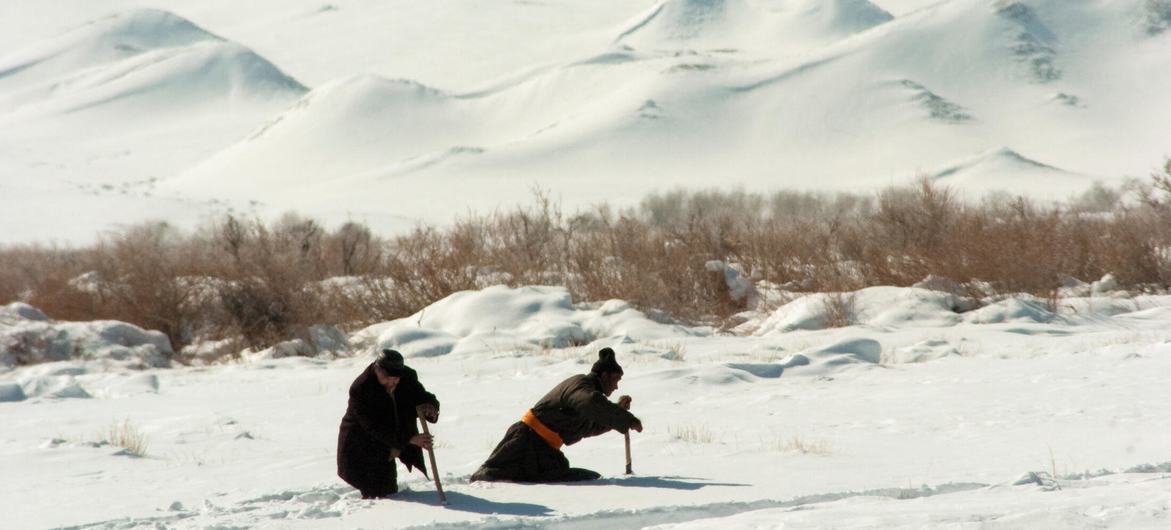
ASIATODAY.ID, JAKARTA – The ongoing “white and iron” dzud in Mongolia has reached a “critical” level, with over 90 per cent of the country facing high levels of risk from the unique weather phenomenon, UN agencies have reported.
About 190,000 herder households are struggling with inadequate feed, skyrocketing prices and heightened vulnerabilities, according to the Office of the UN Resident Coordinator in Mongolia.
Herding and livestock have traditionally been integral to Mongolia’s economy, culture and way of life. Estimates indicate that there are over 64 million livestock this winter season in Mongolia.
“The increasing severity of weather conditions further exacerbates the crisis, underscoring the urgent need for humanitarian assistance and sustainable solutions to support Mongolia’s rural communities and traditional livelihoods,” the Office said in an update this week.
This is the second year in a row that the country has faced these severe conditions. Last winter about 70 per cent of the country was affected.
What are dzuds?
Dzuds, a peculiar slow-onset disaster unique to Mongolia, are extreme winters characterized by freezing temperatures, heavy snow and ground so frozen that animals cannot reach pasture.
These conditions are commonly preceded by a dry summer with equally scant grazing, leaving livestock unable to build up the stores of fat they need for winter.
According to the UN Economic and Social Commission for Asia and the Pacific (ESCAP), the frequency and intensity of dzuds have been increasing since 2015 due to worsening impacts of climate change and poor environmental governance.
This winter, the dual “white” and “iron” dzud is marked by a very deep snow cover preventing animals from accessing grass (white dzud) combined with a short thaw and subsequent hard freeze that locks up pastures in ice (iron dzud).
Children at risk
Over 258,000 people – including over 100,000 children – have been affected as roads have been obstructed by heavy snow, leaving children unable to access vital health, nutrition, education and social services, the UN Children’s Fund (UNICEF) said.
Herder families, who are most directly impacted by the dzud, often have to leave their children in the care of relatives or at boarding schools, increasing protection risks and causing psychological stress, the agency added.
Immediate needs for February to March include funding for road cleaning programmes, medicines, radios to support remote learning and child protection.
Response
The Government has activated its emergency operations Centre (EOC) and designated the Deputy Prime Minister to lead and coordinate the response.
In anticipation of the disaster, UNICEF had already dispatched 120 emergency health kits, 20 hygiene kits and “safe haven” child protection kits to provinces.
It has a further 555 hygiene kits ready for dispatch and is procuring 20 integrated health kits to support the response, including supplying vitamin D to young children.
UNICEF will also support the distribution of portable digital audio devices pre-loaded with audio lessons to herder households with school-age children to ensure continuity of learning. (UN News)
Check out other news and articles at Google News