
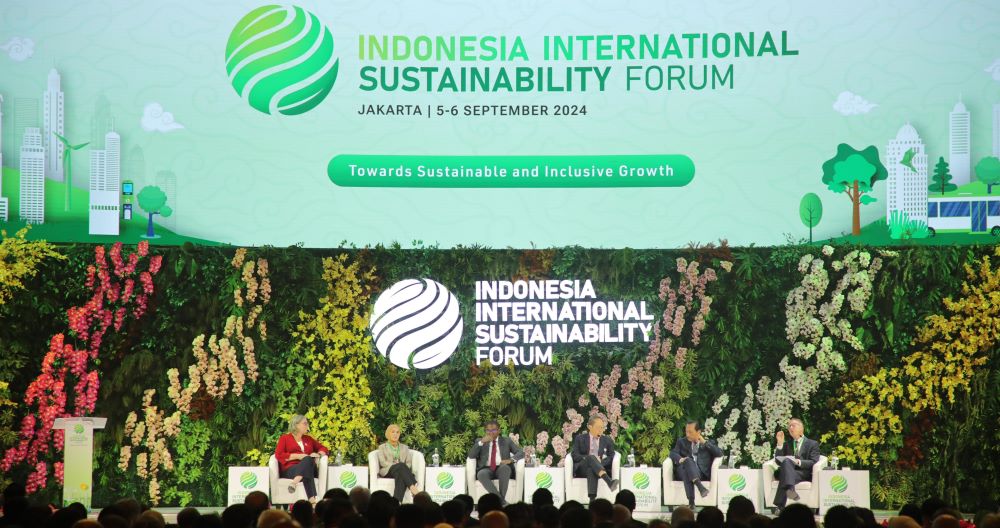
ASIATODAY.ID, JAKARTA – Coordinating Minister for Maritime Affairs of the Republic of Indonesia, Luhut Binsar Pandjaitan, emphasized that the energy transition must be fair to the economy and go hand in hand with decarbonization.
Luhut conveyed this in the Plenary Session of the 2024 Indonesia International Sustainability Forum with the theme Future of Energy Transition in Emerging Economies, on Thursday, September 5 2024, at the Jakarta Convention Center, Jakarta.
“The energy transition must address economic growth, ensure energy security, and address climate change effectively, without compromising these important aspects. No single technology or solution can solve global emissions reductions. “We must avoid being dogmatic about one carbon reduction technology,” said Luhut.
As an energy transition effort, Indonesia has formed a National Energy Transition Task Force to encourage energy transition initiatives in various sectors. One of them is through the Just Energy Transition Partnership (JETP) with International Partners Group (IPG) countries and the Glasgow Financial Alliance for Net Zero (GFANZ), more than 400 priority projects in the electricity sector have been identified that are ready to be funded.
“Our energy transition will not only focus on reducing emissions but also on driving economic growth by developing green industries that will sustain our economy in the long term. To sustain and accelerate this transition, we need collaboration and investment. “The future of Indonesia’s energy transition depends on the collective efforts of all stakeholders,” added Luhut.
PLN has published the Acceleration of Renewable Energy Deployment (ARED) program, which aims to have around 480GW of renewable energy capacity by 2060. Through Indonesia’s partnership with Singapore it has developed the solar photovoltaic industry and Battery Energy Storage System (BESS), which allows Indonesia to export electricity. green to Singapore, generated by solar panels manufactured in Indonesia.
“In the transportation sector, we have introduced incentive and investment programs to accelerate EV adoption and industrial development. Last year, we only had two Battery Electric Vehicle (BEV) car models. Now there are more than 25 models. “BEV sales have more than doubled, from 5,800 units in the first half of 2023 to 12,200 units in the first half of 2024,” added Luhut.
Luhut emphasized that from the implementation of the energy transition initiative, there is no exactly the same solution. Each country has unique starting points and limitations for decarbonization.
“Developing countries must continue to grow while also reducing emissions. We cannot 100% implement solutions from developed countries, because their fiscal capacities, access to technology and political realities are very different. Each country must choose and implement a strategy based on its own context and needs.” closed Luhut. (AT Network)
Follow Us at Google News and WA Channel