
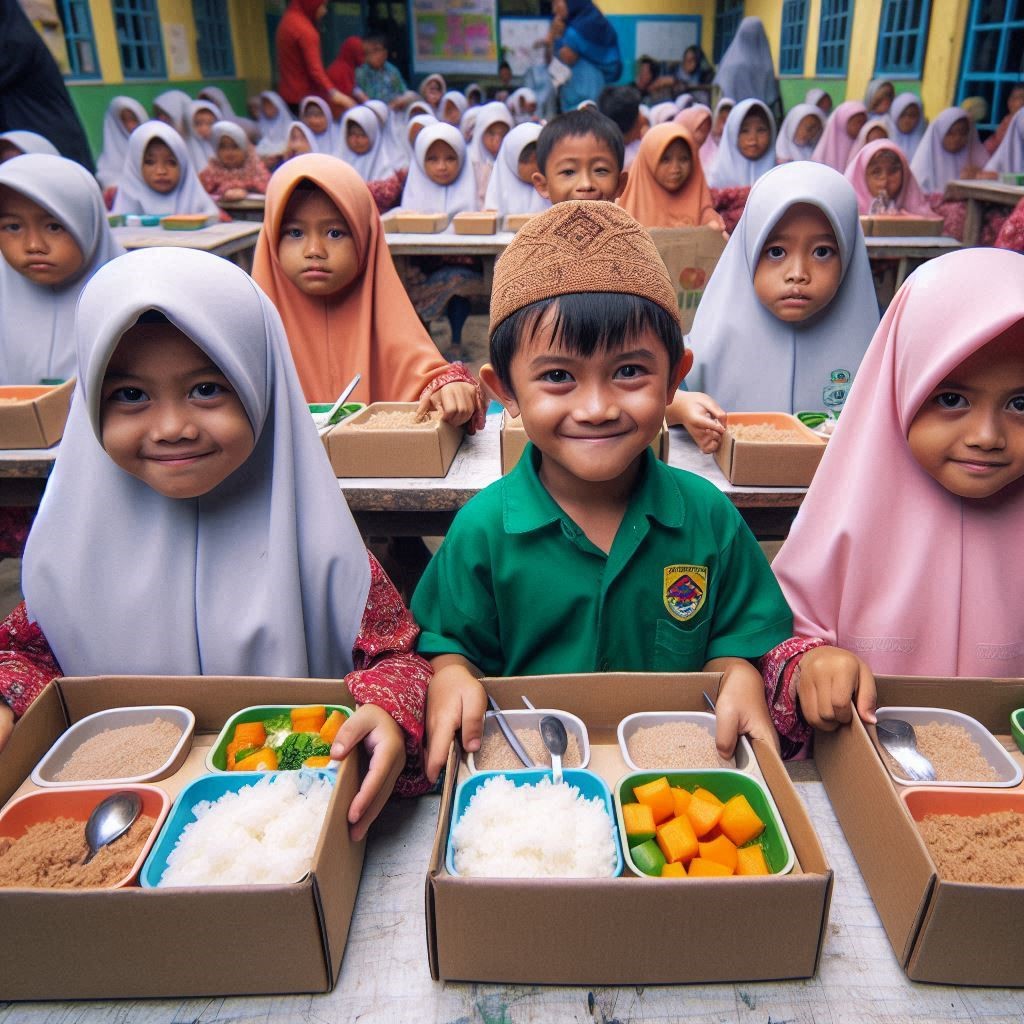
The free nutritious meal programme launched in various schools in Indonesia is an initiative worth appreciating. With the main goal of improving student health and addressing malnutrition, the programme serves nutritious meals at no cost to students. However, behind these good intentions, there is a big challenge that needs to be considered, namely food waste management. In the context of efforts to achieve zero waste, it is important to correct and optimise this programme to not only focus on providing food, but also on managing the waste generated.
Free nutritious school meals have significant positive impacts. Firstly, the programme helps reduce stunting and malnutrition among children. In many cases, children from underprivileged families do not receive adequate nutrition, which impacts their physical growth and cognitive development. By providing nutritious food, the programme contributes to improving students’ health and learning achievement. Secondly, the programme also serves as a form of government support in creating better food accessibility. With free meals, students do not have to worry about hunger, and can focus more on teaching and learning activities.
Free nutritious food programmes play an important role in food equity or distribution, which is a key element in food security. The free nutritious food programme ensures that children from underprivileged families have access to nutritious food. By providing food at no cost, the programme reduces the economic barriers that often prevent families from having healthy meals at home. This is especially important in communities where many children are malnourished due to limited access to quality food.
Focusing on targeting schools in various regions, including remote or less developed areas, the programme helps distribute food to communities that may not have equal access to nutritious food sources. This is important to address social and economic inequities in food distribution..
Through the free nutritious meal programme, students and their parents are educated on the importance of balanced nutrition. This awareness not only helps them make better food choices at home, but also encourages them to appreciate the food they receive more. With increased knowledge about nutrition, it is expected that there will be positive behavioural changes in food consumption in the community.
If a free nutritious meal programme involves local produce, it can support local farmers and improve overall food security. By purchasing ingredients from local farmers, the programme not only provides nutritious food but also strengthens the local economy, creating a positive cycle that supports food security..
By ensuring that the food provided matches the tastes and needs of the students, the programme can reduce food wastage. Good management of food waste and education on food waste also contributes to food security by ensuring that resources are optimised..
However, one issue that is often overlooked in these programmes is food waste management. While the aim of the programme is to provide adequate nutrition, it is often the case that the food provided is not fully utilised. This can happen for various reasons, such as related to flavour preferences. Students may not like the menu served, leading to food waste. Another reason is due to excessive portions. Food served in large portions can make students feel full before finishing the meal. It is also due to food quality. Food that is less fresh or not in accordance with quality standards can make students reluctant to consume it.
Data shows that food waste in Indonesia is very significant, and this food waste not only has an impact on the environment but also on the economy and social. According to Bambang Hermanu in an article titled ‘Environmentally Friendly Food Waste Management’ published in the Agrifoodtech Journal in 2022, the food waste phenomenon in Indonesia reaches 300 kg of food waste per person every year, thus placing Indonesia in the second-ranked position in the world in the amount of food waste in the large category.
To address this issue, it is important for free nutritional food programmes to integrate zero waste principles. Zero waste is a philosophy that aims to reduce waste to a minimum through efficient management and conscious consumption. One step that must be taken is to tailor the menu to students’ preferences. Conducting a survey to find out the types of food that students prefer will help in designing a more acceptable menu. By involving students in the planning process, schools can ensure that the food served is more likely to be consumed, thus reducing waste.
Food portions also need to be considered. Reducing portion sizes can help students finish the food served. Schools can implement a buffet serving system or provide small portion options that can be increased if they are still hungry. This approach not only helps reduce waste but also gives students autonomy in choosing the food they want.
Education is key in changing student behaviour. Schools need to organise awareness campaigns on food waste and the importance of reducing food waste. By educating students about the environmental impact of food wastage, they can better appreciate the food they receive and be motivated to finish it.
Unused leftovers can still be utilised. Schools can collaborate with local organisations to distribute edible food to those in need. In addition, inedible leftovers can be turned into compost to support the school garden programme. In this way, every leftover food can be utilised to its full potential..
Getting parents and the surrounding community to participate in the programme is also important. The community can be involved in food management activities, such as helping to prepare meals or distributing leftovers to those in need. By involving the community, the programme can become more sustainable and relevant. Integrating the principle of zero waste in the free nutritious meal programme is not only beneficial for the environment but also for students’ health and education. By reducing food waste, schools can allocate more resources to improve food quality. In addition, students who are educated on the importance of reducing food waste will grow into more responsible individuals who care for the environment.
The free school meals programme is a very positive step towards improving the nutritional status of children in Indonesia. However, to achieve the bigger goal of zero waste, it is important to pay attention to the management of the food waste generated. By making improvements in menu planning, portion control, education and community collaboration, the programme can be more effective and sustainable. Achieving zero waste in the free nutritional meal programme is not just about reducing waste, but also about creating awareness and social responsibility among students. Thus, we are not only providing nutritious food, but also shaping a generation that is more environmentally conscious and sustainable.
Waste from food wrappers is the next serious problem, if not managed properly. The use of paper and styrofoam boxes in the free nutritious meal programme can add to the already high waste burden. Styrofoam, for example, is a material that is difficult to decompose and can remain in the environment for hundreds of years. Likewise with paper, although paper is easier to decompose, if not managed properly, paper waste can also have a negative impact on the environment.
Efforts to reduce the amount of waste generated from the programme should start from planning. For example, using reusable or biodegradable packaging can reduce the amount of waste that ends up in landfills. By choosing recyclable materials, such as recycled paper or packaging specifically designed to facilitate recycling, we can reduce the environmental impact of waste. Zero waste encourages the application of circular economy principles, where products and materials remain in beneficial use for as long as possible. This can be achieved by designing packaging that can be reused or has value after the food has been consumed.
Through a zero waste approach to packaging waste management, we can minimise these negative impacts. For example, if paper boxes are used, it is important to ensure that the paper comes from a sustainable source and can be recycled after use. By doing so, we are not only reducing the amount of waste, but also supporting more environmentally-friendly practices..
Despite its importance, implementing the zero waste concept in packaging waste management is challenging. One of the main challenges is cost. Eco-friendly packaging materials are often more expensive compared to conventional materials. However, alternative solutions such as collaborating with local producers who provide eco-friendly packaging can be a good move..
In addition, the challenge of public education must also be addressed. People need to be given a clear understanding of the importance of waste reduction and practical ways to do so. Training programmes and awareness campaigns can be a solution to improve people’s understanding..
Waste management of the free nutritious meal programme wrappers must be carefully prepared to comply with the concept of zero waste. By choosing environmentally friendly packaging materials, raising public awareness, and supporting circular economy principles, we can reduce the negative impact on the environment and create a more sustainable programme. Thus, the programme not only provides nutritional benefits to the beneficiaries, but also contributes to environmental sustainability and overall public health. The implementation of the zero waste principle in the management of packaging waste is an important step to ensure that this initiative truly brings long-term benefits to all parties. (AT Network)
Follow Us at Google News and WA Channel