
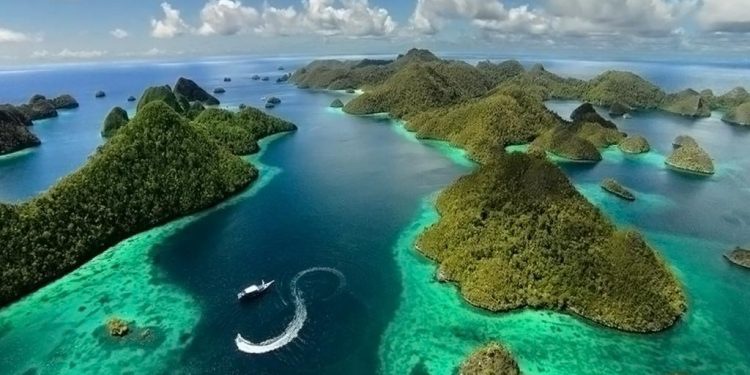
ASIATODAY.ID, JAKARTA — The world-renowned natural paradise of Raja Ampat is facing a serious threat. The rapid expansion of nickel mining on its pristine islands is endangering both the environment and the local communities who rely on sustainable tourism and natural resources.
Evita Nursanty, Deputy Chair of Commission VII of the Indonesian Parliament (DPR RI), expressed deep concern over the growing presence of nickel mining operations in Raja Ampat, located in Southwest Papua. She emphasized the urgent need for the government to address the conflict between extractive industries and tourism preservation.
“Mining activity in Raja Ampat is becoming increasingly widespread. Greenpeace has sounded the alarm, and I’ve seen the situation on the ground. Everyone wants the same thing—long-term preservation of this extraordinary tourism destination,” Evita stated on Sunday, June 1, 2025.
Evita warned that tourism, a vital economic pillar in Raja Ampat, must not become a casualty of unchecked resource exploitation. She called for a comprehensive review of nickel mining permits and stricter environmental oversight.
“Several companies are just beginning operations. We must evaluate whether these mining projects can truly protect the environment. Frankly, I doubt they can,” she added.
Evita also demanded transparency from mining companies regarding their plans to protect Raja Ampat’s marine ecosystem—especially the coral reefs, which are a global tourism magnet. She stressed the need for clear waste management strategies to prevent pollution of coastal areas.
According to Kiki Taufik, Global Forest Campaign Head at Greenpeace Indonesia, almost every island in Raja Ampat, including smaller islets, has been granted mining permits.
“Raja Ampat, long known as Indonesia’s premier natural tourism destination, is now under serious threat due to nickel mining,” Kiki said in a video statement posted on Greenpeace’s Instagram account.
Kiki pointed to mining activities on Kawe Island, Gag Island, and Manuran Island, warning that deforestation and open-pit excavation are destroying critical terrestrial and marine ecosystems.
“Raja Ampat is at a crossroads: preserve its natural beauty or fall victim to mining greed,” Kiki stated.
ALJARA: Community Alliance Demands Mining Halt
On May 26, 2025, hundreds of Indigenous residents, environmental activists, and tourism workers staged a protest in front of the Raja Ampat Regional Parliament Office. They marched under the banner of Aliansi Jaga Alam Raja Ampat (ALJARA)—the Alliance to Protect Raja Ampat’s Nature.
The protest was aimed at rejecting nickel mining operations by PT Mulia Raymond Perkasa (MRP) on Manyaifun and Batang Pele Islands. ALJARA emphasized that mining threatens their livelihoods, pollutes waters, degrades coral reefs, and undermines food security.
“We reject the nickel mining expansion. We demand the government revoke MRP’s permits and halt all mining in Raja Ampat,” ALJARA said in its official statement.
Raja Ampat is home to more than 1,500 fish species and 540 coral species, making it one of the most biodiverse marine ecosystems on Earth. Yet, the government has granted mining concessions totaling over 21,000 hectares to several companies, including PT Gag Nikel, PT Anugerah Surya Pratama, PT Kawei Sejahtera Mining, and PT MRP.
The expansion of nickel mining on islands like Manyaifun and Batang Pele is already causing coastal damage, reducing fish stocks, and harming the traditional livelihoods of Indigenous fisherfolk and farmers.
Local communities who have lived sustainably for generations are now facing displacement, loss of clean water sources, deforestation, and the destruction of vital tourism-based economies. (AT Network)
Follow Us at Google News and WA Channel