
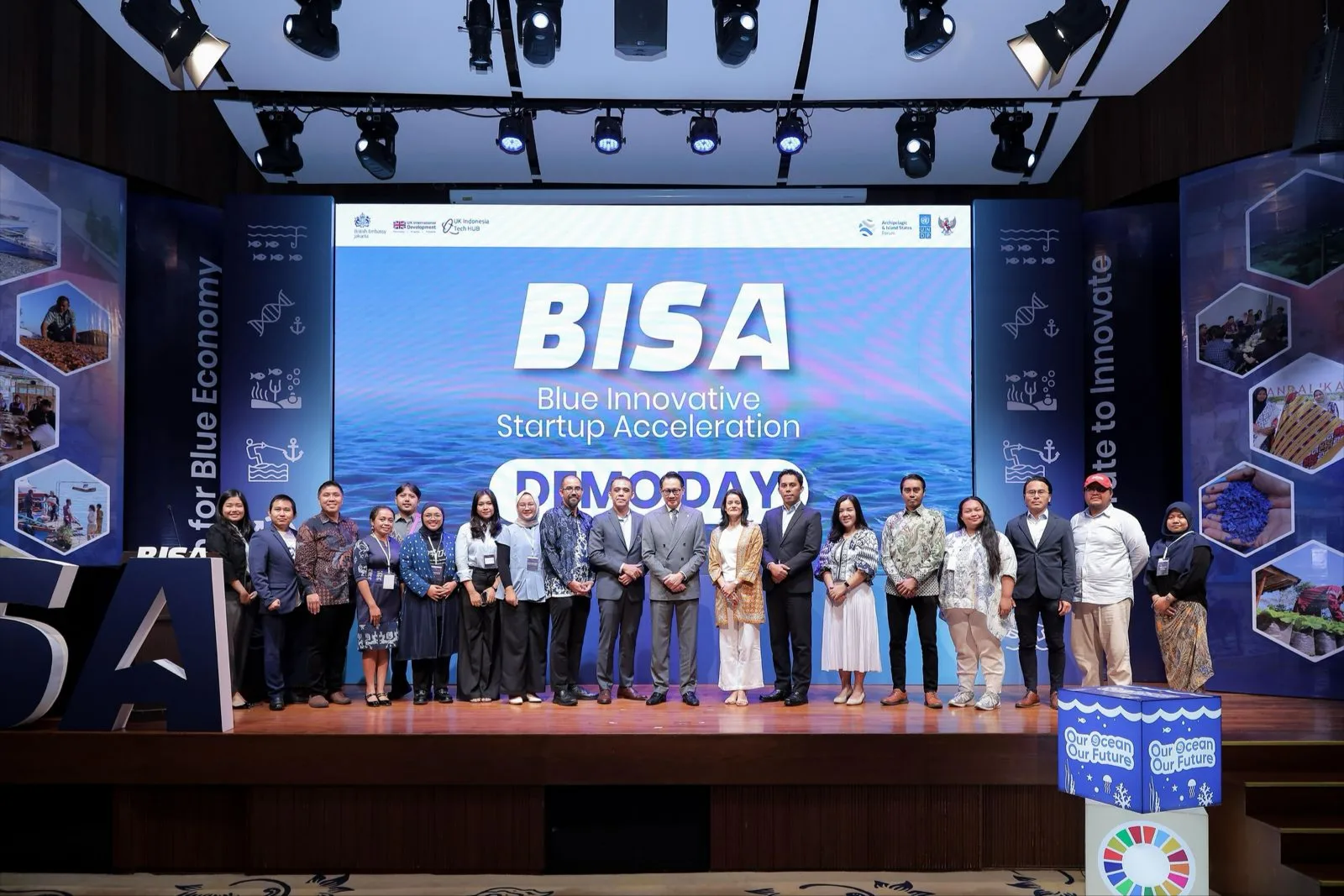
ASIATODAY.ID, JAKARTA – The British Embassy Jakarta, through the UK-Indonesia Tech Hub, in collaboration with the Archipelagic and Island States (AIS) Forum administered by UNDP Indonesia and with Skilvul, hosted a Demo Day to mark the culmination of the Blue Innovative Startup Acceleration (BISA) programme on 1 July 2025, at Soehana Hall.
This initiative champions inclusive, tech-driven innovation in Indonesia’s blue economy by empowering startups, community-based organisations, and students to co-create sustainable solutions for coastal communities.
Launched in January 2025, BISA is a flagship initiative under the UK’s Digital Access Programme, highlighting the UK’s strong commitment to digital inclusion and climate-smart innovation. As the UK and Indonesia pursue a new Strategic Partnership, BISA supports sustainable development, economic resilience, and environmental stewardship.
British Deputy Ambassador to Indonesia, Matthew Downing, said:
“BISA is a powerful example of how the UK’s collaboration with Indonesia can drive tech-enabled solutions for the blue economy. As we work with Indonesia toward a new Strategic Partnership as agreed by Prime Minister Keir Starmer and President Prabowo Subianto in London last year, I look forward to fostering innovation that builds a resilient, inclusive, and sustainable blue economy.”
Through the UK-Indonesia Tech Hub, the UK supports transformative initiatives like BISA that leverage technology to tackle real-world challenges, particularly in underserved and remote communities. By fostering innovation and inclusive access to digital tools, BISA is helping to build a more equitable and climate-resilient future.
As a platform for innovation and impact, BISA Demo Day brought together ten Synergy Groups, comprising startups, community-based organisations, and university students selected from over 200 applicants to present their innovations. These groups tackled issues ranging from marine waste and aquaculture to clean energy and conservation, with solutions tailored to local needs in regions such as Bontang, Takalar, Anambas, and Larantuka.
Following the presentations, five Synergy Groups were awarded grants to implement their solutions in selected areas. These include:
Synergy Group 1 – Parongpong RAW Lab & Anambas Foundation (Anambas, Kepulauan Riau)
Synergy Group 4 – Collabit & Ruang Kolaborasi Perempuan (Larantuka, East Nusa Tenggara)
Synergy Group 11 – Aquabloom & Lombok Research Center (Lombok, West Nusa Tenggara)
Synergy Group 14 – Puffer & YRC Indonesia (Liukang Tupabbiring, South Sulawesi)
Synergy Group 15 – Ravelware & Yayasan Lestari Mulia (Takalar, South Sulawesi)
UNDP Deputy Resident Representative in Indonesia, Sujala Pant, commented on the initiative’s significance aligned with the vision of the United Nations Development Programme (UNDP) and the AIS Forum, the BISA initiative is a concrete example of shared commitment to inclusive and sustainable development in coastal regions.
“This initiative is a strategic step to ensure that innovation responds directly to community needs while strengthening cross-sector collaboration for a more resilient ocean and coastal communities. BISA is a tangible step to address challenges in coastal and small island areas. We are committed to building an inclusive blue innovation ecosystem, expanding cross-sector collaboration, and creating sustainable economic opportunities, especially for youth and women, who are key to the future and prosperity of coastal communities,” he said.
Coordinating Minister for Infrastructure and Regional Development, Agus Harimurti Yudhoyono (AHY), said:
“The selection of Synergy Groups through the BISA Programme aligns with our vision of enhancing connectivity and multi-sectoral collaboration. Initiatives like this are essential to foster more equitable, sustainable, and competitive development in coastal and island regions.”
Deputy Minister of Foreign Affairs, Havas Oegroseno, added initiatives such as BISA affirm that community-based solutions have a strategic role in shaping a global development architecture that is more inclusive and adaptive to local contexts.
“Good practice like this can be adapted by island and archipelagic countries in facing common challenges. Through these types of collaborations, we can strengthen global solidarity and accelerate the presence of transformative solutions that address the real needs of coastal communities,” he said.
The BISA Demo Day marks a significant milestone in the UK–Indonesia partnership and underscores a shared vision for a resilient, inclusive, and sustainable blue economy. As the selected innovations move toward implementation, they offer a blueprint for how technology, community engagement, and international cooperation can transform coastal development and create sustainable economic growth. (AT Network)
Follow Us at Google News and WA Channel