
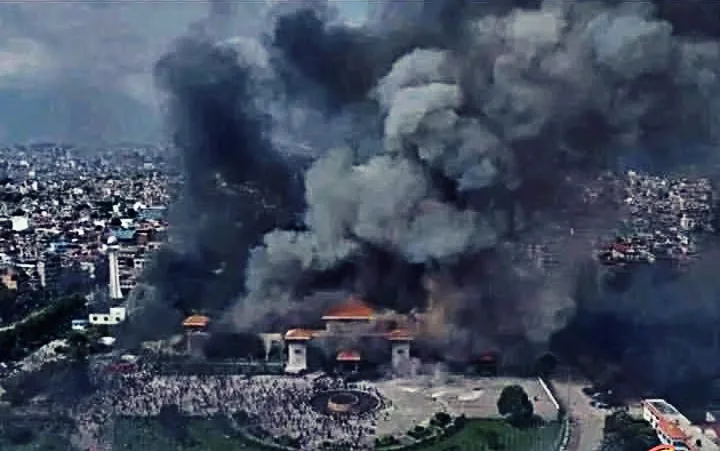
ASIATODAY.ID, KATHMANDU – Nepal is facing one of its darkest moments in recent history. What began as protests against corruption and a controversial social media ban has spiraled into deadly riots that left at least 22 people dead and nearly 200 injured.
The chaos, driven largely by Gen-Z demonstrators, has forced Prime Minister KP Sharma Oli to resign.
PM Oli Resigns Amid Growing Public Fury
The Prime Minister’s Office announced that Oli stepped down to pave the way for a constitutional solution after public outrage escalated beyond control.
“The wave of demonstrations was triggered by the social media ban, which has since been lifted. But public anger had already reached a boiling point,” the statement read.
Gen-Z Takes to the Streets, Violence Erupts
On Monday (September 8, 2025), thousands of young protesters—mostly identifying as Gen-Z—stormed the streets of Kathmandu. Clashes with police turned deadly as security forces deployed tear gas, water cannons, and even live ammunition. By the end of the day, nearly 200 people had been injured.
The violence intensified on Tuesday (September 9, 2025), as demonstrators torched the House of Representatives, the headquarters of the Nepali Congress Party, and the residence of former Prime Minister Sher Bahadur Deuba. Several other politicians’ homes were also vandalized and set ablaze.
Government Buildings and Ministers Under Siege
According to Al Jazeera, enraged protesters stormed the Singha Durbar government complex, which houses Parliament and several key ministries. Eyewitnesses reported demonstrators hurling stones, burning tires, and surrounding the homes of top officials.
The military was forced to deploy helicopters to evacuate ministers trapped inside their residences.
Dramatic footage circulating on social media showed former PM Deuba, Foreign Minister Arzu Rana, and Finance Minister Bishnu Paudel being attacked by mobs. In one clip, Paudel could be seen running through the streets as protesters chased him down.
Media and Infrastructure Targeted
The violence also struck the media sector. The headquarters of Kantipur Media Group, one of Nepal’s largest news organizations, was set on fire, prompting Reporters Without Borders (RSF) to urge protesters not to target journalists.
Meanwhile, Tribhuvan International Airport in Kathmandu remained open, but several flights were canceled due to heavy smoke disrupting visibility, airport spokesperson Rinji Sherpa confirmed.
Global Alarm Over Nepal’s Crisis
UN Human Rights Chief Volker Turk expressed shock at the scale of violence and called for urgent dialogue to prevent further bloodshed.
With dozens dead, the Prime Minister’s resignation, and Gen-Z’s fury still burning in the streets, Nepal now stands at a dangerous crossroads—teetering between political collapse and the possibility of a new era of youth-driven change. (AT Network)
Follow Us at Google News and WA Channel