
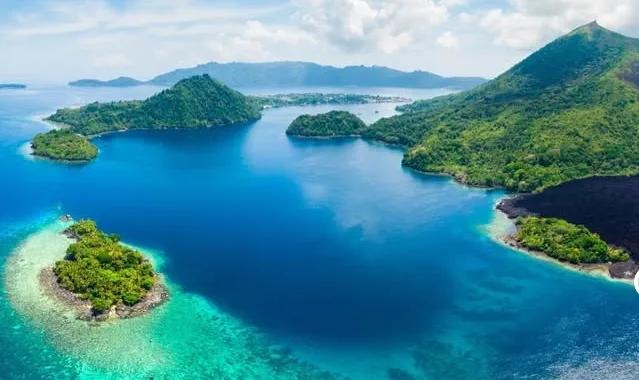
Amid the turquoise waters of the Banda Sea, history and the ocean weave an eternal rhythm. On this small volcanic island once famed as the world’s spice hub, Banda Neira, Indonesia is quietly redefining what a sustainable future looks like — where ocean conservation, maritime archaeology, and local culture converge into a living model of the nation’s blue economy vision.
Through the “Ocean for Prosperity” (LAUTRA) program, the Ministry of Marine Affairs and Fisheries (KKP) is turning Banda Neira into a living laboratory for sustainable coastal development — balancing ecology, economy, and cultural identity.
“Banda Neira represents how the ocean and culture can coexist as pillars of prosperity,” said Koswara, Director General for Marine Management at KKP, during an official briefing in Jakarta, October 26, 2025.
For him, the island is not merely a scenic spot but a classroom — teaching how a healthy sea can nurture both biodiversity and human wellbeing.
The LAUTRA initiative spans 11 provinces, 20 marine conservation areas, and 3 fisheries management zones (WPP), covering over 8.3 million hectares across Indonesia’s archipelago. Banda Neira stands at the heart of this effort, embodying how blue economy principles translate into community-led progress.
From Spice Trade to Blue Tourism
Centuries ago, Banda Neira’s nutmeg attracted traders from Europe and Asia, shaping the course of global history. Today, its legacy continues through eco-cultural tourism, where heritage and nature are revitalized hand in hand.
Together with universities and local communities, KKP promotes five key pillars of blue growth:
Diversifying eco-historical and marine tourism,
Building maritime tourism cooperatives,
Developing local infrastructures like marine museums and eco-piers,
Training local storytellers and certified guides, and
Strengthening blue financing for coastal MSMEs.
According to Enggar Sadtopo, Director of Marine Services at KKP, project funding is designed to empower communities at every scale.
“We offer micro grants of IDR 150 million up to matching grants of IDR 1.25 billion to ensure small enterprises can grow without harming the sea,” he explained.
Science Beneath the Waves
Beneath the Banda Sea, coral gardens thrive alongside remnants of colonial shipwrecks — anchors, cannons, and ceramics that whisper stories from the 17th century.
“The intersection of underwater archaeology and marine biodiversity makes Banda Neira a priceless asset,” said Dr. Kastana Sapanli from IPB University, who has studied the island’s coastal ecosystems within the Coral Triangle.
Meanwhile, Dr. Muhammad Farid, Rector of Banda Neira University, calls the island a “living classroom for sustainable development.”
“Here, science, culture, and economy merge seamlessly. The community learns from the sea, and the sea sustains the community,” he said.
A Blueprint for Indonesia’s Blue Economy
For the Indonesian government, Banda Neira is more than a conservation zone — it’s a blueprint for the nation’s blue economy transformation.
Minister of Marine Affairs and Fisheries Sakti Wahyu Trenggono emphasizes that the initiative reflects Indonesia’s commitment to balancing environmental protection with inclusive economic growth.
“The ocean must remain a source of life and prosperity. Indonesia’s maritime development cannot come at the cost of nature,” he affirmed.
Waves of Hope and Heritage
At the edge of Banda’s coastline, children play by the pier as fishermen return from sea. Behind them, the Museum of Maritime Culture stands beside a centuries-old fortress — a reminder that the sea has always been both provider and protector.
In Banda Neira, conservation isn’t a constraint — it’s a calling. The island has become a living symbol of Indonesia’s blue economy, where history, community, and the ocean move forward together. (AT Network)
Follow Us at Google News and WA Channel