
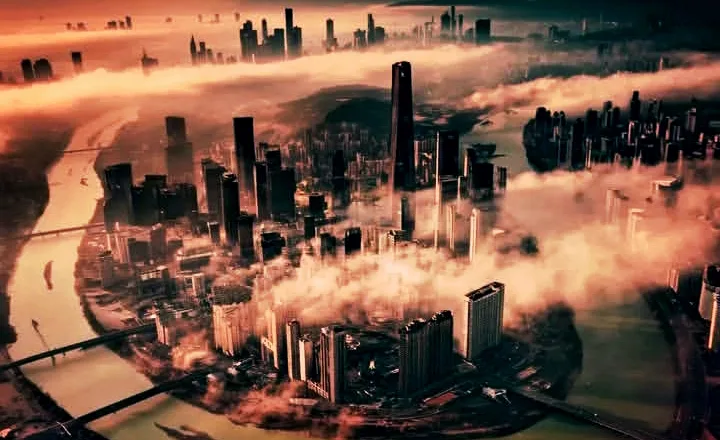
ASIATODAY.ID, VIENNA — Cities are rapidly emerging as the world’s biggest climate battleground. Consuming the majority of global energy and producing the largest share of greenhouse gas emissions, urban areas — especially in low- and middle-income countries — now sit at the heart of the global climate emergency.
A new white paper from the UN Industrial Development Organization (UNIDO), The City-Industry-Climate Nexus: Cities as Engines of Global Net-Zero Transitions in a Shifting World, delivers a stark message: decarbonizing cities is no longer just environmental policy — it is a critical industrial strategy for the 21st century.
“Decarbonization is not just about solar rooftops and electric buses,” said Olga Rataj, from UNIDO’s Division of Energy and Climate Action on December 2, 2025.
“It is about transforming the urban-industrial systems that power daily life — from cement and steel production to textiles, food processing, logistics, and waste management.”
The report outlines the city-industry-climate nexus, a framework that integrates climate action with industrial transformation. This nexus recognizes that cities concentrate people, infrastructure, value chains, and industries — making them essential hubs for achieving global net-zero transitions.
A Systems Approach to Urban Decarbonization
UNIDO applies a holistic, systems-thinking approach that brings together policy, technology, finance, partnerships, and data for coordinated climate and industrial action. The strategy spans energy, transport, buildings, water, waste, manufacturing, and cleantech ecosystems, positioning cities as engines of innovation, competitiveness, and resilience.
To unlock the potential of urban-industrial decarbonization, the white paper calls for:
Municipal finance reform to enable large-scale climate investment
Green public procurement and market incentives to build demand for low-carbon materials and technologies
Innovation ecosystems to support MSMEs, start-ups, and deployment of clean technologies
Green skills development to empower local communities and youth in the net-zero workforce
According to UNIDO, cities are not only hotspots of climate risk — they are also strategic arenas of opportunity. By integrating industrial transformation with climate action, cities can drive inclusive growth while becoming more resilient, competitive, and sustainable. (AT Network)
Follow Us at Google News and WA Channel