
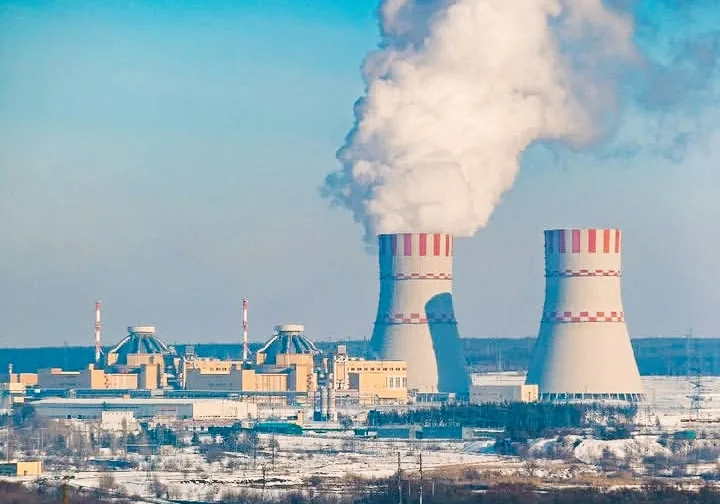
ASIATODAY.ID, JAKARTA — Indonesia is moving decisively toward launching its first-ever nuclear power plant (NPP) in 2032, marking a historic milestone in the nation’s transition to clean and reliable energy.
The development plan is formally outlined in the Electricity Supply Business Plan (RUPTL) 2025–2034 and further reinforced through the Government Regulation (PP) No. 40/2025 on National Energy Policy (KEN).
This landmark initiative signals Indonesia’s entry into the global league of countries that utilize nuclear energy as a cornerstone of long-term energy security and carbon reduction.
500 MW of Nuclear Power to Enter the Grid by 2032
Director General of New, Renewable Energy and Energy Conservation (EBTKE), Eniya Listiani Dewi, confirmed that the government has allocated 500 MW of nuclear capacity into the national planning framework.
“Our target is 500 MW by 2032. This is a significant step that we have never taken before,” she said on Friday, December 5, 2025.
According to Eniya, nuclear power will complement Indonesia’s renewable energy mix, which currently relies heavily on solar, geothermal, and hydropower.
Two Priority Locations: Bangka Island and West Kalimantan
The government has shortlisted two regions as the leading candidates for Indonesia’s first nuclear power plant:
Bangka Island (Bangka Belitung Province)
West Kalimantan Province
Haendra Subekti, Deputy for Nuclear Safety Assessment at the Nuclear Energy Regulatory Agency (Bapeten), explained that both locations have undergone extensive safety and feasibility studies, including seismic analysis, geological risks, and environmental impact assessments.
To execute the project, the government has appointed two subsidiaries of PLN:
PLN Nusantara Power → responsible for the Bangka project
PLN Indonesia Power → responsible for the West Kalimantan project
“The target for the first NPP is 2032. These two locations have passed initial studies and meet key safety parameters,” Haendra said on December 4, 2025.
Regulatory Framework Almost Ready: NEPIO Presidential Decree Awaits Signing
The government is finalizing a Presidential Regulation to establish the Nuclear Energy Program Implementation Organization (NEPIO)—a central body responsible for construction and operation of the nuclear program.
Once signed by President Prabowo Subianto:
Within 6 months → the site must be officially designated, including site licensing.
Within 12 months → the construction permit must be issued.
This timeline solidifies the regulatory backbone required to begin full-scale development.
West Kalimantan Holds Strong Geological and Fuel Potential
The RUPTL 2025–2034 identifies West Kalimantan as a region with abundant primary energy resources, including: Hydropower, Biomass, Biogas and Coal. Uranium and thorium, including an estimated ±24,112 tons of uranium in Melawi Regency.
This makes West Kalimantan a highly favorable candidate for an NPP, especially as future reactors may utilize thorium-based fuel cycles.
28 Potential Nuclear Sites Identified Across Indonesia
The National Research and Innovation Agency (BRIN) and its predecessor BATAN have conducted site surveys for 28 potential nuclear power locations.
These assessments considered: Seismic activity, Peak Ground Acceleration (PGA), Volcanic hazards and Active fault lines.
Based on these studies and the country’s electricity demand outlook, the government plans to focus the first phase of nuclear development in the Sumatra and Kalimantan systems.
Indonesia’s potential nuclear capacity from all surveyed regions reaches up to 70 GW in the long term.
Nuclear Energy Share to Increase Sharply Through 2060
Under Government Regulation Number 40/2025, the share of nuclear energy in Indonesia’s primary energy mix is projected to rise significantly:
0.4–0.5% in 2032
2.8–3.4% in 2040
6.8–7% in 2050
11.7–12.1% in 2060
This long-term roadmap positions nuclear power as one of Indonesia’s key strategies to achieve a resilient, low-carbon energy future.
A Historic Leap in Indonesia’s Energy Transformation
The launch of Indonesia’s first nuclear power plant in 2032 represents far more than a 500 MW addition to the grid. It symbolizes:
A breakthrough in advanced energy technology
A deeper diversification of the national energy mix
Stronger energy independence
A long-term reduction in greenhouse gas emissions
A strategic shift toward high-reliability baseload power
With clear targets, regulatory preparation, and confirmed project implementers, Indonesia is on track to enter a new era of nuclear-powered clean energy. (AT Network)
Follow Us at Google News and WA Channel