
ASIATODAY.ID, JAKARTA – Amid global and domestic economic challenges, two regions in Indonesia have recorded economic growth exceeding 8 percent.
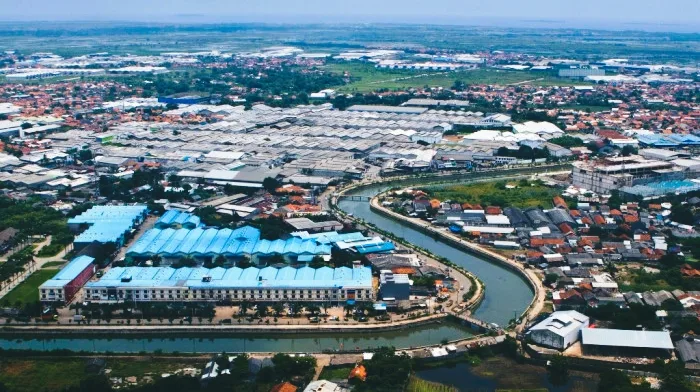
Batang and Kendal regencies in Central Java stand out as national exceptions, driven by effectively managed Special Economic Zones (SEZs) integrated with regional industrial ecosystems.
In Batang Regency, the Industriopolis Batang SEZ has become the main engine of local economic acceleration. The zone has spurred significant investment, expanded employment opportunities, and boosted household purchasing power.
According to Statistics Indonesia (BPS), Batang’s economy grew 6.03 percent in 2024 and surged sharply in 2025. In Q3 2025, Batang recorded a year-on-year growth of 8.52 percent, driven primarily by strong household consumption and robust investment.
Coordinating Minister for Economic Affairs Airlangga Hartarto emphasized that the experience of Batang and Kendal demonstrates that SEZs can serve as catalysts for regional economic transformation.
“SEZs are not merely investment incentive tools; they are catalysts for regional economic growth. With well-planned infrastructure, ease of doing business, and integration with the local workforce, SEZs have proven capable of delivering high and sustainable economic growth,” said Airlangga quoted on Monday December 15, 2025.
The impact of Batang SEZ extends beyond headline growth figures. Academic studies show a significant multiplier effect, including increased employment opportunities and reduced poverty levels. The poverty rate in Batang decreased from 8.73 percent in 2024 to 7.79 percent in 2025, reflecting growing industrial activity and workforce absorption in the surrounding area.
Furthermore, new investments and the adoption of industrial technology in Batang SEZ have boosted regional economic productivity. The development of value-added manufacturing has improved production efficiency and increased output per worker, strengthening Batang’s economic competitiveness.
Kendal Regency shows a similar performance. In Q3 2025, Kendal’s economy grew 8.84 percent year-on-year, the highest in Central Java Province. Growth was fueled by thriving industrial activity and investments in industrial zones and SEZs, reflecting the strengthening of the regional economic ecosystem.
The achievements of Batang and Kendal indicate a spillover effect across the Batang–Kendal–Semarang corridor, confirming that SEZ development can generate sustainable new sources of economic growth, benefiting both core and surrounding regions.
Looking ahead, the government sees these two regions as a model for national SEZ development, particularly in creating new economic growth centers outside metropolitan areas. Strengthening connectivity, regulatory certainty, workforce readiness, and integration with SMEs and local economies will be key to ensuring broader and more inclusive benefits.
“The government will continue coordinating policies across ministries, agencies, and local governments to ensure SEZs function optimally as instruments for accelerating investment, creating jobs, and promoting equitable national economic development,” concluded Minister Airlangga. (ATN)
Follow Us at Google News and WA Channel