
ASIATODAY.ID, JAKARTA – Amid growing state control and the erosion of civic freedoms, Civil Society Movements (CSMs) are increasingly seen as the last line of defense for democracy in Southeast Asia.
Researcher at the Research Center for Politics of Indonesia’s National Research and Innovation Agency (BRIN), Irine Hiraswari Gayatri, stressed that civil society plays a critical role in maintaining checks and balances, advancing social justice, and safeguarding democratic values across the region’s diverse political systems.
“The wave of democratization has enabled civil society movements to influence public policy and expand citizen participation. However, these achievements are now facing serious pressure,” Irine said during the Dialogue on Civil Society Movements in Southeast Asia: Prospect & Progress held at BRIN’s Sarwono Prawirohardjo Science and Technology Area in Jakarta, Wednesday, December 17, 2025.
The forum served as a platform for critical reflection on the position of civil society amid Southeast Asia’s increasingly complex socio-political landscape—marked by democratic backsliding, authoritarian consolidation, and rising restrictions on civic activism.
Irine noted that digital transformation has significantly strengthened civil society’s capacity for mobilization, enabled cross-border collaboration, and opened new spaces for advocacy. Yet paradoxically, these gains have been met with intensified repression.
“Shrinking civic space, tighter government surveillance, and restrictions on funding pose real challenges. The ability to adapt, innovate, and expand advocacy networks is essential for civil society to remain relevant and resilient,” she emphasized.
Offering a regional perspective, Professor of Political Science at Lund University, Sweden, Anders Uhlin, reviewed nearly two decades of engagement between Southeast Asian civil society and ASEAN. This engagement has been institutionalized through transnational platforms such as the ASEAN Civil Society Conference (ACSC) and the ASEAN Peoples’ Forum (APF).
“While these forums are vital spaces for networking and idea exchange among activists, they are not without structural limitations,” Uhlin said.
He pointed to ASEAN’s limited responsiveness, persistent issues of representation, and intimidation faced by activists—particularly those from countries where civic space is increasingly constrained.
Uhlin further underlined that national-level civic conditions strongly shape participation, with civil society activism tending to be more robust in relatively open environments such as Indonesia and Malaysia.
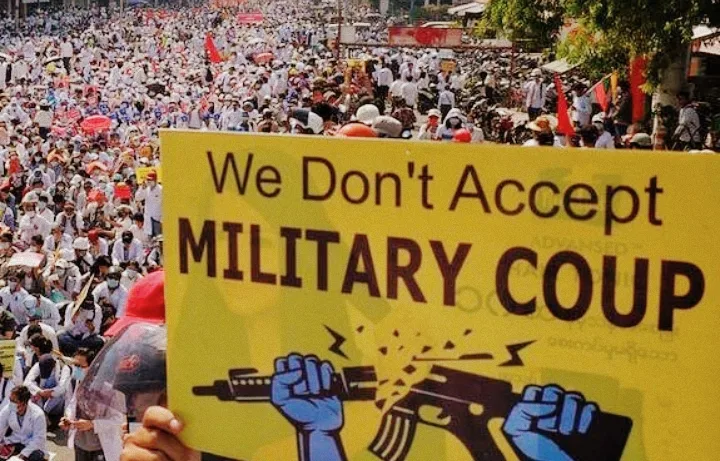
Meanwhile, BRIN researcher Humphrey Wangke presented the case of Myanmar to illustrate the strategic importance of digital connectivity in sustaining civil society movements.
“Digital media has enabled communication across individuals and organizations, contributing to efforts to restore democracy through people-to-people diplomacy,” Humphrey explained.
However, he warned that digital progress also carries significant risks, including the spread of disinformation, hate speech, identity politics, and online manipulation.
These challenges were exacerbated following Myanmar’s military coup on February 1, 2021, when severe restrictions on digital communication further weakened civil society consolidation and severed established advocacy networks.
Through this dialogue, BRIN hopes the discussions will deepen understanding of the prospects and challenges facing civil society movements in Southeast Asia, while also providing a foundation for strengthening future research and collaboration in support of democracy and social justice across the region. (AT Network)
Follow Us at Google News and WA Channel