
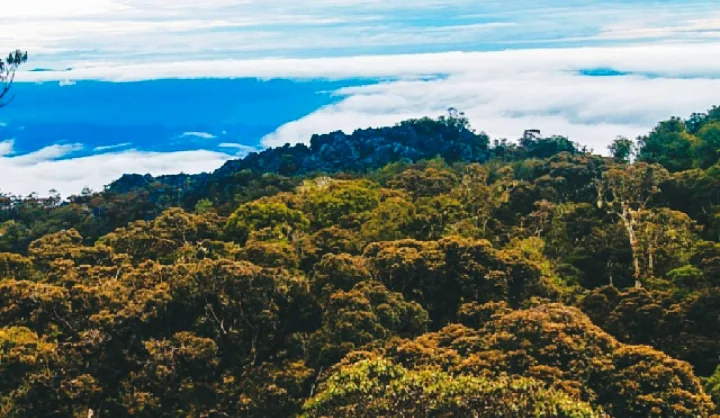
ASIATODAY.ID, JAKARTA – Indonesia, through the National Research and Innovation Agency (BRIN), is pushing for the Wallacea region, particularly the Sombori–Matarombeo–Tangkelemboke–Mekongga Landscape in Southeast Sulawesi, to be inscribed on the World Heritage List and designated as a National Park.
The move is seen as critical amid escalating climate change impacts, deforestation, and ecological disaster risks in eastern Indonesia.
The proposal was emphasized by Prof. Hendra Gunawan, Principal Researcher at BRIN’s Research Center for Ecology, during the Wallacea Expeditions Conference held in Kendari on Monday, January 5, 2026. The forum discussed the establishment of a landscape-based conservation area covering approximately 6,000 square kilometers, encompassing the Sombori karst region, Matarombeo forests, Tangkelemboke, and the Mekongga mountain range.
“Proposing National Park and World Heritage status is a preventive, science-based measure—not a political decision,” Hendra stressed.
Accelerating Forest Loss Raises Ecological Risks
According to BRIN, the Wallacea region has lost approximately 1.37 million hectares of forest over the past decade, with Southeast Sulawesi among the most significantly affected areas. This trend has increased the risks of flooding, drought, and ecosystem degradation, threatening a region widely recognized as one of the world’s most important biodiversity hotspots.
A key area within the proposal is the Mekongga Mountain Complex, covering around 258,519 hectares. The area functions as the headwaters of three major river basins and more than 30 rivers, sustaining regional hydrological systems and water security for surrounding communities.
Beyond its hydrological role, the landscape hosts a rare continuum of ecosystems—from sub-montane to sub-alpine forests—and provides habitat for endemic Sulawesi wildlife, including the anoa, babirusa, Sulawesi hornbill, and tarsier.
Scientific Evidence Strengthens World Heritage Claim
Hendra noted that research conducted under the International Cooperative Biodiversity Group (ICBG) and the Wallacea Scientific Expedition Series has revealed extraordinary biodiversity potential. Numerous species of mammals, plants, insects, and hundreds of microorganisms are believed to be new to science and have yet to be formally described.
These findings reinforce the argument that the Wallacea landscape holds Outstanding Universal Value (OUV)—a core requirement for inscription as a UNESCO World Heritage Site.
Broad Support from Academia, Local and National Governments
Support for the proposal has emerged from a wide range of stakeholders. Prof. La Ode Santiaji Bande, Vice Rector of Halu Oleo University, stated that the Sombori–Matarombeo–Tangkelemboke–Mekongga landscape possesses exceptional biodiversity, geological, and archaeological values deserving of global recognition.
Meanwhile, Hugua, Vice Governor of Southeast Sulawesi, reaffirmed the provincial government’s commitment to submit the designation process to the Ministry of Forestry as part of long-term environmental protection efforts.
At the national policy level, Silverius Oscar Unggul, Special Staff at the Ministry of Forestry, emphasized that the proposal aligns with Indonesia’s landscape-based forest management strategy, including the formation of a dedicated task force and the implementation of a moratorium on activities that could damage high-conservation-value forests.
A Defining Moment for Wallacea’s Future
Evrard Wendenbaum, Director of Naturevolution International, explained that more than a decade of international scientific collaboration has produced an integrated database serving as a foundation for the proposed sustainable protected area in Southeast Sulawesi.
BRIN views the current policy window as a decisive moment to revive regional commitments first declared in 2013. Designation as a National Park and World Heritage Site, the agency argues, should not be seen as an obstacle to development, but rather as a strategic long-term investment in ecological protection, water security, biodiversity conservation, and community well-being.
“Delaying designation means putting the future at risk. Acting now is an ecological investment for generations to come,” Hendra concluded. (AT Network)
Follow Us at Google News and WA Channel