
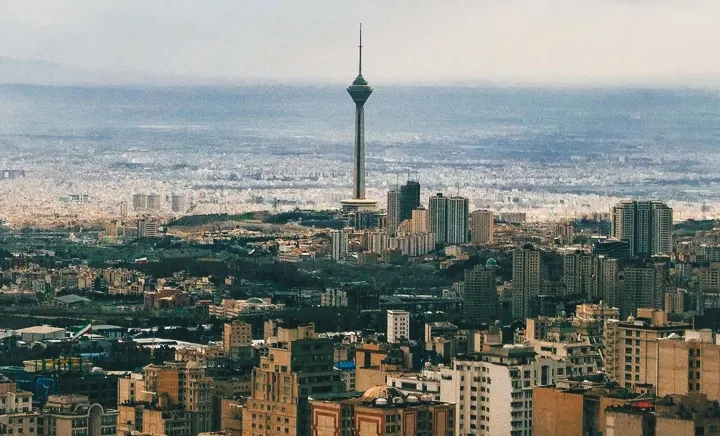
ASIATODAY.ID, TEHRAN – Iran is facing its deepest multidimensional crisis since the post–Cold War era, as the national currency plunges to historic lows, inflation surges beyond 40 percent, and nationwide protests spread across all provinces. What began as an economic shock has evolved into a broader crisis of political legitimacy and human rights.
Domestic pressure is now compounded by mounting international scrutiny, with the United Nations issuing strong criticism over the Iranian authorities’ response to largely peaceful demonstrations.
Rial Collapse Erodes Public Confidence
According to Fars News Agency, Iran’s currency has fallen to between 1.4 million and 1.47 million rials per US dollar on the open market, marking the weakest level in modern Iranian history. The sharp depreciation reflects declining public confidence in the government’s ability to stabilize the economy.
Fars reported that the currency pressure stems from a combination of falling oil revenues, restricted access to foreign exchange due to international sanctions, and domestic policies that have failed to build sufficient reserves or long-term economic resilience.
Inflation Crushes Purchasing Power
The currency crisis has been exacerbated by annual inflation exceeding 42 percent. Official data cited by Fars News Agency indicate that prices of basic necessities—particularly food—have risen by more than 70 percent year-on-year.
The surge has significantly eroded household purchasing power and narrowed the economic space for Iran’s middle class, long regarded as a key pillar of social and political stability.
Economic Protests Escalate into Political Crisis
The current wave of protests began in late December 2025 with the closure of bazaars and commercial centers in Tehran. Merchants protested the rial’s collapse, which has severely disrupted imports and pricing mechanisms.
Within days, the demonstrations evolved into a nationwide movement involving traders, workers, students, and middle-class citizens across all 31 provinces. Demands expanded beyond economic grievances to include criticism of economic mismanagement, structural corruption, and political restrictions.
Security Crackdown and Nationwide Internet Shutdown
In response to the escalating unrest, Iranian authorities imposed a series of restrictive measures, including mass arrests, clashes between protesters and security forces, and a nationwide internet shutdown beginning in early January 2026.
Domestic media reports indicate that hundreds of people have been killed and thousands detained. The internet blackout has been widely interpreted as an effort to curb information flows and prevent coordination among protesters.
Middle Class Joins Protests, Regime Stability Tested
The participation of traditional merchants and middle-class citizens has emerged as one of the most serious indicators of the crisis confronting the government. These groups have historically served as a stabilizing force within Iranian society.
However, persistent inflation, the erosion of savings, and growing economic uncertainty have pushed them into the streets, deepening the regime’s legitimacy challenge.
Structural Failures Beyond Sanctions
Analysts argue that Iran’s crisis cannot be attributed solely to international sanctions. Long-standing dependence on oil rents, weak industrial diversification, and elite-dominated patronage networks are widely cited as structural causes.
Sanctions, they say, have accelerated existing vulnerabilities. As oil revenues shrink and geopolitical pressure intensifies, structural weaknesses have surfaced in the form of currency collapse, runaway inflation, and social unrest.
Reforms Seen as Late and Superficial
Government measures—including changes in central bank leadership and promises of monetary reform—have been widely criticized as delayed and insufficient. The regime’s reliance on economic controls to maintain political stability has, critics argue, constrained the scope of reforms needed for meaningful recovery.
This dynamic has created a growing contradiction between elite interests and the broader requirements of national economic stabilization.
UN: Killing of Peaceful Protesters Must Stop
As the crisis escalates, international pressure has intensified. UN High Commissioner for Human Rights Volker Türk expressed deep concern over reports of excessive force used against peaceful demonstrators.
In a statement issued on January 13, 2026, Türk said he was “shocked and alarmed” by reports that hundreds of protesters had been killed and thousands arrested.
“The killing of peaceful demonstrators must stop. Labelling protesters as ‘terrorists’ to justify violence against them is unacceptable,” Türk said.
He urged Iranian authorities to immediately halt all violence and repression, restore full access to the internet and telecommunications, and open space for dialogue.
Nationwide Protests Since December 28
According to the UN Human Rights Office, protests have continued since December 28, 2025, spreading nationwide and driven by high inflation, soaring food prices, and the collapse of the rial.
Türk noted that the pattern mirrors the state’s response to major protests in 2022, when demands for fundamental change were similarly met with force.
“Once again, the authorities’ response has been to use brutal force to suppress legitimate demands for change,” he said.
Concerns Over Death Penalty and Human Rights Violations
The UN has also voiced serious concern over reports that the death penalty could be applied to protesters through expedited judicial processes. The nationwide internet shutdown imposed since January 8, 2026, has been criticized for undermining freedom of expression, disrupting emergency services, and obstructing independent human rights monitoring.
UN reports indicate hospitals are overwhelmed with casualties, including children, while verification efforts are hampered by information restrictions.
UN Experts: Iran Violating International Law
Separately, a group of independent UN human rights experts stated that the use of lethal force against peaceful protesters, arbitrary arrests, and attacks on medical facilities constitute serious violations of international human rights law.
They documented the use of firearms, metal pellets, tear gas, beatings, and hospital raids. More than 2,600 people, including schoolchildren, have reportedly been detained.
The experts warned that implementing death sentences would compound street-level killings with state-sanctioned executions.
Iran at a Critical Juncture
The collapse of the rial, soaring inflation, nationwide protests, and strong UN condemnation underscore the comprehensive nature of Iran’s crisis—spanning the economy, politics, and human rights.
Iran now stands at a dangerous crossroads: pursue deep structural reforms that threaten entrenched elite interests, or continue repression that further erodes state legitimacy.
For many citizens and international observers, one conclusion is increasingly difficult to ignore: Iran is failing to perform the most basic functions of a state—ensuring a dignified and secure life for its people. (AT Network)
Follow Us at Google News and WA Channel