
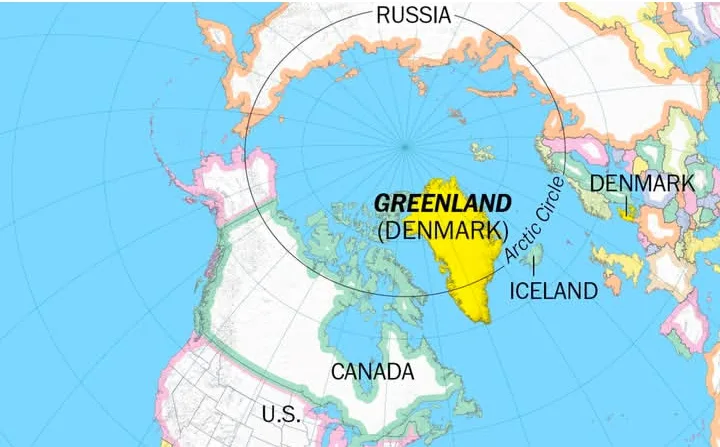
ASIATODAY.ID, OSLO – NATO’s rhetoric of solidarity is once again under scrutiny. As geopolitical pressure over Greenland intensifies, Denmark is increasingly being forced to rely on its own capabilities to defend its Arctic territory.
Support from NATO allies such as France and Germany has so far amounted to little more than the deployment of a small number of troops and vague promises of deeper military cooperation in the future.
The Danish government has announced a massive USD 13.7 billion investment to strengthen Arctic security, covering Greenland and the Faroe Islands. The move follows growing concern over repeated statements by US President Donald Trump, who has openly floated the idea of taking control of Greenland—remarks that Danish officials no longer dismiss as mere political theatrics.
Ironically, the pressure facing Copenhagen does not primarily come from Russia or China, but from its closest ally. Washington’s increasingly unilateral actions on the global stage—including the recent capture of Venezuelan President Nicolás Maduro by US special forces—have rattled European capitals and raised serious questions about the credibility of NATO’s collective defense commitments.
No concrete agreement emerged from an open discussion held at the White House on January 14 between officials from Denmark, Greenland, and the United States. This lack of consensus is particularly alarming given Greenland’s strategic importance, not only as Arctic ice melts and opens new maritime routes, but also because of the island’s vast, untapped energy and mineral resources.
In an official statement, the Danish government said it would expand its military presence in and around Greenland, including the deployment of aircraft, naval vessels, and ground forces.
In practice, however, NATO’s contribution remains largely symbolic. France and Germany have sent only a limited number of personnel and equipment, with no significant deployment of strategic air or naval assets.
Denmark Acts Alone as NATO Lags Behind
Facing the absence of meaningful allied backing, Denmark has chosen to act independently. Its plans focus on strengthening Arctic naval power through the acquisition of five Arctic patrol vessels, enhanced icebreaking capabilities, maritime patrol aircraft with anti-submarine warfare functions, new air-surveillance radar installations in eastern Greenland, and the formation of a dedicated Arctic infantry unit.
The Joint Arctic Command (JAC) headquarters in Nuuk will also be expanded, alongside plans to support the deployment of F-35A fighter jets and unmanned aerial systems to improve situational awareness across the Arctic and the North Atlantic.
Despite the fact that NATO collectively operates dozens of icebreakers, not a single one has been deployed to Greenland. This reality reinforces the perception that the world’s largest military alliance is more adept at issuing statements than delivering decisive action.
Amid lofty rhetoric about solidarity and NATO’s Article 5 commitments, Denmark now finds itself standing on the front line alone.
Greenland has become a critical test: whether NATO is truly a collective defense alliance—or merely a fragile political forum when major strategic interests collide. (ATN)
Follow Us at Google News and WA Channel