
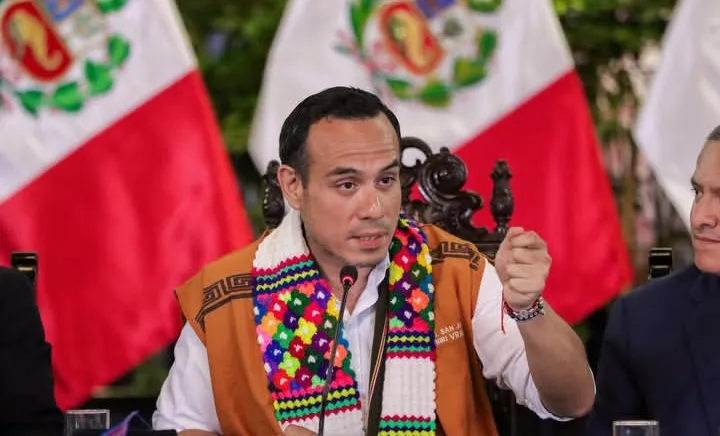
ASIATODAY.ID, PERU – Peru’s Congress has officially removed Interim President José Jerí from office following a decisive impeachment vote on Tuesday, February 17, 2026, plunging the country deeper into political uncertainty just two months before national elections.
The dismissal stems from an alleged corruption scandal dubbed “Chifagate,” involving closed-door meetings between Jerí and two Chinese executives. Lawmakers voted 75 in favor of his removal, 24 against, with three abstentions.
The decision marks yet another chapter in Peru’s prolonged political instability, as the country prepares for presidential and congressional elections scheduled for April 2026.
Allegations of Influence Peddling
The controversy erupted after reports surfaced of a private meeting held in December 2025. One of the Chinese executives reportedly holds an active government contract, while the other is under investigation for alleged illegal logging activities.
Jerí has firmly denied any wrongdoing, insisting the meeting was intended to discuss cultural cooperation between the two nations.
“I have committed no crime,” Jerí said.
Opposition lawmakers, however, argue the encounter raises serious concerns over conflicts of interest and potential influence peddling.
Latest Episode in Ongoing Political Crisis
Jerí assumed the interim presidency on October 10, 2025, replacing Dina Boluarte, who was removed amid a surge in violent crime nationwide.
Since 2016, Peru has seen seven presidents come and go — a stark reflection of chronic political instability in the Andean nation. Jerí’s removal further underscores the fragility of the country’s leadership structure.
Congress is expected to appoint a new interim president from among its members to serve until July 28, 2026, when the winner of the April 12 election is scheduled to be sworn in. Jerí will return to his seat in Congress for the remainder of the transitional term.
Economic Stability Amid Political Turbulence
Despite the ongoing political upheaval, Peru’s economic fundamentals remain relatively stable. Public debt stood at around 32 percent of GDP in 2024 — one of the lowest ratios in Latin America.
As the election approaches, several candidates are gaining momentum, including conservative businessman Rafael López Aliaga and veteran politician Keiko Fujimori.
With “Chifagate” shaking the political landscape, the April elections are shaping up to be a pivotal test for Peru’s democracy — whether the country can restore stability or remain trapped in a cycle of recurring political crises. (AT Network)
Follow Us at Google News and WA Channel