
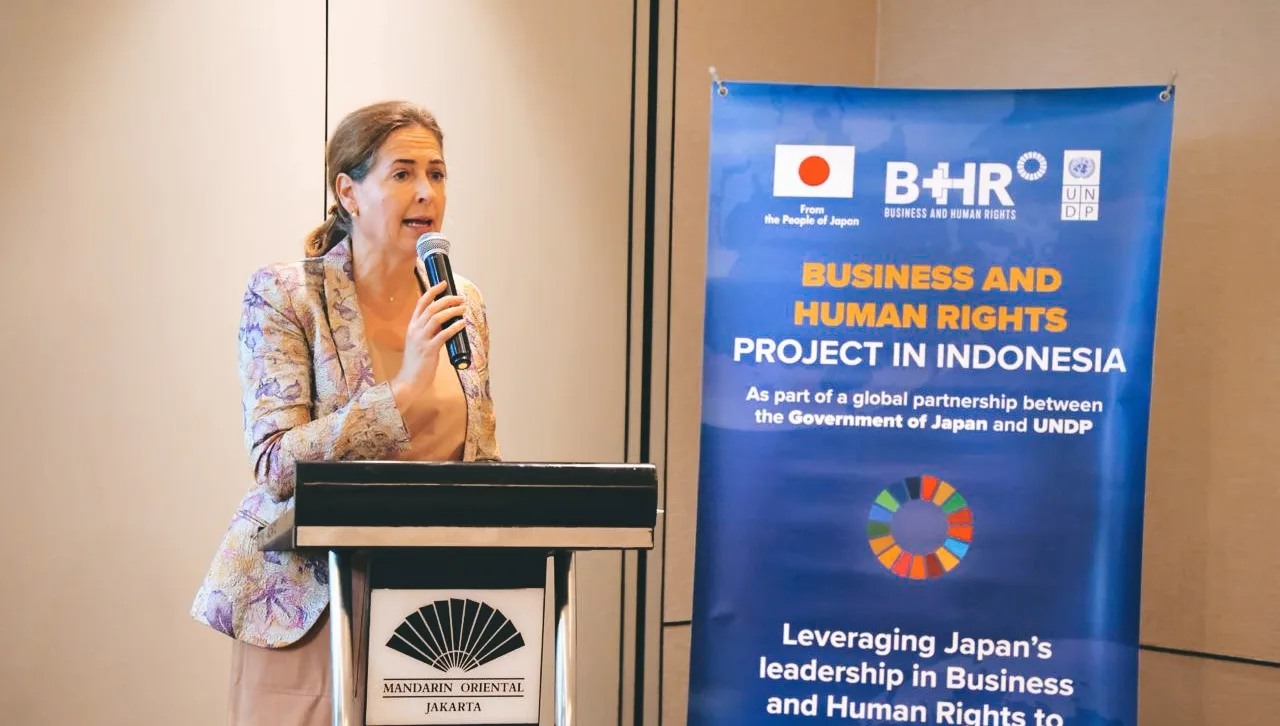
ASIATODAY.ID, JAKARTA — As new global standards on supply chains, human rights, and environmental practices increasingly shape international trade, business leaders from across Southeast Asia gathered in Jakarta today to launch the ASEAN Responsible Business Collective, a regional platform designed to help companies remain competitive and prepared for rapidly evolving regulations.
Funded by the Government of Japan and supported by the United Nations Development Programme (UNDP), the platform aims to bring together companies, industry associations, and diplomatic representatives from across the region.
ASEAN is now the world’s fifth-largest economy, with a combined GDP exceeding US$4 trillion, and plays a central role in global production networks spanning electronics, palm oil, garments, minerals, and digital services.
At the same time, new due diligence and transparency requirements in major markets such as the European Union and Japan are reshaping how companies demonstrate accountability.
For export-dependent economies like Indonesia, which has recorded exports exceeding US$200 billion in recent years, meeting these expectations is increasingly linked to sustained market access.
“The question for companies in Southeast Asia is no longer whether global expectations are changing—because they already have,” said Sara Ferrer Olivella, UNDP Resident Representative in Indonesia.
“The real question is whether businesses have the capacity to adapt quickly to rapidly evolving global standards and remain competitive in markets such as the European Union and Japan. The ASEAN Responsible Business Collective promotes collaboration to find practical solutions and move from commitment to implementation.”
Unlike traditional policy forums, the ASEAN Responsible Business Collective is designed as a space where companies can address real operational challenges, ranging from supply chain traceability to grievance mechanisms and corporate governance.
The launch event brought together a wide range of business stakeholders, including Global Compact Networks from Malaysia, the Philippines, Singapore, and Thailand; the Vietnam Chamber of Commerce; and representatives from Indonesian industry groups across manufacturing, agriculture, digital services, mining, finance, and infrastructure.
In addition to the launch of the Collective, a key highlight of the event was a session on UNDP’s latest research, “Human Rights vs. Competitiveness — A False Dilemma?”, which analyzed 235 global companies operating in high-risk sectors. The study found no evidence that stronger human rights performance undermines financial outcomes.
On the contrary, the research indicates that companies with stronger human rights practices are more efficient in converting their assets into profits. This suggests that better-managed supply chains and stronger worker protections can enhance business performance.
The findings challenge the long-standing assumption that responsible business practices weaken competitiveness and instead show that respect for human rights can strengthen operational efficiency and long-term resilience.
Kazuo Chujo, Deputy Head of Mission of Japan to ASEAN, welcomed the initiative, stating:
“As we face increasingly complex and unpredictable challenges, the resilience and sustainability of the ASEAN economy—supported by strong and trusted supply chains—are becoming ever more important. Today’s discussions, including shared learning through peer platforms, will be an important step in addressing unprecedented global challenges.”
As ASEAN continues positioning itself as a major hub for manufacturing and investment, the launch of the ASEAN Responsible Business Collective signals a coordinated regional effort to help companies meet evolving global standards while maintaining growth and credibility in international markets. (AT Network)
Follow Us at Google News and WA Channel