
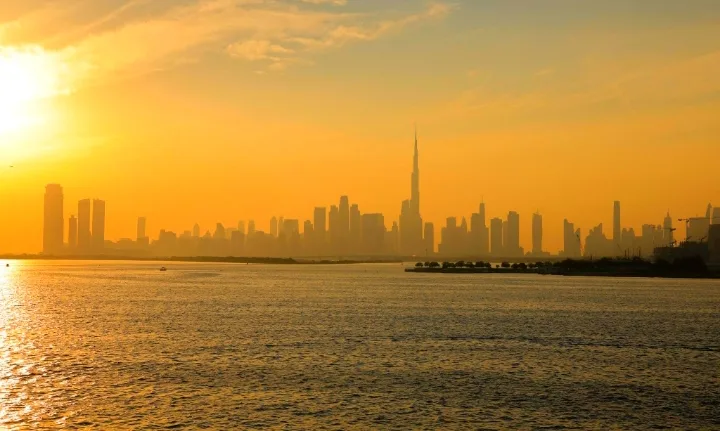
DUBAI — a city famous for spotless streets, strict security, discreet banking, and red carpets rolled out for the global elite — is facing one of the biggest tests to its reputation.
For decades, the largest city in the United Arab Emirates built its image as a safe haven for wealth, tourism, and global finance. But the regional conflict involving Israel and Iran, with the strategic involvement of the United States, is now exposing how vulnerable that reputation may be.
As geopolitical tensions escalate across the Middle East, Dubai is confronting a harsh reality: a global brand carefully built over decades can unravel in a matter of weeks.
A Millionaire’s Refuge in the Middle East
Dubai’s rise as the Arab world’s most cosmopolitan city did not happen by accident. It was the result of a long-term strategy by the UAE’s leadership to transform the desert emirate into a global hub.
Tourists with money to spend found a playground of luxury hotels, high-end shopping, and world-class entertainment. Investors discovered a business-friendly ecosystem that welcomed foreign capital, though often requiring local partnerships outside special economic zones.
The strategy paid off.
Dubai’s population surged from about 2 million in 2011 to nearly 4 million by 2025. Strikingly, about 90 percent of residents are foreign-born.
Among them are roughly 81,200 millionaires and around 20 billionaires, making Dubai one of the world’s most concentrated centers of wealth.
The Great Expat Exodus
When regional conflict intensified, confidence in Dubai’s stability began to wobble.
Reports indicate that tens of thousands of expatriates left the city during the first week of hostilities, particularly those with the financial means to relocate quickly.
The price of evacuating a family of four on a private jet reportedly soared to $250,000.
Major international companies also began implementing contingency plans. Several global firms instructed employees in the Gulf to work remotely or temporarily relocate outside the region.
Financial markets reacted swiftly.
Dubai’s Real Estate and Construction Index (DFMRE) plunged nearly 30 percent within two weeks, reflecting growing investor anxiety over the city’s future.
Is the “Dubai Dream” Ending?
At street level, uncertainty is becoming visible.
A Pakistan-born taxi driver told international media that business had collapsed after his vehicle was damaged during a missile strike.
“We are thinking of moving to another country now. Everybody knows Dubai is finished. There is no business, no tourism, and no income since this war,” he said.
Influencers who helped build Dubai’s glamorous global image are also facing tighter restrictions. Authorities have warned that posting content that could disturb “public order” or “national unity” may lead to heavy fines or even imprisonment.
Meanwhile, wealthy residents have their own concerns. Some reports indicated that transferring funds to financial hubs such as Singapore was temporarily disrupted during the early days of the escalation.
A Bigger Storm on the Horizon
Although Dubai remains far from collapse, deeper risks are emerging.
Strikes targeting data centers operated by Amazon Web Services in the Gulf — reportedly linked to intelligence and AI infrastructure — have raised alarms about the region’s digital backbone.
Energy and trade routes are also at risk. Any disruption to shipping through the strategically critical Strait of Hormuz could severely affect food and energy supplies across the Gulf.
Even desalination plants, which provide most of the region’s drinking water, could become potential targets in an expanded conflict scenario.
Bruised — But Not Broken
For now, Dubai may be wounded but far from defeated.
Yet the unfolding geopolitical crisis has revealed a structural vulnerability: the city’s economic model depends heavily on regional stability, international investment, and uninterrupted tourism flows.
If the conflict drags on, a pressing question will remain:
Will Dubai continue to thrive as the world’s millionaire capital, or will it become another casualty of great-power geopolitics? (RT)
Follow Us at Google News and WA Channel