
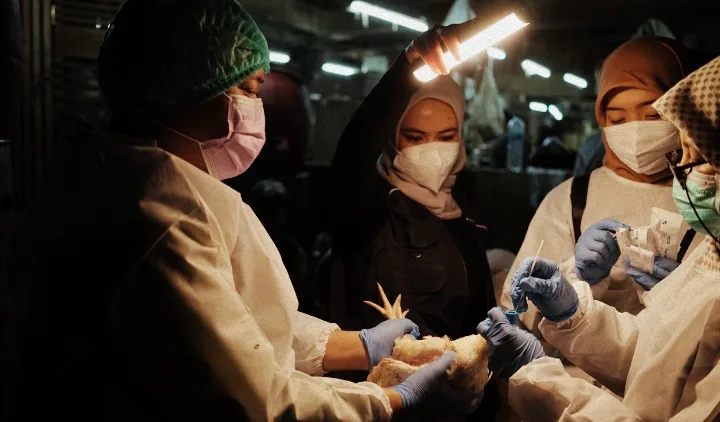
ASIATODAY.ID, JAKARTA – On World Health Day, the World Health Organization (WHO) highlighted the serious threat of zoonotic diseases looming over Indonesia, while also praising the government’s swift efforts to strengthen the One Health approach—a coordinated strategy that links human, animal, and environmental health.
Behind the recognition, however, lies a stark warning: Indonesia is on the front line of potentially deadly outbreaks originating from animals and environmental exposure.
A Real Threat: 75 Percent of Emerging Diseases Come from Animals
WHO revealed alarming figures—more than 60 percent of known infectious diseases and up to 75 percent of emerging diseases originate from animals.
Globally, zoonotic diseases infect more than 2 billion people and claim over 2 million lives each year.
As the world’s largest archipelagic nation, Indonesia faces compounded risks driven by climate change, environmental degradation, and increasingly close interactions between humans and animals—factors that heighten the likelihood of major outbreaks.
“Indonesia demonstrates how coordinated multisectoral action can reduce zoonotic risks,” said Dr. N. Paranietharan, WHO Representative to Indonesia, on Tuesday, April 7, 2026.
He stressed the importance of cross-sector collaboration to strengthen early detection and rapid response systems.
From Avian Influenza to Rabies: Priority Threats
Indonesia’s One Health strategy focuses on several high-risk zoonotic diseases:
Avian influenza (bird flu): Integrated surveillance is being piloted in five priority provinces, with traditional poultry markets serving as critical early warning points.
Leptospirosis: Increasing in flood-prone areas, addressed through early detection, rapid treatment, and public awareness.
Anthrax: Tackled through frontline health worker training and acute event monitoring.
Rabies: Focused on vaccination, case management, and community engagement.
These efforts are seen as strengthening national preparedness while reducing mortality in high-risk regions.
One Health: A Key Weapon Against Global Health Crises
The One Health approach is becoming increasingly vital as health threats intensify due to climate change and environmental disruption. Indonesia is emerging as a key driver of this strategy across the ASEAN region.
This commitment will be reinforced at the upcoming One Health Summit, which will bring together world leaders to push for science-based, coordinated global action.
In addition, WHO’s global forum emphasized the importance of sustained investment through its network of more than 800 collaborating centres worldwide, including two in Indonesia focused on nursing, midwifery, and the prevention of hearing loss.
Health Alert: An Outbreak Could Strike at Any Time
WHO’s warning sends a clear signal: zoonotic threats are not hypothetical—they are real risks that could erupt at any moment.
Without stronger cross-sector coordination and robust health system preparedness, the consequences could surpass those of previous pandemics.
Indonesia may be earning praise—but at the same time, the world is sounding the alarm: the window to act is rapidly closing. (AT Network)
Follow Us at Google News and WA Channel