
ASIATODAY.ID, JAKARTA – Strategic straits are not merely narrow waterways between landmasses—they are the arteries of the modern world.
Through these tight corridors flow global commerce, energy supplies, and geopolitical power. When they operate smoothly, the world economy hums. When they are disrupted, the consequences ripple across continents within days.
Narrow Passages, Global Consequences
More than 80 percent of global trade moves by sea. Yet much of this flow is funneled through a handful of narrow chokepoints.
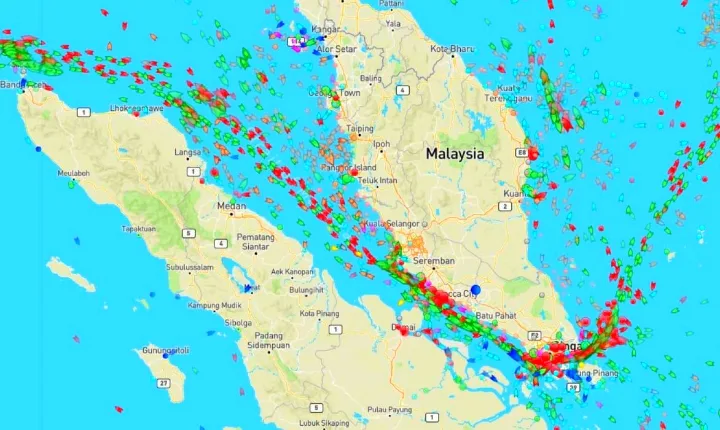
Among the most critical is the Strait of Malacca, linking the Indian Ocean with the South China Sea. Over 100,000 vessels transit this route annually, carrying energy and goods from the Middle East to East Asia’s industrial giants.
Equally vital is the Strait of Hormuz, the main exit for oil from the Persian Gulf. Nearly one-third of the world’s seaborne oil supply passes through this narrow corridor, making it one of the most sensitive in global energy security.
Meanwhile, the Suez Canal and the Panama Canal demonstrate how human engineering has created artificial chokepoints that dramatically reshape global logistics.
Geopolitics at the World’s Most Sensitive Points
Strategic straits are not just economic corridors—they are arenas of power.
Tensions around the Strait of Hormuz frequently trigger volatility in global oil prices. Instability near the Bab el-Mandeb threatens access to the Suez Canal, disrupting trade between Asia and Europe.
In Europe, the Bosporus Strait stands as a unique geopolitical gateway—bridging continents while serving as a strategic control point shaped by empires past and alliances present.
When One Route Fails, the World Feels It
The fragility of these chokepoints became evident in 2021, when the Ever Given container ship blocked the Suez Canal. Within days, hundreds of vessels were stranded, supply chains stalled, and billions of dollars in trade were delayed.
The incident exposed a critical: the global economy depends heavily on a few narrow passages. Disrupt one, and the shockwaves spread worldwide.
Indonesia at the Crossroads of Global Shipping
As the world’s largest archipelagic state, Indonesia occupies a pivotal position in global maritime routes. The Sunda Strait and the Lombok Strait serve as key alternatives for large vessels unable to transit the Strait of Malacca.
Through its Archipelagic Sea Lanes (ALKI), Indonesia not only safeguards its sovereignty but also plays a crucial role in maintaining the flow of international trade. This geographic advantage positions Indonesia as both a maritime gatekeeper and an emerging geopolitical force.
The Future: Risk, Rivalry, and Reinvention
Looking ahead, strategic straits will face mounting pressure from climate change, regional conflicts, and great-power competition. Melting Arctic ice is even opening new for alternative shipping routes, potentially reshaping global trade patterns.
Yet one reality remains unchanged: as long as the world depends on maritime, these narrow waterways will continue to function as the vital valves of the global economy—small in size, but immense in consequence.
Straits embody a modern paradox: geographically narrow, yet globally decisive. Within their constrained waters lie the forces that drive economies, shape geopolitics, and determine the resilience of global systems. And when these arteries are blocked, the world does not merely slow down—it risks coming to a standstill. (ATN)
Follow Us at Google News and WA Channel