
ASIATODAY.ID, JAKARTA – The Indonesian government has expressed confidence that the national economy will expand at a stronger pace in 2027, targeting growth of 5.8 percent to 6.5 percent as a crucial stepping stone toward achieving the country’s ambitious 8 percent economic growth target by 2029.
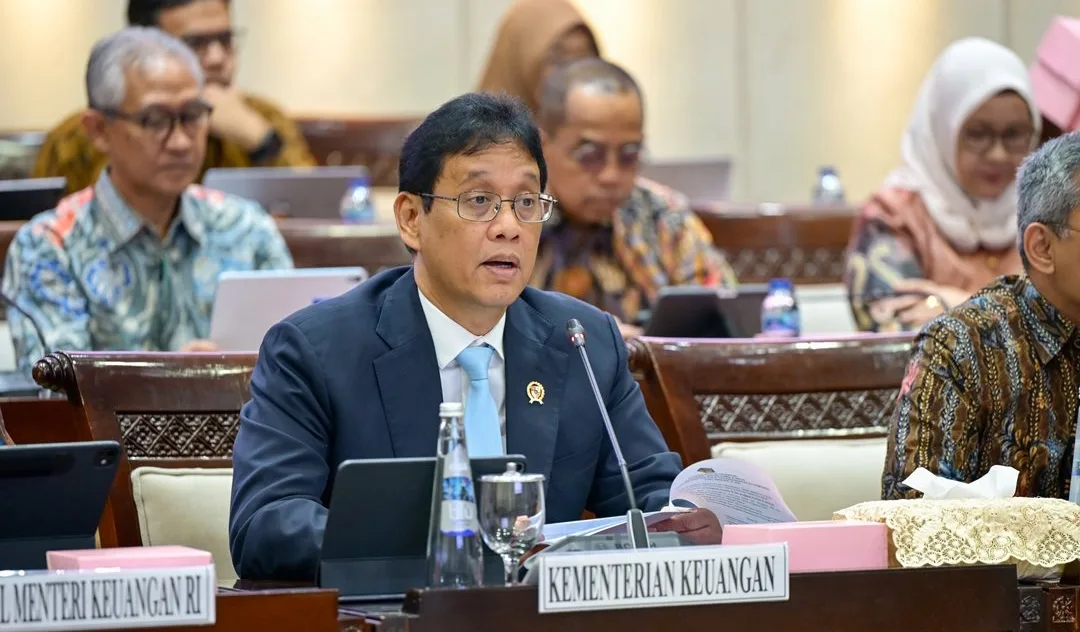
The projection was announced by Finance Minister Purbaya Yudhi Sadewa while presenting the government’s response to parliamentary factions regarding the 2027 Macroeconomic Framework and Fiscal Policy Guidelines (KEM PPKF) during a plenary session of the House of Representatives (DPR) in Jakarta.
According to Purbaya, the growth target has been formulated with a balance of optimism and prudence, taking into account persistent global economic uncertainties. The government believes that Indonesia’s strong economic fundamentals will provide a solid foundation for navigating external challenges.
“This 2027 Macroeconomic Framework and Fiscal Policy Guidelines is the first in history to be presented directly by the President,” Purbaya told lawmakers.
“It is also my first KEM PPKF as Minister of Finance.”
The government views 2027 as a critical year for accelerating Indonesia’s economic transformation. Fiscal policy will therefore be directed toward stimulating economic activity, encouraging investment, creating jobs, and improving public welfare.
To support the growth target, the government has outlined key macroeconomic assumptions for 2027. Inflation is expected to remain within the range of 1.5 percent to 3.5 percent, while the rupiah exchange rate is projected to trade between Rp16,800 and Rp17,500 per U.S. dollar. The yield on 10-year government bonds is forecast at 6.5 percent to 7.3 percent, and the Indonesian Crude Price (ICP) is assumed to range from US$70 to US$95 per barrel.
On the fiscal front, the government plans to maintain a budget deficit of 1.8 percent to 2.4 percent of Gross Domestic Product (GDP). State revenue is projected at 11.82 percent to 12.40 percent of GDP, while government expenditure is expected to reach 13.62 percent to 14.80 percent of GDP.
Public spending will be concentrated on eight national priority clusters, including food security, energy and water resilience, education, healthcare, downstream industrial development, housing and disaster resilience infrastructure, rural and people-centered economic development, and poverty reduction.
The government also intends to improve the effectiveness of social protection programs by gradually shifting subsidies and social assistance toward a more targeted beneficiary-based system using the National Socioeconomic Single Data Registry (DTSEN).
Strong Fundamentals Support 2027 Outlook
The government’s confidence in the 2027 growth target is underpinned by Indonesia’s solid economic performance throughout 2026.
Speaking before Commission XI of the DPR, Finance Minister Purbaya reported that the economy grew 5.61 percent in the first quarter of 2026, while annual inflation remained under control at 3.08 percent in May 2026.
Indonesia also continued to record a trade surplus, supported by foreign exchange reserves equivalent to 5.6 months of imports, highlighting the resilience of the country’s external sector despite ongoing global volatility.
“The manufacturing sector showed improvement in May 2026, indicating stronger production activity and providing a positive signal for sustained economic growth going forward,” Purbaya said.
Entering the second quarter of 2026, several indicators pointed to strengthening domestic demand. Consumer confidence remained robust, reflected in rising household spending and improved consumer sentiment indices.
Economic activity also gained momentum, supported by increased automobile and motorcycle sales, higher electricity consumption, and stronger cement demand—key indicators of domestic economic expansion.
Although the rupiah continued to face pressure from global market sentiment and investor risk aversion, the government remains optimistic that the currency will gradually strengthen in the second half of 2026.
Purbaya emphasized that stronger coordination among fiscal, monetary, and financial-sector policies, combined with reforms to export earnings management and deeper domestic financial markets, would help boost foreign-exchange liquidity and investor confidence.
Foreign capital inflows have already shown significant improvement during the second quarter of 2026, particularly into government bonds and Bank Indonesia’s rupiah securities. While the stock market still recorded some outflows, investor interest in Indonesian financial assets remained broadly intact.
To sustain growth momentum, the government continues to implement a range of strategic measures, including maintaining stable fuel and food prices, ensuring sufficient energy and rice supplies, accelerating public spending, preserving fiscal discipline, and providing targeted stimulus to support household purchasing power and business activity.
With strong economic fundamentals, stable macroeconomic conditions, and a prudent yet growth-oriented fiscal strategy, the government believes Indonesia is well-positioned to achieve economic growth of up to 6.5 percent in 2027, paving the way toward becoming a high-income economy by the end of the decade. (AT Network)
Follow Us at Google News and WA Channel