
ASIATODAY.ID, WASHINGTON – The 2026 FIFA World Cup has already delivered one of its biggest early stories: Asia’s representatives are proving they can compete with the world’s football elite.
After the opening round of matches, Asian teams remain unbeaten, sending a strong message that the continent’s footballing rise is no longer a future ambition—it is happening now.
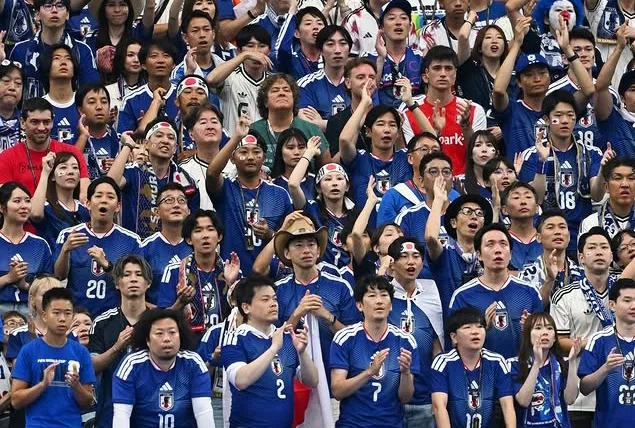
Japan became the latest Asian nation to impress after securing a dramatic 2-2 draw against the Netherlands on Monday. The Samurai Blue appeared headed for defeat before Daichi Kamada struck in the 89th minute, rescuing a valuable point and extending Asia’s remarkable unbeaten run in the tournament.
The result further highlights the growing competitiveness of Asian football on the global stage. Earlier in the tournament, South Korea opened its campaign with a hard-fought 2-1 victory over the Czech Republic, thanks to goals from Hwang In-beom and Oh Hyeon-gyu.
Australia also made a strong statement, defeating Turkey 2-0 through goals from Nestory Irankunda and Connor Metcalfe to secure all three points in its opening match.
Meanwhile, Qatar demonstrated resilience against Switzerland. After falling behind to a Breel Embolo penalty in the 17th minute, the Gulf nation fought back and earned a 1-1 draw in stoppage time following an own goal by Miro Muheim.
With five matches played involving Asian representatives, the continent has yet to suffer a defeat at the 2026 World Cup. The impressive start marks one of the strongest opening performances by Asian teams in the history of the tournament.
The achievement could become even more significant in the coming days. Several Asian nations—including Iran, Iraq, Jordan, and Uzbekistan—have yet to play their opening matches. Jordan and Uzbekistan, both World Cup debutants, are among the teams attracting considerable attention.
Historically, Asia’s greatest World Cup achievement remains South Korea’s run to the semifinals as co-hosts of the 2002 tournament. More than two decades later, however, a new generation of Asian teams appears ready to challenge established football powers.
Japan has held the Netherlands, South Korea and Australia have secured victories, and Qatar has taken points from Switzerland. Collectively, they have demonstrated that the gap between Asia and the traditional football giants is narrowing faster than many expected.
The 2026 World Cup is still in its early stages, but Asia has already emerged as one of the tournament’s most compelling stories—capturing global attention and reshaping perceptions of the continent’s place in world football. (AT Network)
Follow Us at Google News and WA Channel