
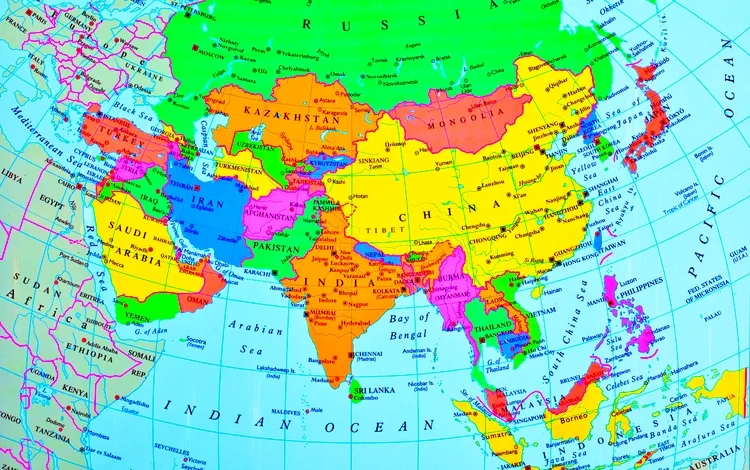
ASIATODAY.ID, JAKARTA — Asia has further solidified its position as the world’s leading economic force, accounting for the majority of global growth while controlling more than half of the world’s foreign exchange reserves, according to the latest data released by the International Monetary Fund (IMF).
The combined findings from the IMF’s Quarterly Gross Domestic Product (GDP) report and its International Reserves and Foreign Currency Liquidity (IRFCL) database paint a clear picture: Asia is not only the engine of global economic expansion but also the world’s strongest financial buffer against external shocks.
The IMF reported that the global economy expanded by 0.7% in the first quarter of 2026, maintaining the same pace recorded in the previous quarter despite persistent geopolitical tensions and global economic uncertainty.
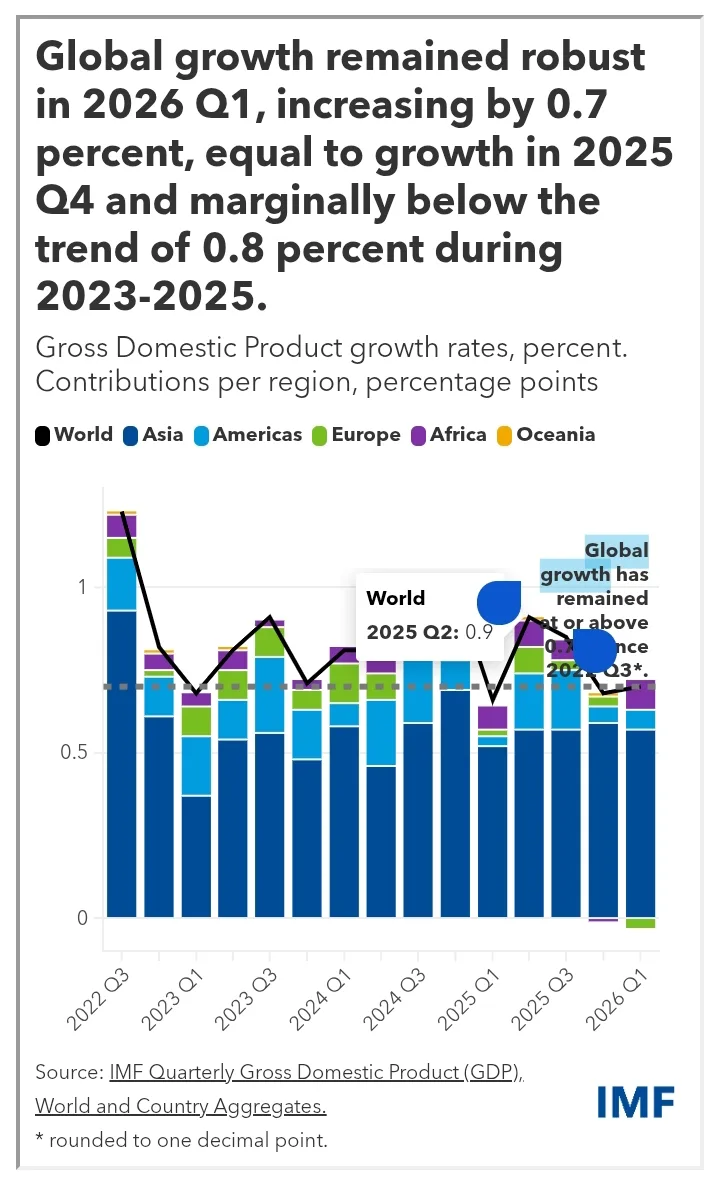
Asia was the dominant contributor, adding 0.6 percentage points—or more than 85%—of total global growth. The region itself expanded by 1.1% during the quarter, continuing a streak of quarterly growth above 1% that has largely persisted over the past two years.
By contrast, the Americas, Europe, Africa, and Oceania together contributed only 0.1 percentage points to global growth, highlighting Asia’s increasingly central role in sustaining the world economy.
The region’s economic momentum is matched by its financial strength.
According to the IMF’s latest foreign exchange reserve data, seven Asian economies—China, Japan, Taiwan, India, Hong Kong, South Korea, and Singapore—collectively hold nearly US$7 trillion in foreign exchange reserves, representing more than half of the world’s estimated US$13 trillion in reserve assets, excluding gold.
China remains the world’s largest reserve holder with US$3.41 trillion, followed by Japan with US$1.26 trillion. Switzerland ranks third globally, while Taiwan, India, Hong Kong, South Korea, and Singapore complete the group of the world’s largest reserve-holding economies.
The concentration of reserves reflects decades of export-led industrialization, persistent trade surpluses, and prudent macroeconomic management across Asia.
Economists also view the region’s substantial reserve accumulation as a lasting legacy of the 1997 Asian Financial Crisis, when several economies experienced sharp currency depreciations and severe capital outflows.
Since then, Asian governments and central banks have prioritized building strong reserve buffers to stabilize exchange rates, finance strategic imports, meet external debt obligations, and safeguard investor confidence during periods of financial stress.
The IMF data also underscore the unique position of the United States. Although it remains the world’s largest economy, the U.S. ranks only 13th in foreign exchange reserves with US$244.6 billion.
This reflects the international dominance of the U.S. dollar, which serves as the world’s primary reserve currency and enables the United States to meet many external obligations without maintaining exceptionally large foreign currency reserves.
While maintaining vast reserve holdings comes with opportunity costs—since much of the capital is invested in relatively low-yield but highly secure assets—the strategy has proven effective in strengthening resilience against financial volatility and external economic shocks.
Taken together, the latest IMF figures point to a broader shift in the global economic landscape. Asia is no longer simply the world’s manufacturing center; it has become the principal driver of global economic growth, the largest repository of international liquidity, and an increasingly indispensable anchor of global financial stability.
As uncertainty continues to reshape the international economy, Asia’s combination of sustained growth and unparalleled foreign exchange reserves is likely to reinforce its influence over global trade, investment, and the future direction of the international financial system. (AT Network)
Follow Us at Google News, WA Channel, and LinkedIn