
ASIATODAY.ID, JAKARTA — Indonesia is stepping up its ambition to become a global powerhouse in the blue economy after strengthening its strategic partnership with the United Nations Development Programme (UNDP). The expanded collaboration aims to accelerate sustainable marine development through innovative financing, blue carbon markets, and downstream seaweed industries.
The commitment was reaffirmed during a bilateral meeting between Indonesia’s Minister of Marine Affairs and Fisheries, Sakti Wahyu Trenggono, and UN Assistant Secretary-General as well as UNDP Regional Director for Asia and the Pacific, Kanni Wignaraja on June 29.
Trenggono said the partnership aligns with the UNDP Country Programme Document (CPD) 2026–2030, which identifies the blue economy and carbon markets as strategic priorities, consistent with Indonesia’s five flagship blue economy programs.
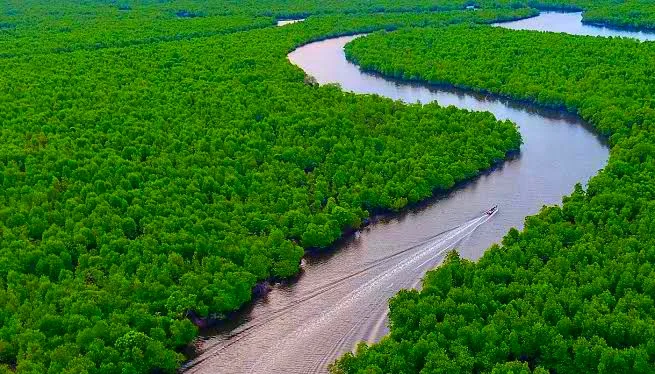
Indonesia is widely regarded as one of the world’s most resource-rich maritime nations. According to the minister, the country holds approximately 17 percent of the world’s blue carbon reserves, giving it a significant strategic advantage in developing carbon markets while strengthening the conservation of coastal and marine ecosystems.
To unlock this potential, Indonesia is proposing broader access to climate finance through the Blue Financing Window and the development of the Indonesia Critical Marine Habitat Facility (ICMHF), a sustainable financing mechanism designed to support marine conservation and fisheries development.
The partnership also focuses on improving the resilience and livelihoods of small-scale fishing communities. Existing joint programs in Morotai and the Tanimbar Islands have strengthened fisheries governance, enhanced local capacity, and introduced low-carbon technologies to improve productivity while reducing environmental impacts.
Trenggono highlighted the success of the JSB seaBLUE initiative, saying the project has demonstrated that blue economy practices can reduce post-harvest losses, improve seafood quality, lower operational costs for fishers, and create tangible economic benefits for coastal communities.
For its part, UNDP described Indonesia as a strategic partner in advancing the blue economy across the Asia-Pacific region.
Kanni Wignaraja said investments in the marine sector generate both environmental and economic returns by protecting ecosystems while creating inclusive opportunities for coastal populations.
UNDP reaffirmed its commitment to supporting Indonesia in expanding innovative financing, developing blue carbon markets, conserving marine ecosystems, strengthening the seaweed industry, and mobilizing sustainable investment to accelerate long-term ocean-based economic growth.
With one of the world’s largest marine resources and vast blue carbon potential, Indonesia is increasingly positioning the blue economy as a key pillar of its future development strategy, seeking to balance economic growth, climate action, and marine conservation while strengthening its role in the global sustainable economy. (AT Network)
Follow Us at Google News, WA Channel, and LinkedIn