
ASIATODAY.ID, JAKARTA — Indonesia is accelerating its transition from a major exporter of raw nickel to a global manufacturing hub for electric vehicles (EVs), as the government intensifies efforts to build an integrated domestic supply chain spanning nickel processing, battery production, vehicle manufacturing, and charging infrastructure.
The strategy is central to Indonesia’s broader downstream industrialization agenda, which aims to capture greater value from the country’s vast mineral resources while strengthening its position in the rapidly expanding global clean energy economy.
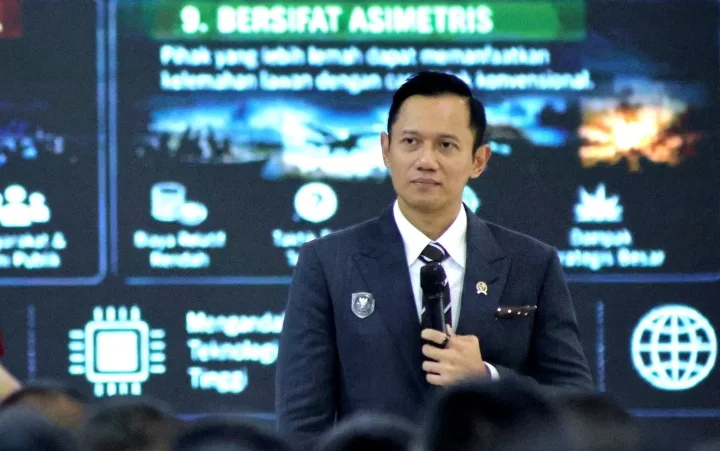
Coordinating Minister for Infrastructure and Regional Development Agus Harimurti Yudhoyono (AHY) said Indonesia should no longer depend on exporting raw nickel, arguing that the country’s competitive advantage lies in transforming its abundant resources into high-value industrial products.
“Simply exporting nickel means we are only selling raw materials. Indonesia must build industries capable of converting nickel into batteries and batteries into electric vehicles,” AHY said in Jakarta on Monday.
Indonesia is the world’s largest nickel producer and holds the largest known nickel reserves, making it a critical supplier of one of the most important minerals used in lithium-ion batteries. As global demand for EVs continues to rise, the government is seeking to move further up the value chain by attracting investment in battery manufacturing, EV production, and related industries.
AHY said Indonesia also possesses the human capital and engineering expertise needed to compete with established global manufacturers.
Referring to China’s emergence as a global EV leader, he said the country’s success was built through long-term investment in research, technological innovation, and industrial development.
“Indonesia has the capability and capacity to achieve the same. We should not be afraid to compete globally,” he said.
To strengthen domestic manufacturing, AHY called for a gradual increase in local content across the EV industry while expanding technology partnerships, joint research, and collaborative production with international companies.
The government is also prioritizing the development of a nationwide EV ecosystem through investment incentives, expansion of the domestic battery supply chain, and accelerated deployment of public charging infrastructure.
Speaking at the launch of Grab Indonesia’s Green Movement campaign in Jakarta, AHY reaffirmed the government’s commitment to expanding public EV charging stations across the country to encourage wider adoption of electric vehicles and support long-distance mobility.
He said electrifying transportation is a key component of Indonesia’s energy transition, noting that the energy sector accounts for around 55 percent of the country’s carbon emissions, while transportation contributes approximately 22 percent, with road transport responsible for nearly 89 percent of transport-related emissions.
AHY also welcomed Grab Indonesia’s continued expansion of its electric vehicle fleet, which has doubled from around 14,000 units last year to approximately 28,000 units as of June 2026. The company aims to increase the fleet to 42,000 units by the end of the year.
As countries race to secure critical mineral supply chains and expand clean mobility industries, Indonesia is positioning itself not only as a leading supplier of nickel but also as a competitive manufacturing base for batteries and electric vehicles.
By combining downstream mineral processing, industrial investment, technological collaboration, and infrastructure development, Southeast Asia’s largest economy aims to play a significantly larger role in the global EV value chain. (AT Network)
Follow Us at Google News, WA Channel, and LinkedIn