
ASIATODAY.ID, JAKARTA — Indonesia and India have agreed to pursue an ambitious expansion of bilateral trade beyond its current US$25 billion, while deepening cooperation in critical minerals, digital infrastructure, pharmaceuticals, and strategic maritime connectivity, marking a new phase in relations between two of the Indo-Pacific’s largest economies.
The commitment followed talks between Indonesian President Prabowo Subianto and Indian Prime Minister Narendra Modi, who agreed that existing trade volumes fall well short of the potential offered by their rapidly growing economies and a combined population exceeding 1.6 billion.
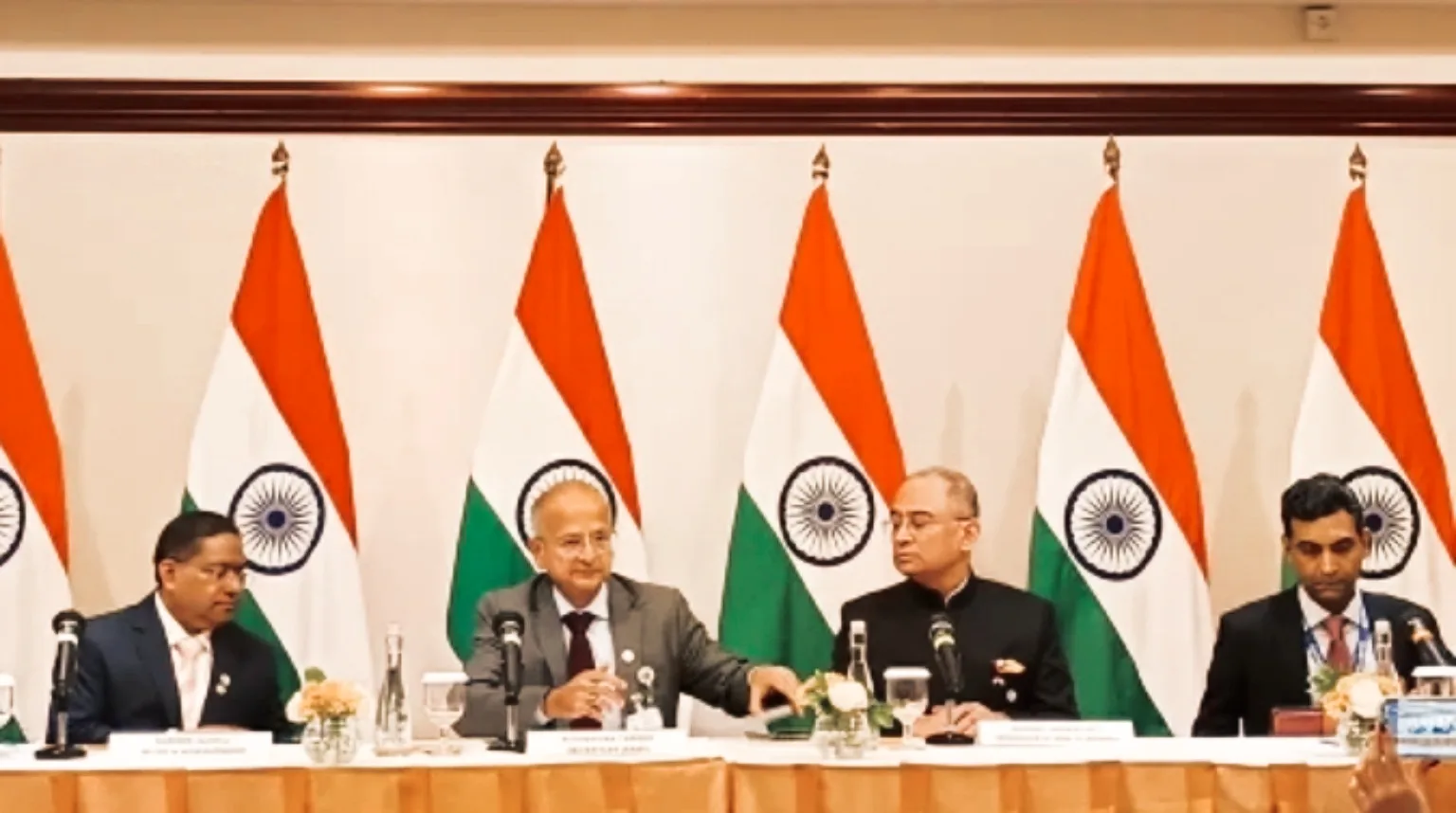
“Our leaders agreed that bilateral trade, currently around US$25 billion, does not adequately reflect the scale of our economies and markets,” Rudrendra Tandon, Secretary (East) at India’s Ministry of External Affairs, told reporters during a press briefing in Jakarta.
To accelerate economic cooperation, both governments identified critical minerals, digital infrastructure, innovation ecosystems, cross-border digital payment systems, pharmaceuticals, food processing, and advanced manufacturing as priority sectors for investment and collaboration.
The emphasis on critical minerals reflects the complementary strengths of the two economies. Indonesia is among the world’s leading producers of nickel and other strategic minerals that are essential for electric vehicle batteries and clean energy technologies, while India is expanding its industrial base and seeking secure supplies of raw materials to support manufacturing and its energy transition.
Digital cooperation is also expected to become a defining pillar of the partnership. The two countries are exploring closer integration of their digital payment systems to facilitate trade, tourism, and cross-border business while supporting broader digital economic growth.
Healthcare featured prominently in the discussions as well. India, one of the world’s largest producers of affordable generic medicines, is expected to deepen cooperation with Indonesia to improve access to quality pharmaceuticals while expanding collaboration in healthcare manufacturing.
Beyond economic priorities, Jakarta and New Delhi agreed to strengthen cooperation across six strategic pillars, including defense and security, maritime affairs, people-to-people exchanges, civilizational ties, and the sharing of development experience.
Strategic infrastructure projects also received renewed attention. Indonesia expressed interest in India’s Great Nicobar Island development initiative, while India reaffirmed its support for the development of Sabang Port in Aceh, whose location near the Malacca Strait gives it strategic importance along one of the world’s busiest maritime trade routes.
According to Tandon, technical teams from both countries have already held two meetings under the Joint Task Force established in 2018, with a third round expected later this year to advance implementation of the Sabang cooperation agenda.
The renewed commitment comes as countries across the Indo-Pacific seek to build more resilient supply chains, strengthen regional connectivity, and secure access to critical resources amid shifting global trade patterns and geopolitical uncertainty.
If successfully implemented, the expanded partnership could elevate Indonesia and India into one of the region’s most influential economic corridors, reinforcing their roles as key drivers of trade, investment, industrial development, and long-term stability across the Indo-Pacific. (AT Network)
Follow Us at Google News, Instagram, WA Channel, and LinkedIn