
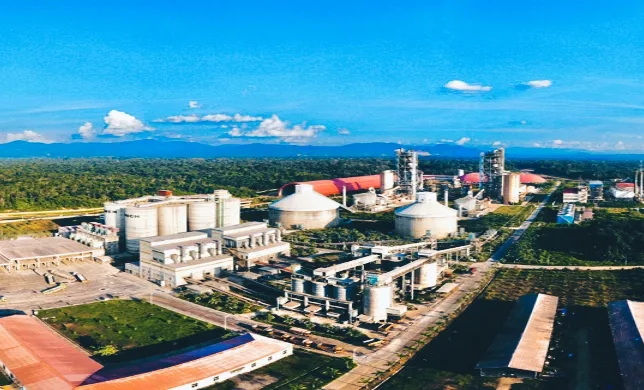
ASIATODAY.ID, JAKARTA — China’s Conch Group, one of the world’s largest cement producers, is facing heightened regulatory scrutiny over its planned expansion in Indonesia, as policymakers weigh the benefits of new foreign investment against mounting pressure on the country’s domestic cement industry.
The proposed investment by PT Conch Cement Indonesia in Barru, South Sulawesi, includes a cement packing plant, cement bag manufacturing facility, and a dedicated port terminal. While the project does not involve building a new clinker production plant, lawmakers say its potential impact on market competition, employment, and environmental compliance requires careful assessment before approvals are granted.
The investment is being closely watched because Indonesia’s cement industry has struggled with chronic overcapacity for years, forcing the government to balance investor confidence with measures aimed at protecting existing manufacturers and preserving industrial employment.
Deputy Chairman of Commission VI of Indonesia’s House of Representatives, Nurdin Halid, said Parliament supports the government’s moratorium on new cement plants and urged authorities to ensure that any new investment complements rather than disrupts the country’s existing industrial base.
According to Nurdin, lawmakers have received differing views over the Barru project. Environmental groups argue that an earlier environmental permit was revoked by Indonesia’s Supreme Court because it conflicted with regional spatial planning regulations. Local authorities, however, maintain that the current proposal complies with applicable zoning requirements.
Parliament has called on the Ministry of Environment to conduct a rigorous environmental review before issuing any final approvals.
Oversupply Remains the Central Challenge
Indonesia’s cement sector continues to operate with substantial excess capacity.
National production capacity has reached approximately 124.6 million tonnes per year, while domestic demand stands at only 63–64 million tonnes, leaving an estimated annual surplus of 55–60 million tonnes.
In eastern Indonesia, production capacity is estimated at around 27 million tonnes, compared with regional demand of only 13 million tonnes, underscoring the structural imbalance that has weighed on the industry for years.
Lawmakers said the government’s moratorium on new cement plants reflects those market conditions, although downstream logistics and distribution projects continue to be evaluated individually.
Conch Strengthens Its Indonesian Presence
Indonesia has been central to Conch Group’s international expansion strategy since 2011, when the Chinese company established its first major overseas operations in the country.
According to company information, Conch has outlined a long-term investment plan worth US$5 billion, targeting total production capacity of 25 million tonnes annually across Indonesia.
The company says it has already invested approximately US$1.5 billion, establishing eight operating companies with combined annual production capacity of 11.1 million tonnes, making it one of the country’s largest cement producers.
The proposed Barru project would further strengthen Conch’s logistics and distribution network across eastern Indonesia, although the investment remains subject to environmental assessments and regulatory approval.
Analysts say the debate surrounding the project highlights Indonesia’s broader policy challenge: maintaining an attractive investment climate while preventing additional pressure on domestic industries already operating with significant excess capacity. (AT Network)
Follow Us at Google News, Instagram, WA Channel, and LinkedIn