
ASIATODAY.ID, DENPASAR – Various activities are held to support the activities of the World Water Forum (WWF), but unfortunately, this forum is often considered as just a quorum of stakeholder meetings, without producing concrete solutions that can be implemented. The World Water Forum (WWF) is the largest international conference that regularly discusses water-related issues. It has been held every three years since 1997 by the World Water Council, a non-profit organization dedicated to raising awareness, mobilizing action, and creating political commitment to water resources management worldwide.
As a global platform, WWF provides a platform for governments, international organizations, NGOs, academics, and the private sector to gather, discuss, and find solutions to water-related challenges. Topics covered include access to clean water, sanitation, water resources management, climate change impacts, and other water issues. The problem is that WWF is often considered a formal meeting that does not result in real action. This forum has great potential to encourage global collaboration and produce strategic breakthroughs in water management. It is time for WWF to shift from being a discussion forum to a platform that encourages the implementation of concrete solutions.
Each meeting should produce a clear action plan, with measurable roles and responsibilities for each stakeholder. So far, WWF has tended to be dominated by governments and international organizations. In the future, this forum must be more open to involve civil society, the private sector, and marginalized groups that are directly affected by water issues. Commitments and action plans generated by WWF must be equipped with strong monitoring and evaluation mechanisms. This is important to ensure that the solutions formulated are implemented and have the expected impact.
WWF should be a platform to encourage innovation and utilization of the latest technologies in water resources management. This could include the development of water treatment technologies, efficient water distribution systems, and the utilization of data and analytics for better decision-making. The transformation of the World Water Forum is expected to become a more active platform for fostering global collaboration and generating tangible solutions to address the looming water crisis around the world.
WWF should not just get caught up in trying to achieve a large number of participants. What is more important is the quality of discussions, recommendations, and commitments generated, not merely the number of participants present. The a need to ensure the involvement of stakeholders who are truly relevant and have the capacity to implement the forum’s recommendations, because it is not enough to gather many participants, but must ensure the involvement of key parties. WWF must move beyond simply producing recommendations. The more important progress is to ensure that the recommendations are implemented in real terms at the local, national, and global levels.
The next challenge is for WWF to not only focus on global issues but also consider diverse local contexts. The solutions produced must be by the needs and wisdom of the local community. Moreover, water management is a complex issue and requires long-term commitment, not just a one-time meeting. The World Water Forum must be able to encourage follow-up and sustainability of the resulting recommendations. One of the main criticisms of the World Water Forum is the dominance of corporate and government interests over the voices of civil society and marginalized groups. The Forum is often perceived as a lobbying platform for private water companies, contractors, and governments to promote their agenda while ignoring the needs and perspectives of communities most affected by the water crisis.
On the other hand, WWF must actively identify, document, and integrate local communities’ traditional knowledge and practices in water management. Many indigenous peoples and local communities have valuable traditional wisdom in conserving water resources, such as conservation techniques, irrigation systems, and traditional rituals. Incorporating these perspectives will enrich the resulting solutions. In addition to identifying, it should also support and strengthen community-based water management initiatives. Many local communities have developed innovative and sustainable water management systems according to their specific conditions. The Forum can provide technical, financial, and advocacy support to strengthen their capacity.
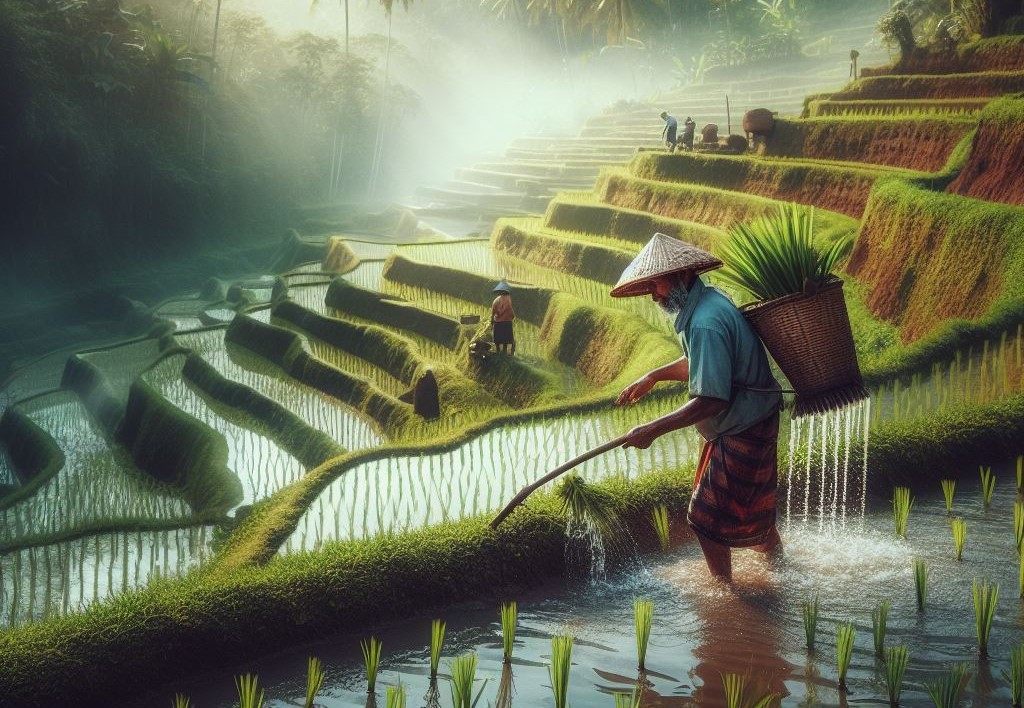
The recommendations produced by the World Water Forum should be flexible enough to be adapted and applied according to diverse local contexts. The Forum can provide general guidance, but leave room for local communities to develop specific solutions that suit their needs and wisdom. The World Water Forum can serve as a platform to facilitate knowledge exchange and learning between traditional local practices and global innovations. This will enable synergies and mutually enriching two-way learning. By systematically integrating local wisdom, the World Water Forum can ensure that the recommendations and solutions it produces are truly context-specific and can be implemented effectively and sustainably at the local level. The local wisdom of Subak in Bali is an excellent example of how traditional community practices can serve as inspiration and valuable lessons for water management globally. Subak is a traditional irrigation system developed by the Balinese for centuries. The system is not only technically functional in distributing water for agriculture, but also has strong social, cultural, and spiritual dimensions.
Some aspects of Subak wisdom that can serve as examples for the World Water Forum include local wisdom-based water management. Subak prioritizes water management principles that are in harmony with nature and local culture. This can be seen in practices such as equitable water distribution, irrigation rotation, and maintenance of irrigation infrastructure in cooperation. Subak is not just a technical system, but also a social organization governed by customary rules and religious rituals. This creates social cohesion and a sense of shared ownership of water resources among farmers.
The Subak system is designed to maintain ecological balance, such as through land conservation practices, forest management, and maintenance of water sources. This ensures the sustainability of water resources. Subak continues to adapt to changing times, while still maintaining its basic principles. This demonstrates flexibility and good adaptability to new challenges. Meanwhile, decision-making and management of Subak are done in a participatory manner by community members. This creates a sense of ownership and shared responsibility for water resources. These Subak practices can serve as inspiration for the World Water Forum in developing water management solutions that are holistic, sustainable, and aligned with local wisdom. Lessons learned from Subak can be applied across other cultural and geographical contexts.
Subak as a social organization in Bali also can adapt in the face of diminishing water availability, both in quality and quantity. Farmers who are members of Subak in Bali to use water efficiently have generally been accustomed to the Nyorog tradition. Nyorog encourages efficient water use by sharing water alternately among farmers. This is in line with the water efficiency principles promoted by the World Water Forum. Nyorog is a form of integrated water management at the local level, involving the active participation of farmers. This is in line with the integrated water management approach promoted by the World Water Forum. Nyorog ensures equitable water sharing among farmers, without discrimination. The principle of fairness and equitable access to water is also a focus of the World Water Forum. Nyorog is a Balinese local wisdom practice in managing water resources. The World Water Forum encourages the utilization of local wisdom in water management. Nyorog ensures the sustainable use of irrigation water for agriculture. This is in line with the World Water Forum’s goal to achieve sustainable water management. This means that Nyorog in Bali’s Subak System reflects the principles promoted by the World Water Forum, thus serving as an example of efficient, equitable, and sustainable water management practices.
Indonesia, as a country with a large wealth of water resources, can make a significant contribution. Indonesia can take a leadership role in championing water issues at the Southeast Asian regional level. As a country with great influence in the region, Indonesia can encourage synergy and coordination among neighboring countries in addressing transboundary water issues. Indonesia has a wealth of experience and best practices in water resources management, both at the national and local levels. Indonesia can share valuable knowledge and lessons learned, such as watershed conservation practices, traditional irrigation systems, and innovative urban water management. As a country that has recognized water as a human right, Indonesia can be a strong advocate in fighting for this issue in global forums. Indonesia can push for the human rights to water and sanitation to be a basic principle in every recommendation and policy produced. On the other hand, Indonesia can act as a bridge between global water issues and the diverse local contexts in its country. With the cultural diversity and traditional wisdom of local communities, Indonesia can be an example of how to integrate local perspectives into global solutions. (***)
Follow Us at Google News and WA Channel