
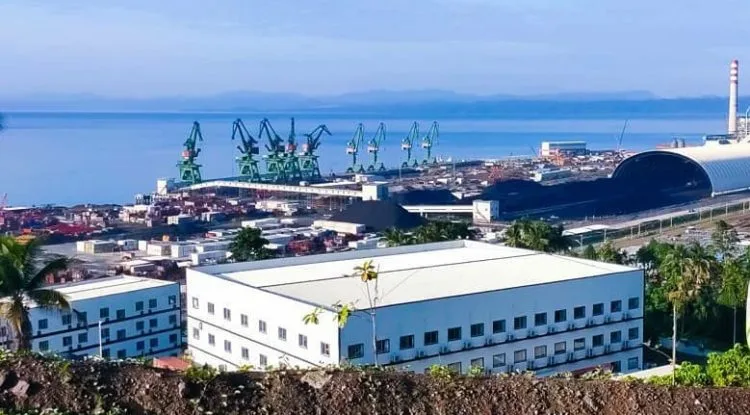
ASIATODAY.ID, JAKARTA — Indonesia’s position as the world’s leading nickel producer is facing a major test after PT Weda Bay Nickel (WBN), one of the largest nickel mines globally, suspended mining operations following the exhaustion of its 2026 production quota under the government-approved Work Plan and Budget (RKAB).
The shutdown has raised concerns over a potential wave of layoffs, with French mining giant Eramet warning that up to 65% of WBN’s workforce could be affected if Indonesian authorities do not approve a revision to the company’s production quota.
Speaking on the sidelines of the Indonesia Critical Mineral Conference in Jakarta on Thursday, Eramet Indonesia CEO Jerome Baudelet said the mine’s 2026 production allocation of 12 million tonnes had already been fully mined by the end of May, forcing the company to place the operation under a care-and-maintenance program.
“At the end of 2025, nearly 18,000 people were working directly or indirectly for Weda Bay Nickel. During the care-and-maintenance phase, that workforce would need to be reduced by around 65%,” Baudelet said.
If implemented in full, the reduction could affect approximately 11,700 employees and contractors, making it one of the largest workforce downsizing events ever faced by Indonesia’s nickel industry.
Baudelet noted that the cuts would be carried out gradually, but emphasized that the final outcome depends on whether Indonesia’s Ministry of Energy and Mineral Resources approves the company’s request to revise its RKAB.
Some workers have already been impacted since mining activities were halted at the end of May. The suspension also threatens to disrupt ore supplies to Indonesia’s vast nickel-processing ecosystem, including industrial parks and smelters that rely heavily on feedstock from Weda Bay.
Eramet has proposed increasing WBN’s 2026 production quota to 42 million tonnes, matching its 2025 output level. The company argues that the current 12-million-tonne allocation is insufficient to support operational requirements and growing demand from Indonesia’s rapidly expanding downstream nickel industry.
The Weda Bay situation comes amid mounting concern across the mining sector over Indonesia’s RKAB policy. Several miners and smelter operators have warned that restrictive production quotas could lead to ore shortages, jeopardize downstream processing projects, and undermine billions of dollars in investment tied to the country’s mineral industrialization strategy.
For Indonesia, the Weda Bay case highlights the delicate balance between conserving mineral resources and sustaining industrial growth. While the government aims to manage production levels to preserve reserves and support market stability, industry players argue that excessive restrictions risk disrupting mining operations, threatening jobs, and weakening the country’s competitive advantage in the global nickel supply chain.
The government’s decision on Weda Bay’s quota revision is now being closely watched by investors and commodity markets worldwide. The outcome will not only determine the future of thousands of workers but may also signal how Indonesia intends to manage its dominant role in the global nickel industry at a time of intensifying competition from emerging producers in Africa and elsewhere. (AT Network)
Follow Us at Google News and WA Channel