
ASIATODAY.ID, DEN HAAG – The International Court of Justice (ICJ) held historic hearings from 2 to 13 December addressing States’ obligations under international law to combat climate change, a process spearheaded by small island nations facing existential threats.
Initiated by a UN General Assembly resolution, the proceedings involved 96 countries and 11 regional organizations presenting their views on the “obligations of States with regard to climate change” under international law.
While ICJ advisory opinion will be non-binding, it is expected to shape the future of international climate law.
Small islands call for justice
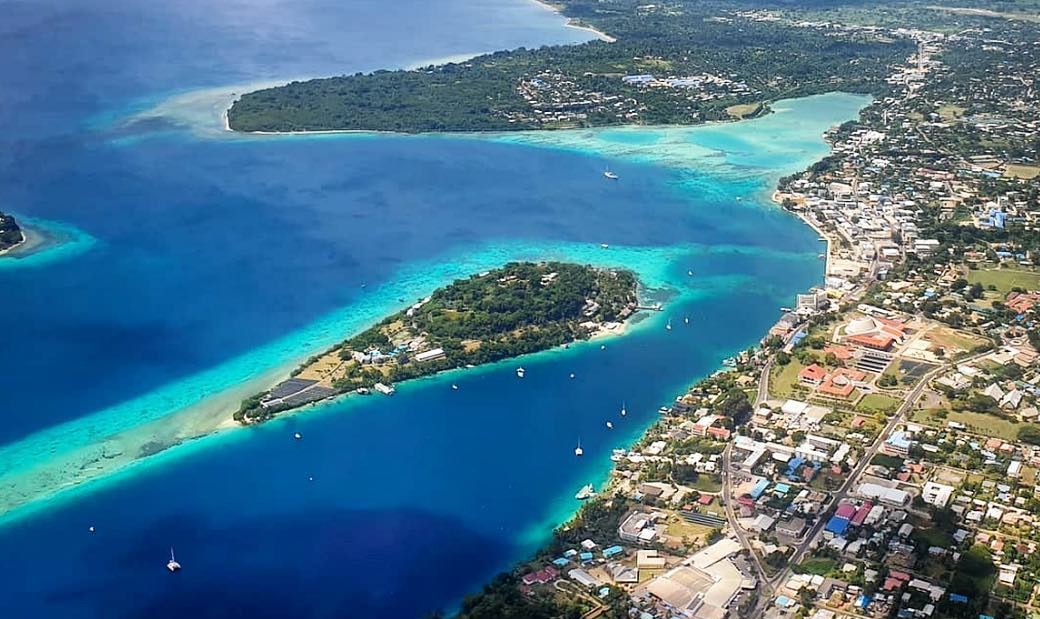
The hearings opened with an appeal from Vanuatu and Melanesian Spearhead Group, representing nations most vulnerable to climate change.
“The outcome of these historic proceedings will have repercussions for generations to come, determining the fate of nations like mine and the future of our planet,” said Ralph Regenvanu, Vanuatu’s special envoy for climate change.
The Pacific Island nation highlighted the catastrophic impacts of rising seas and extreme weather, calling the failures of high-emitting States “illicit”.
The country’s Attorney General Arnold Kiel Loughman argued that “the failure of a handful of high-emitting states to meet their obligations constitutes an internationally wrongful act,” as they have brought humanity “to the brink of the abyss.”
Small island developing States (SIDS), represented by the Alliance of Small Island States (AOSIS), echoed these calls.
They asked the World Court to affirm principles of international law that address sea-level rise, including the recognition of maritime zones and statehood even if territories are inundated.
Differentiated responsibilities: Brazil, China weigh in
Brazil highlighted its commitment to ambitious emissions reductions, stressing that despite being a developing country, it faces significant challenges like poverty eradication and extreme climate impacts.
The country’s special envoy on climate change, Luiz Alberto Figueiredo Machado, underscored the principle of “common but differentiated responsibilities”, asserting that high-emitting developed countries bear the greatest burden in addressing the crisis.
China, meanwhile, urged the ICJ to avoid creating new legal obligations and focus on existing frameworks such as the Paris Agreement on climate change.
As one of the world’s largest emitters, China argued that developed nations must bear historical responsibility, while developing countries require longer timelines to meet climate goals.
US, EU take diverging stances
The United States acknowledged the severity of the climate crisis but argued that international treaties like the Paris Agreement are not legally binding.
Margaret Taylor, the US representative, also rejected the notion that “common but differentiated responsibilities” is a fundamental principle of international law.
On the other hand, the European Union (EU) emphasised cooperation and stressed the non-adversarial nature of the advisory proceedings.
EU representatives pointed to the importance of existing treaties in addressing climate change but stopped short of calling for enforcement mechanisms.
A crucial moment for international climate action
While the ICJ deliberates, nations and observers alike await its advisory opinion, expected to guide future legal interpretations of States’ responsibilities for the climate crisis.
For small island nations and vulnerable communities, the stakes are existential. (UN News)
Follow Us at Google News and WA Channel