
ASIATODAY.ID, JAKARTA — One year into the administration of President Prabowo Subianto and Vice President Gibran Rakabuming Raka, Indonesia’s industrial sector is under heavy pressure from both global and domestic challenges. Despite this, the government continues to prioritize industrialization as a key driver of national economic resilience.
Minister of Industry Agus Gumiwang Kartasasmita revealed that the first year of the Prabowo–Gibran administration has been marked by multiple challenges in strengthening the nation’s manufacturing base.
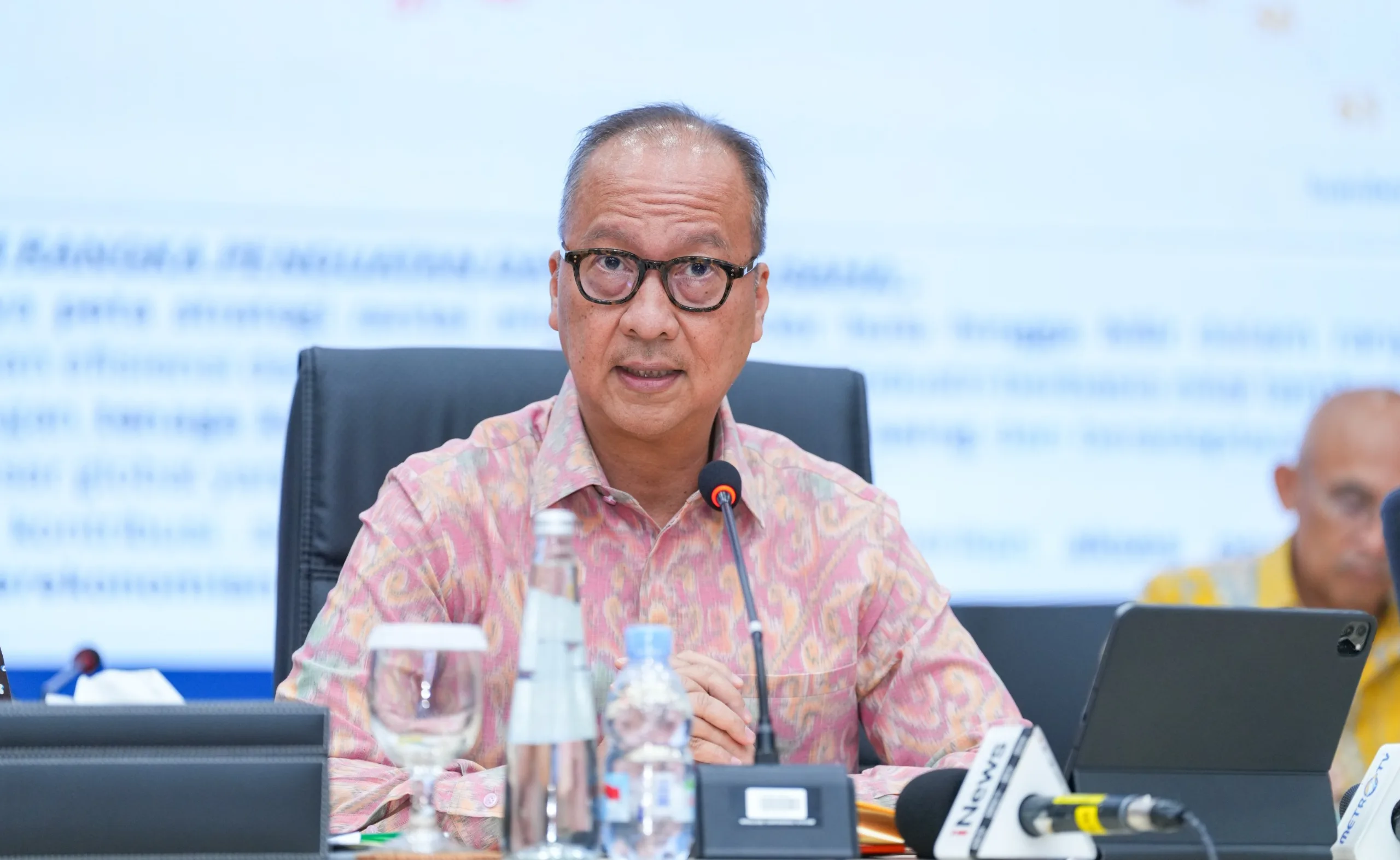
“Throughout this year, the industrial sector has faced pressures from both internal and external factors. Therefore, we remain committed to strengthening our domestic industrial capabilities to ensure Indonesia’s economic resilience,” he said during the press conference “One Year of Industrial Performance under the Red and White Cabinet” in Jakarta, Monday, October 20, 2025.
Flood of Imports and Supply Chain Disruptions
One of the most pressing challenges is the influx of cheap imported goods, both legal and illegal, flooding the domestic market. In addition, certain products from Bonded Zones (Kawasan Berikat)—which are meant for export—have been redirected into the domestic market, creating further strain on local industries.
Global geopolitical instability has also added to the pressure. The Russia–Ukraine war and the Iran–Israel conflict have disrupted supply chains, triggered energy price spikes, and slowed exports. Meanwhile, domestic supply chains have also been affected by quota policies and rising industrial gas prices.
There has also been mounting pressure on industrial protection policies, even though 80% of Indonesia’s manufactured goods are sold domestically.
“Protective policies are crucial to safeguard 19.6 million industrial workers and ensure investment sustainability,” Agus emphasized.
Four Strategic Focus Areas
The Ministry of Industry is addressing these challenges through four key strategic focuses:
1. Protecting national industries from import pressures.
2. Maintaining and improving production utilization rates.
3. Safeguarding industrial workers and investments.
4. Strengthening production technology to enhance competitiveness.
“Through these strategies, Indonesia’s manufacturing sector has continued to perform positively amid global geo-economic and geopolitical dynamics,” the Minister stated.
Manufacturing Remains the Backbone of the Economy
Indonesia’s Non-Oil and Gas Manufacturing Industry (NOGMI) grew by 4.94% (YoY) from Q4 2024 to Q2 2025, contributing 17.24% to the national GDP — reaffirming its role as the backbone of the economy.
In terms of exports, the sector has shown remarkable resilience, recording USD 202.9 billion in exports — or 78.75% of Indonesia’s total exports of USD 257.6 billion during October 2024 – August 2025. “This contribution underscores the growing competitiveness of Indonesian manufactured products in the global market,” Agus added.
Investor confidence in the industrial sector also remains strong. Investment realization in the manufacturing industry reached IDR 568.4 trillion (or 40.72% of total national investment) between October 2024 and June 2025. This growth has also boosted employment, with 19.55 million workers employed in the NOGMI sector — equivalent to 13.41% of the national workforce.
Optimism Still Intact
Despite facing pressure, industrial optimism remains intact. The Industrial Confidence Index (ICI) stood at 53.02 in September 2025, indicating expansion, while the Purchasing Managers’ Index (PMI) for manufacturing reached 50.4 — both signaling positive business sentiment.
Average capacity utilization in the NOGMI sector reached 62%, indicating significant room for production expansion.
“We will continue to maintain domestic industrial stability to ensure this capacity can be fully optimized,” Agus noted.
Several subsectors outperformed the national average, including:
Basic Metal Industry: grew by 12.27%.
Leather, Footwear, and Related Products Industry: grew by 8.13%.
Food and Beverage Industry: grew by 6.18%.
Other subsectors such as electronics, chemicals, pharmaceuticals, machinery, and equipment also recorded steady growth in the 5–6% range.
“These figures reflect the strengthening structure of Indonesia’s industrial ecosystem — from upstream to downstream,” the Minister explained.
Rising Value-Added and Global Competitiveness
According to World Bank and United Nations Statistics data, Indonesia’s Manufacturing Value Added (MVA) in 2024 reached USD 265.07 billion, placing the country 13th globally, 5th in Asia, and 1st in ASEAN, surpassing Thailand and Malaysia.
Meanwhile, the Institute for Management Development (IMD) 2025 Report ranked Indonesia 40th out of 69 countries in the World Competitiveness Ranking, with the strongest performance in economic performance (24th) and business efficiency (26th), though infrastructure remains a challenge (57th).
To address these challenges, the government continues to accelerate the development of industrial infrastructure, energy supply, logistics, and the upskilling of a productive, adaptive workforce.
“We are strengthening our policy instruments — from domestic market protection and increased local content (TKDN) to technology adoption and workforce quality enhancement — so that Indonesia’s manufacturing sector becomes more resilient, competitive, and sustainable,” Agus concluded. (AT Network)
Follow Us at Google News and WA Channel