
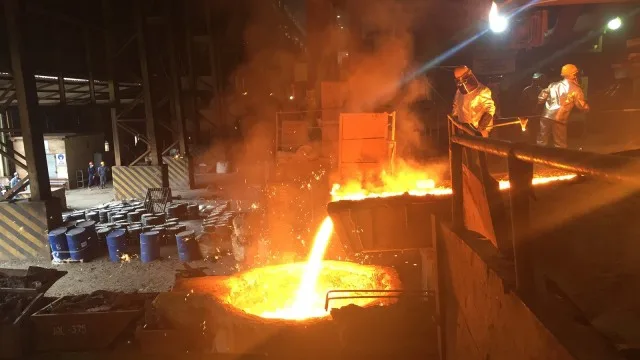
ASIATODAY.ID, JAKARTA — In the heart of the Indonesian archipelago, from the red soils of Sulawesi to the nickel-rich coasts of Halmahera, a quiet revolution is transforming the global economy.
That revolution is powered by nickel — the once-overlooked metal that has now become the backbone of the clean energy transition.
Once known merely as a component in stainless steel, nickel has become indispensable in electric vehicle (EV) batteries, renewable energy storage, and green technologies.
And leading this global shift is Indonesia — a nation that has redefined its economic destiny and, in doing so, changed the balance of industrial power in the 21st century.
A Leap from Ore to Influence
According to the U.S. Energy Information Administration, Indonesia now controls around 42% of the world’s nickel reserves, amounting to over 55 million tons.
In less than a decade, Indonesia’s production has surged from 1.6 million tons in 2022 to over 2.2 million tons in 2024, making it the largest nickel producer on Earth.
Its share of global production has skyrocketed — from only 16% in 2017 to nearly 50% by 2024.
“Indonesia has become a central player in the global EV supply chain,” said Kristalina Georgieva, Managing Director of the International Monetary Fund (IMF).
“Its industrial transformation is a model for how developing economies can move up the value chain through long-term vision and policy consistency.”
The Turning Point: A Bold Industrial Policy
The turning point came in January 2020, when Indonesia took a bold and controversial step: banning the export of raw nickel ore.
The decision shocked global markets and provoked a trade dispute with the European Union at the WTO.
But Indonesia stood firm — determined to end decades of dependency on raw exports and instead build a domestic processing and manufacturing ecosystem.
The result has been extraordinary. Indonesia’s exports of processed nickel products jumped from USD 3.3 billion in 2017 to over USD 33.5 billion in 2023 — a tenfold increase in just six years.
Dozens of smelters now operate across Sulawesi, Maluku, and other islands, employing tens of thousands and attracting billions in foreign investment from China, South Korea, Japan, and Europe.
“Indonesia’s nickel policy is one of the most remarkable industrial transformations of the 21st century,” wrote The Financial Times.
“It’s a rare example of a developing nation rewriting its role in the global economy through strategic statecraft.”
Economic Transformation at Home
The downstream nickel revolution has triggered a ripple effect across Indonesia’s economy:
Exports have soared, driving record trade surpluses.
New industries have emerged, from metallurgy to EV battery manufacturing.
Foreign Direct Investment (FDI) has surged, led by partnerships with global giants like CATL, LG Energy Solution.
Job creation has accelerated, particularly in industrial zones across Sulawesi and North Maluku.
The Indonesian Chamber of Commerce estimates that the nickel downstream sector now contributes over 5% of national GDP, compared with just 0.7% in 2017.
For a country long seen as a raw-material supplier, this shift marks a fundamental redefinition of its economic structure.
A Global Power in the Clean Energy Transition
Indonesia’s rise has altered not only its domestic economy but also the global supply chain for green energy technologies.
As the world races toward net-zero emissions, the demand for nickel-rich batteries has skyrocketed — and with over half of the global supply, Indonesia now sits at the center of this transformation.
Major economies are now courting Jakarta to secure access to this critical resource.
The United States, China, and the European Union have all sought strategic partnerships and investment frameworks with Indonesia, recognizing its pivotal role in the future of clean energy.
At the G20 Energy Transition Meeting in Bali, Indonesian Investment Minister Bahlil Lahadalia declared,
“If the world wants to achieve net-zero, it needs Indonesia. We are not just supplying resources — we are building the foundation of the global green economy.”
Challenges on the Horizon
Yet, Indonesia’s rapid rise comes with real challenges.
Environmental organizations warn that high-grade nickel ore (saprolite) could become scarce within the next decade if extraction continues unchecked.
Mining expansion has also led to concerns over deforestation, marine sedimentation, and carbon emissions.
In response, Indonesia has begun to champion a new approach: “Green Nickel” — emphasizing sustainable mining, renewable-powered smelters, and stronger ESG (Environmental, Social, and Governance) standards.
Projects in Morowali and Halmahera now utilize hydropower and geothermal energy to power nickel processing facilities, signaling Indonesia’s commitment to a more sustainable industrial future.
A Model for the Global South
What Indonesia has achieved is more than just an economic success — it’s a paradigm shift for developing nations across Africa, Asia, and Latin America.
For decades, resource-rich countries have been trapped in the “raw material curse,” exporting unprocessed commodities while importing finished products at high prices.
Indonesia broke that cycle — through bold policy, political will, and a clear national vision.
As the World Economic Forum (WEF) noted in its 2025 report:
“Indonesia’s nickel strategy demonstrates that industrialization and sustainability are not the exclusive domain of developed nations. With vision and courage, the Global South can lead the next wave of industrial transformation.”
Beyond Nickel: Building the Future
The next chapter of Indonesia’s journey is already unfolding.
The government is developing a fully integrated electric vehicle ecosystem — from mining and refining to battery production and EV manufacturing.
By 2045, Indonesia aims to achieve USD 50 billion in annual exports from nickel-based industries and become a global hub for green technology.
This is not just an economic story — it is a story of national ambition, sovereignty, and reinvention.
Indonesia and the New World Economy
As the world pivots toward clean energy, one truth has become undeniable: The road to a sustainable future runs through Indonesia.
From remote islands to global boardrooms, Indonesia’s nickel has become a catalyst for economic transformation and a symbol of how a nation from the Global South can rise — not by chance, but by choice.
Nickel, once buried in red earth, has become the silver key to the green economy.
And in unlocking it, Indonesia has not only changed its own destiny — but also reshaped the face of the global economy. (Newsroom)
Follow Us at Google News and WA Channel