
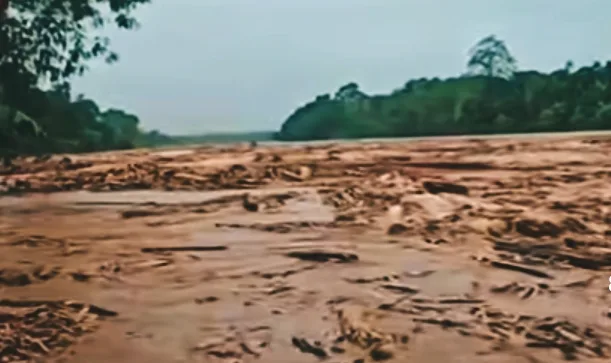
ASIATODAY.ID, MEDAN – Indonesia’s National Disaster Management Agency (BNPB) has confirmed a rising death toll from the catastrophic floods and landslides that have devastated Aceh, North Sumatra, and West Sumatra.
As of Sunday, November 30, 2025, the number of fatalities has reached 316 people, with hundreds more still missing.
BNPB Chief Lt. Gen. Suharyanto announced the updated figures, stressing the urgency of accelerating emergency response efforts.
Latest Official Casualty Figures
BNPB released the following breakdown of deaths and missing persons across the three worst-hit provinces:
Aceh: 54 dead, 55 missing
West Sumatra: 90 dead, 87 missing
North Sumatra: 172 dead, 147 missing
These numbers highlight the scale of destruction, particularly in remote areas where search-and-rescue teams continue to face severe access challenges.
Utilities Partially Restored, but Many Areas Still Cut Off
Lt. Gen. Suharyanto stated that basic utilities—electricity and water—have begun to recover in several districts. However, many communities remain without power and clean water.
“Electricity and water supply have largely been restored, but many areas are still experiencing outages. PLN has deployed personnel, and we urge faster efforts, especially in isolated locations where residents are in urgent need,” he said.
Greenpeace: Sumatra Is Being “Sold Off” Through Massive Permitting
In the midst of emergency operations, Greenpeace Indonesia issued a strong warning: Sumatra’s ecological collapse is not a natural accident but the result of decades of the island being “sold off” through uncontrolled mining, palm oil, and industrial plantation permits—especially in watershed areas.
Greenpeace Forest Campaigner Arie Rompas said the disaster reflects the consequences of aggressive land-use licensing that has stripped forests, weakened watershed capacity, and left communities exposed.
“Much of Sumatra’s forests and river basins have been effectively sold to corporate concessions. What we are seeing now is the ecological debt coming due,” Rompas declared.
Severe Degradation in Key Watersheds
Greenpeace highlighted the Batang Toru Watershed as one of the most critically impacted areas. Approximately 94,000 hectares—or about 28% of the watershed—have been allocated to mining, industrial timber plantations, and large-scale palm oil operations.
Since the 1990s, these concessions have drastically reduced natural forest cover, severely limiting the landscape’s ability to absorb intense rainfall.
A Deepening Ecological Emergency
The environmental group warns that the chain of disasters across Sumatra signals a full-scale ecological emergency. Deforestation has destroyed natural buffers, allowing heavy rains to flow rapidly into populated areas and triggering deadly floods and landslides.
Call for Immediate Restoration and Policy Reform
Greenpeace is urging the government to restore damaged ecosystems, overhaul land-use policies, and review all existing permits to prevent future tragedies.
“The government must not only respond to the disaster but also reclaim and rehabilitate landscapes that have been degraded for decades,” Rompas said. (AT Network)
Follow Us at Google News and WA Channel