
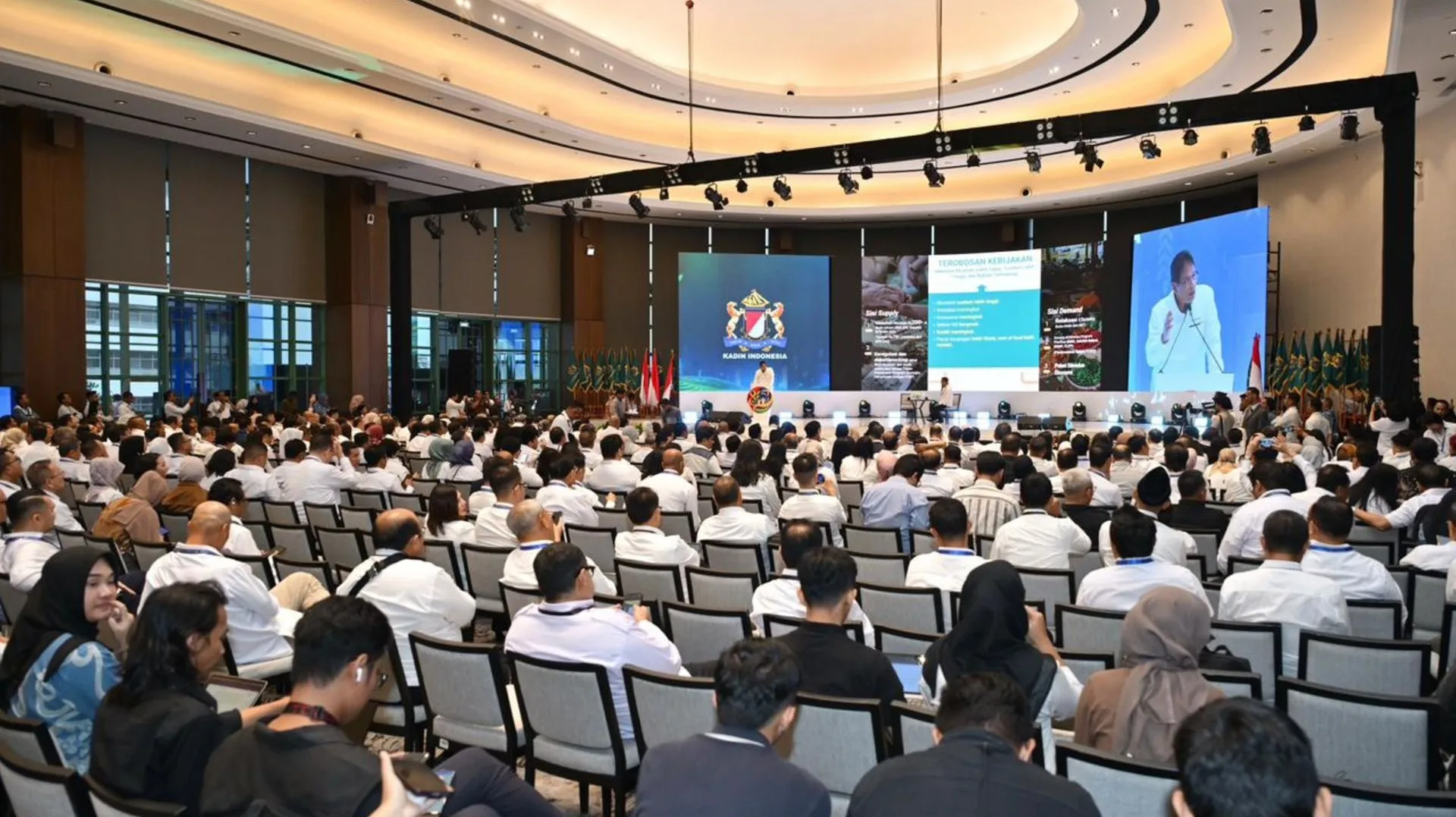
ASIATODAY.ID, JAKARTA — Minister of Finance Purbaya Yudhi Sadewa emphasized that Indonesia will not achieve higher economic acceleration without a comprehensive reform of its national investment climate.
He acknowledged that Indonesia’s competitiveness still lags behind regional peers such as Vietnam, Thailand, Singapore, and Malaysia, a gap once again highlighted by Nvidia’s decision to invest in Johor rather than Indonesia.
To address these structural weaknesses, the government launched the Debottlenecking Task Force, a high-level working group designed as an official channel for businesses to report real-world investment barriers, which will then be resolved through regular debottlenecking sessions chaired directly by the Minister.
“If your business faces any obstacles, report them. We will bring them into session. I have allocated a full day to lead the debottlenecking meetings,” the Minister stated during the 2025 National Leadership Meeting of the Indonesian Chamber of Commerce and Industry (Kadin) in Jakarta on Monday, December 1, 2025.
Debottlenecking Task Force: Indonesia’s New Strategy for Investment Climate Reform
The government is shifting toward a field-based approach to regulatory reform, aiming to fix investment barriers directly from on-the-ground realities. This method has been proven effective: from 2016 to 2019, the government resolved 193 debottlenecking cases worth IDR 894 trillion.
“Going forward, we will fix our business climate directly from the field, and adjust the regulations afterward—not the other way around,” the Minister explained.
Beyond bureaucratic reform, the government is strengthening border enforcement against illegal imported goods, particularly second-hand items, to protect domestic industries and maintain fair market competition.
Targeting 8% Growth: Strategy, Roadmap, and Realistic Expectations
Indonesia aims to achieve 6% growth starting next year and gradually move toward 8% within the next 4–5 years. The strategy relies on three core pillars:
Strengthening domestic demand
Coordination between fiscal and monetary authorities
Aggressive investment climate reform through the Debottlenecking Task Force
“Reaching 8% growth is difficult, but not impossible if pursued gradually. Fiscal policy, the financial sector, and the investment climate all must improve together,” said the Minister.
Indonesia’s Q3 2025 Economic Performance: Rising Optimism and Strengthening Recovery
Indonesia posted 5.04% economic growth in Q3 2025, supported by stronger household consumption, expanding manufacturing activity, and proactive fiscal–monetary policies. The update was delivered by Minister of Finance Purbaya Yudi Sadewa during a working meeting with Commission XI of the House of Representatives (DPR RI).
Stronger Consumption and Rising Consumer Confidence
Retail sales continued to climb
Motor vehicle sales recorded significant growth
The Consumer Confidence Index (CCI) reached its highest point in recent months
From October to November 2025, Indonesia experienced a sharp rise in economic optimism, reinforcing public confidence in overall economic stability.
Manufacturing PMI in Expansion Territory
Indonesia’s Manufacturing PMI reached 51.2 in October 2025, indicating expansion. Higher output and stronger new orders suggest that the industrial sector continues to be a key driver of the country’s broad-based recovery.
IDR 276 Trillion Liquidity Injection Boosts Economic Momentum
The government injected:
IDR 200 trillion into the banking system in September 2025
An additional IDR 76 trillion shortly after
This policy:
Boosted banking liquidity
Helped lower lending rates
Stimulated consumption and investment
Strengthened household purchasing power
“This momentum must be preserved. We need to maintain this recovery trajectory so that Indonesia can achieve even stronger economic growth,” the Minister stressed.
Investment Reform Will Shape Indonesia’s Economic Future
With rising optimism, stronger domestic demand, and regulatory reform led by the Debottlenecking Task Force, Indonesia aims to reclaim its position in ASEAN’s investment landscape.
The government hopes that bold, field-driven reforms will accelerate the country’s transition toward high and sustainable economic growth. (AT Network)
Follow Us at Google News and WA Channel