
ASIATODAY.ID, JAKARTA — Indonesia is strengthening its commitment to accelerate the energy transition toward net zero emissions (NZE) by 2060 or earlier.
The direction of this long-term transition was highlighted by Senda Hurmuzan Kanam, Director of Planning and Infrastructure Development for New and Renewable Energy and Energy Conservation (EBTKE) at the Ministry of Energy and Mineral Resources, during the Indonesia–Spain Renewable Energy Seminar titled “Collaboration on Smart Grid and Biomass for a Just Energy Transition” held at the B.J. Habibie Building, Jakarta, on Thursday, December 11, 2025.
Senda emphasized that Indonesia’s clean energy strategy includes major scale-up in solar, wind, hydro, biomass, hydrogen, ammonia, and nuclear energy.
“The government is committed to ensuring Indonesia’s prosperity and sovereignty, including through energy independence,” he said.
Indonesia’s share of renewable energy in the national electricity mix is expected to rise significantly by 2030, driven primarily by solar power development. Offshore wind power will expand from 2037 onward, while the country’s first nuclear power plant (NPP) is targeted to begin operation in 2032.
Under the 2025–2035 electricity plan, the government aims to add 42 GW of new renewable power capacity and 10 GW of energy storage systems. The expansion will be led by 70 GW of solar power, followed by 11 GW of hydro, 7 GW of wind, and additional nuclear capacity.
A Massive 3,000 GW Potential
Indonesia’s renewable energy potential reaches around 3,000 GW, making it one of the world’s most resource-rich countries in clean energy. Solar power alone has a potential of approximately 3,200 GW, followed by wind energy with 155 GW.
“With this vast potential, solar power will become the backbone of Indonesia’s future renewable energy development,” Senda stated.
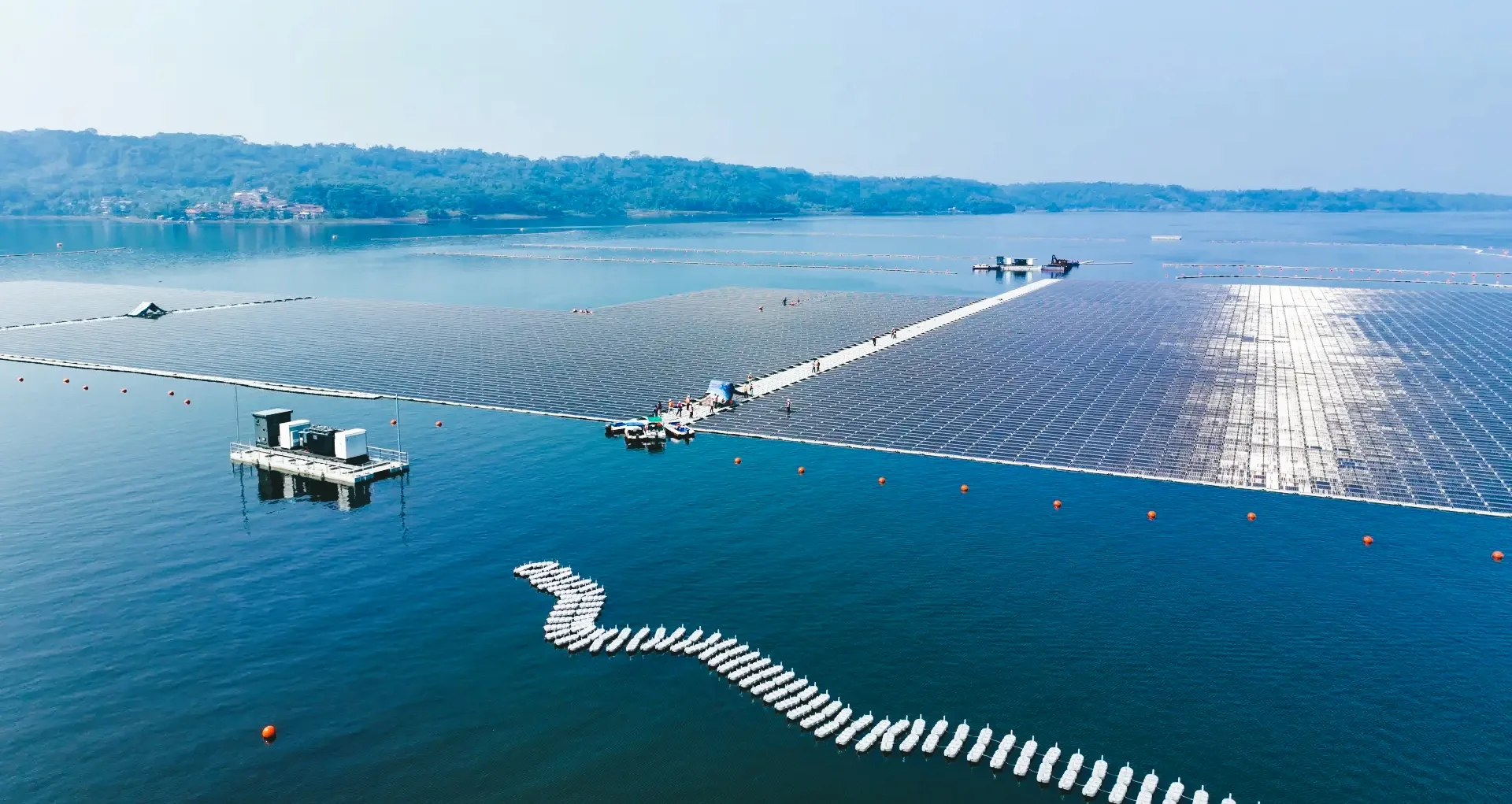
The government is currently developing three major solar programs: rooftop solar PV, utility-scale solar farms on former mining lands, floating solar plants, including the Cirata Floating Solar Plant — now the largest in Southeast Asia.
Indonesia is also promoting community-based solar initiatives to support agriculture, fisheries, and tourism through solar ice makers, solar water pumps, and solar-powered tourism facilities.
Hydrogen–Ammonia Roadmap
Indonesia has launched its National Hydrogen and Ammonia Roadmap, outlining strategies from the short to long term. Up to 2030, the country will focus on studies, pilot projects, and regulatory preparation.
From 2045 to 2060, Indonesia aims to become a major player in the global green hydrogen and ammonia market.
For nuclear energy, the government targets 44 GW of nuclear capacity by 2060, consisting of 35 GW of conventional NPPs and 9 GW dedicated to hydrogen production.
Indonesia–Spain Collaboration Strengthens Smart Grid and Bioenergy Innovation
Senda stressed that the energy transition cannot be carried out by the government alone.
Collaboration with Spain — especially in smart grid development and bioenergy — is expected to play a strategic role, given Spain’s advanced experience in renewable energy integration.
“Smart grids are one of the most discussed issues in Indonesia, and we can learn a great deal from Spain’s long-standing expertise,” he noted.
Beyond technology, Senda highlighted the need to strengthen human resources capable of supporting the transition.
“Achieving an inclusive energy transition requires collaboration among government, industry, academia, and the public,” he concluded. (AT Network)
Follow Us at Google News and WA Channel