
ASIATODAY.ID, YEMEN — The once-solid alliance between Saudi Arabia and the United Arab Emirates (UAE) is unraveling into open confrontation, raising fears that Yemen could slide into a new, full-scale civil war fueled by rival Gulf powers.
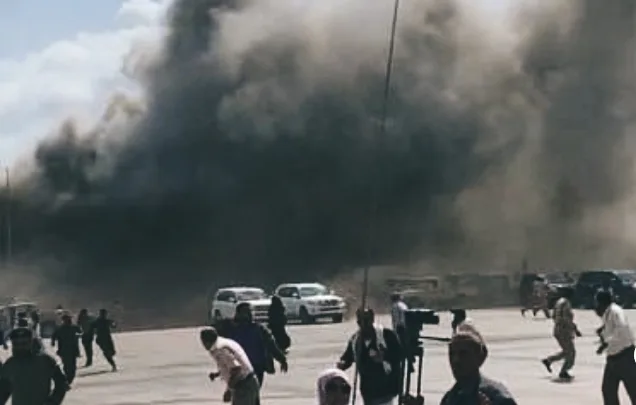
Tensions reached a critical point after the Saudi-led coalition launched airstrikes on the port of Mukalla in southern Yemen on December 30, 2025. Riyadh said the strikes targeted a weapons shipment linked to the UAE, allegedly destined for southern separatist forces.
The attack marked the most serious rupture yet between two monarchies long regarded as the backbone of Gulf security and regional stability.
Saudi Airstrikes on UAE-Linked Cargo Signal Open Break
Saudi state media released video footage showing a roll-on/roll-off vessel named “Greenland”, owned by Dubai-based Salem Al Makrani Cargo Company, unloading armored vehicles and military equipment at Mukalla before the dock was bombed.
While Saudi officials claimed there were no casualties, thick black smoke rising from the strategic port was broadcast on Yemeni state television. Yemen’s internationally recognized government swiftly imposed a 72-hour air, land, and sea blockade, alongside a no-fly zone.
Shortly afterward, the UAE announced the withdrawal of its remaining troops from Yemen, effectively ending its residual counterterrorism mission.
The Core Dispute: Separatism and Territorial Control
At the heart of the crisis lies a stark divergence of strategic interests. Saudi Arabia backs Yemen’s internationally recognized government led by Rashad al-Alimi, while the UAE is widely accused of supporting the Southern Transitional Council (STC)—a separatist movement seeking to break away from the Yemeni state.
In a televised address, Al-Alimi accused Abu Dhabi of directly orchestrating military escalation through the STC:
“It has been definitively confirmed that the UAE pressured and directed the STC to undermine state authority through military escalation.”
Saudi officials described STC advances—allegedly backed by the UAE—as crossing a red line for Saudi national security, particularly as separatist forces pushed closer to the kingdom’s southern border.
From Strategic Partners to Open Rivals
For years, the close relationship between Saudi Crown Prince Mohammed bin Salman and UAE President Sheikh Mohamed bin Zayed Al Nahyan symbolized Gulf unity. That unity is now fractured.
Riyadh seeks to preserve Yemen’s territorial integrity and assert regional primacy. Abu Dhabi, by contrast, has expanded its influence through non-state actors and control over strategic ports and trade corridors, especially in southern Yemen.
Regional analysts say these conflicting visions are no longer reconcilable, dramatically increasing the risk of Yemen splintering into rival zones of control—an outcome that would reignite civil war dynamics.
Oil Markets and OPEC on Edge
The fallout extends well beyond Yemen. Saudi Arabia and the UAE are key pillars of OPEC, and their confrontation threatens to derail consensus on oil production quotas.
Equity markets across the Gulf reacted negatively amid fears of prolonged geopolitical instability. With an OPEC+ meeting looming, delegates are increasingly concerned that political rivalry could spill over into energy policy.
The United States has moved quickly to contain the crisis. Secretary of State Marco Rubio held urgent talks with Saudi Foreign Minister Prince Faisal bin Farhan, warning that regional stability is at serious risk.
Yemen Once Again Becomes a Proxy Battlefield
Above all, Yemen stands to suffer the gravest consequences. After years of devastating war, the country now faces the prospect of a renewed civil conflict, this time driven by direct confrontation between its former Gulf backers.
If escalation continues, Yemen could become the largest proxy war arena in the Middle East, with severe humanitarian consequences and far-reaching implications for global energy security and regional geopolitics. (AT Network)
Follow Us at Google News and WA Channel