
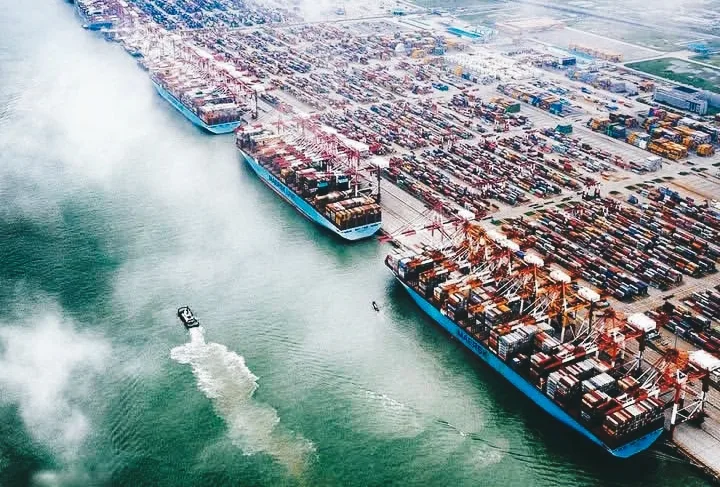
ASIATODAY.ID, BEIJING – Bilateral trade between China and India surged to a record $155 billion in 2025, marking a year-on-year increase of more than 12%, according to China’s ambassador to India, Xu Feihong.
The milestone underscores a rapid economic thaw between Asia’s two giants, just years after relations plunged following a deadly border clash.
Speaking at a Chinese New Year reception on Tuesday, Xu said the growth reflects a broader reset in China–India ties, catalyzed by high-level political engagement between President Xi Jinping and Prime Minister Narendra Modi.
India’s exports to China reached $19.7 billion in 2025, up 9.7% year-on-year, Xu noted in an article published in The Hindu on January 29.
Notably, export growth accelerated sharply toward the end of the year, with November and December recording spikes of 90% and 67%, respectively.
Despite the gains, the trade balance remains tilted in China’s favor. Xu urged Indian companies to introduce more high-value and premium products into the Chinese market, arguing that the persistent deficit could be transformed into “cooperative surpluses.”
Diplomacy Fuels Economic Momentum
The trade boom follows a series of diplomatic breakthroughs.
Xu highlighted the Tianjin meeting between Xi and Modi last August, describing it as a turning point that elevated bilateral relations from a “reset and fresh start” to a “new level of improvement.”
Relations between the two countries deteriorated sharply after the 2020 border clash. However, a gradual thaw began in October 2024, when Xi and Modi met on the sidelines of the BRICS summit in Kazan, Russia.
The momentum continued at the Shanghai Cooperation Organization (SCO) summit in Tianjin in September 2025, where both leaders agreed to deepen cooperation.
Concrete steps followed. Direct flights between China and India resumed in October 2025, and both countries have eased visa restrictions over the past year.
In January, India is also considering lifting restrictions on Chinese firms bidding for government contracts—rules imposed in the aftermath of the 2020 clash.
BRICS and the Global South Factor
China has also voiced strong support for India’s presidency of BRICS, which New Delhi assumed on January 1.
Xu said Beijing is ready to enhance coordination with India within the bloc, signaling shared interests in shaping the Global South’s economic and political agenda amid growing friction with the West.
As geopolitical rivalries intensify globally, the China–India trade surge suggests a pragmatic calculation on both sides: strategic competition may persist, but economic interdependence is back on the fast track. (RT)
Follow Us at Google News and WA Channel