
ASIATODAY.ID, JAKARTA — Indonesia’s Attorney General’s Office has once again shaken the global palm oil industry after uncovering a massive corruption scheme in the export of crude palm oil (CPO), with state losses estimated at IDR 10.6–14.3 trillion (approximately USD 680 million–920 million).
The case, handled by the Special Crimes Directorate, centers on alleged corruption and manipulation in the export of CPO and its derivatives, including Palm Oil Mill Effluent (POME), during the 2022–2024 period—a time when palm oil was designated a strategic national commodity amid domestic cooking oil shortages.
11 Suspects Named in Indonesia Palm Oil Corruption Case
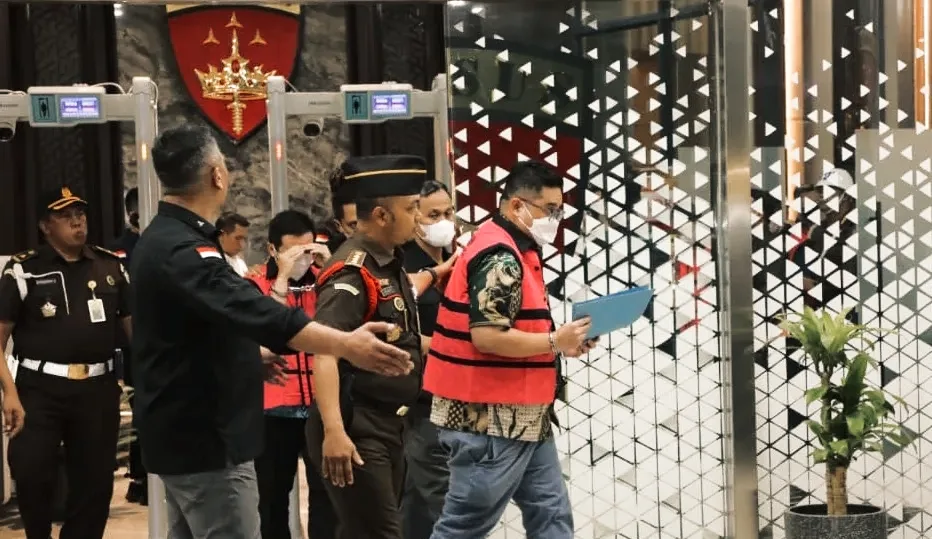
Investigators have formally named 11 suspects, comprising three state officials and eight senior executives from private palm oil companies, following extensive examinations of witnesses, documents, and electronic evidence.
“Based on sufficient evidence, the investigation team has identified multiple suspects involved in corruption related to CPO exports and their derivatives,” said Syarief Sulaeman Nahdi, Director of Investigation at Special Crimes Directorate, accompanied by Anang Supriatna, Head of the Legal Information Center, during a press conference at the Attorney General’s Office in Jakarta on February 10, 2025.
List of Suspects
The suspects include senior figures from Indonesia’s Ministry of Industry, Customs and Excise, and major palm oil corporations:
1. A senior official at the Directorate of Forest-Based Industries, Ministry of Industry
2. FJR, Director of Customs Technical Affairs, Directorate General of Customs and Excise (currently Head of DJBC Bali–NTB–NTT)
3. MZ, civil servant at Pekanbaru Customs Office
4. ES, Director of PT SMP, PT SMA, and PT SMS
5. ERW, Director of PT BMM
6. FLX, President Director and Head of Commerce at PT AP
7. RND, Director of PT PAJ
8. TNY, Director of PT TEO and shareholder of PT Green Product International
9. VNR, Director of PT SIP
10. RBN, Director of PT CKK
11. YSR, President Director of PT MAS and Commissioner of PT SBP
All suspects have been detained for 20 days at Salemba Detention Centers under the authority of the Attorney General’s Office and the South Jakarta District Prosecutor’s Office.
How the CPO Export Manipulation Worked
According to investigators, the scheme emerged amid Indonesia’s strict CPO export controls imposed between 2020 and 2024 to safeguard domestic cooking oil supply and stabilize prices.
These controls were enforced through:
– Domestic Market Obligation (DMO)
– Export approvals
– Export duties and palm oil levies
Under Indonesian customs law, CPO is classified under HS Code 1511, regardless of its Free Fatty Acid (FFA) content. This means high-acid CPO remains fully subject to export restrictions and fiscal obligations.
However, investigators uncovered a deliberate and systematic manipulation:
– False Commodity Classification
– High-acid CPO was intentionally misclassified as POME or Palm Acid Oil (PAO)—using HS Code 2306, a category intended for solid residues or waste products.
“This reclassification allowed exporters to bypass export controls, avoid DMO obligations, and drastically reduce export duties,” explained Syarief.
“CPO taxes are far higher than POME taxes. The difference is enormous—and that gap is where the state lost trillions.”
Regulatory Loopholes and Institutional Complicity
Investigators also revealed that an unofficial Palm Oil Downstreaming Roadmap, which lacks legal standing and includes commodity specifications unknown in international classification systems, was nonetheless used as a reference by certain officials.
This loophole enabled the approval of exports under non-standard classifications, effectively neutralizing Indonesia’s CPO export control regime.
Kickbacks to Officials Allegedly Involved
Beyond regulatory manipulation, prosecutors allege the existence of kickbacks and illicit payments to state officials.
These payments were intended to:
– Smooth administrative processes
– Ensure improper classifications were approved
– Prevent corrective action during export supervision
“The suspects were not merely aware of the legal framework—they actively designed, applied, and sustained this unlawful mechanism,” said the Director of Investigation.
Systemic Impact on Indonesia’s Strategic Commodity Governance
The alleged corruption has had far-reaching consequences:
– Massive loss of state revenue, particularly from unpaid export duties and palm oil levies
– Failure of export control policies, undermining domestic supply protection
– Erosion of regulatory authority and legal certainty, weakening governance of strategic commodities
– Distortion of fair competition within the palm oil industry
Investigators warn that without firm law enforcement, such practices could set a dangerous precedent for future abuses in Indonesia’s natural resource sectors.
State Losses Reach Up to IDR 14.3 Trillion
While the final figure is still under audit, provisional calculations by investigators estimate state losses between:
– IDR 10.6 trillion and Rp14.3 trillion
– Concentrated among several corporate groups exporting CPO between 2022 and 2024
The Attorney General’s Office emphasized that asset tracing and financial recovery efforts are ongoing. (AT Network)
Follow Us at Google News and WA Channel