
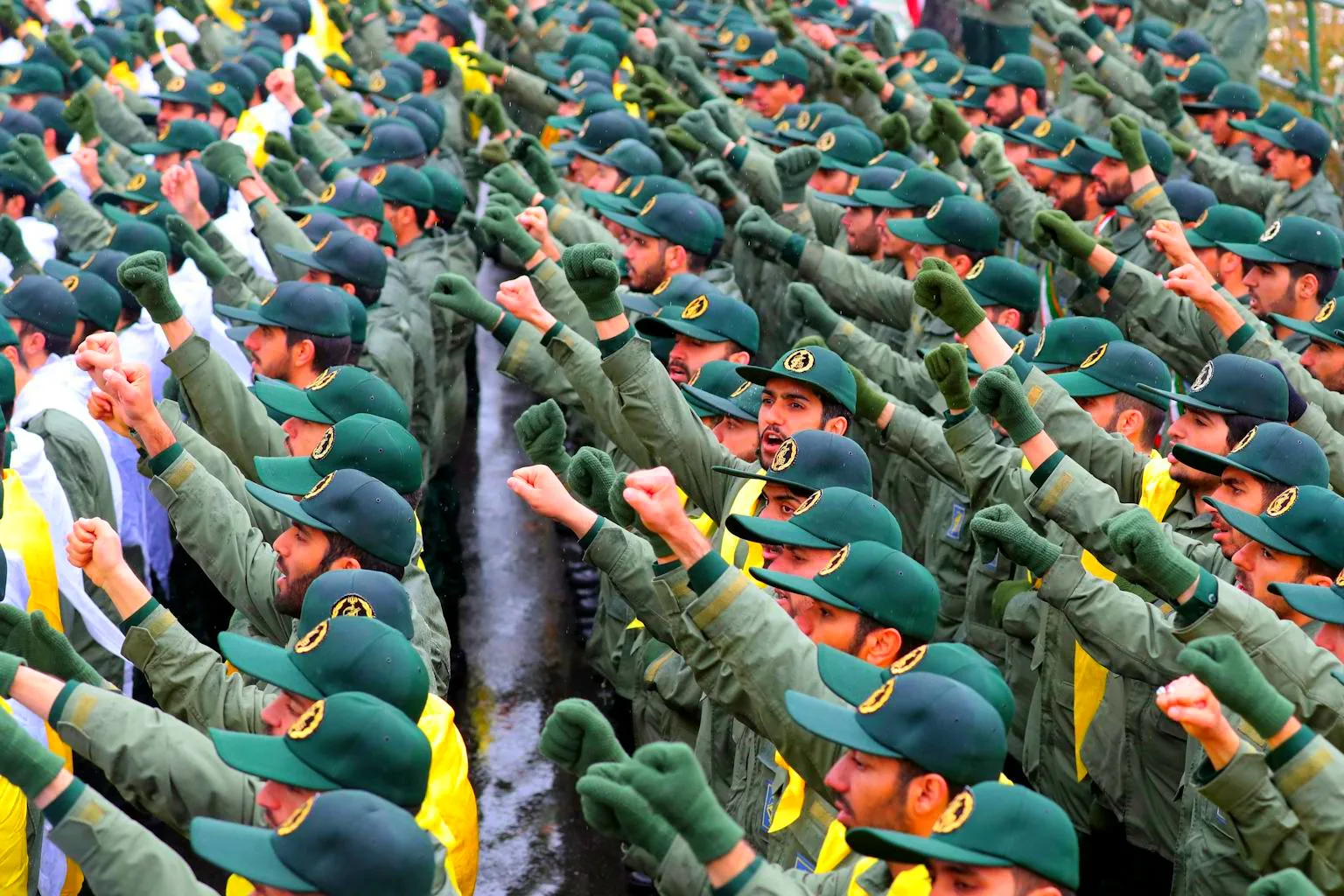
ASIATODAY.ID, TEHRAN — Iran has reportedly overhauled its defense posture on Monday, March 2, 2026, activating what it calls the “Decentralized Mosaic Defence” doctrine — a nationwide, synchronized guerrilla warfare strategy. The move follows US and Israeli strikes on Sunday that targeted central command structures.
Under the new strategy, the Islamic Revolutionary Guard Corps (IRGC) has been restructured into 31 autonomous operational units: one based in Tehran and 30 others operating under provincial-level commands.
Each unit commander has reportedly been granted full authority to make wartime decisions independently, without requiring approval from central leadership in Tehran.
Designed to Prevent Systemic Paralysis
Iranian officials say the recent US and Israeli strikes targeted key infrastructure and military command centers. While Tehran has not disclosed detailed operational mechanisms, senior figures have indicated that the restructuring is intended to prevent systemic paralysis in the event of communication disruptions or leadership decapitation attempts.
Iranian Foreign Minister Abbas Araghchi stated that Iran has long studied how to confront the United States and its allies.
“The bombing of our capital does not affect our capacity to fight. Decentralized Mosaic Defence allows us to determine when — and how — this war will end,” he wrote on X on Sunday.
Meanwhile, Ali Larijani, chairman of Iran’s Supreme National Security Council, signaled readiness for a prolonged conflict.
“Iran, unlike the United States, has prepared itself for a long war,” Larijani wrote on the same platform Monday.
How the “Decentralized Mosaic Defence” Works
According to reports cited by Times Now, the IRGC’s 31 independent units are designed to function like pieces of a puzzle.
Each commander is granted full tactical authority, enabling immediate decisions on missile launches, drone deployments, and guerrilla-style assaults without waiting for centralized authorization.
The doctrine draws heavily on asymmetric warfare principles. Iran’s rugged mountains and vast desert terrain are expected to serve as natural operational zones.
Analysts suggest this layered and decentralized defense system is intended to gradually wear down adversaries through sustained, dispersed resistance rather than conventional head-on confrontation.
The activation of this doctrine marks a significant shift in Iran’s military posture, signaling preparation not just for retaliation, but for a potentially extended and decentralized conflict. (AT Network)
Follow Us at Google News and WA Channel