
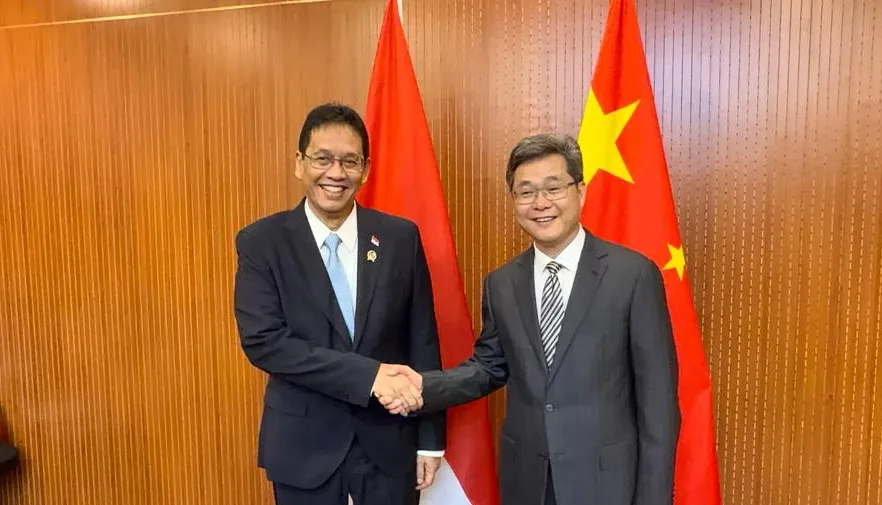
ASIATODAY.ID, BEIJING — Indonesia has secured strong backing from Chinese authorities for its planned debut issuance of a sovereign Panda Bond, underscoring Beijing’s growing confidence in Southeast Asia’s largest economy and opening a new avenue for Jakarta to diversify its funding sources amid an uncertain global financial landscape.
During a two-day visit to Beijing, Finance Minister Purbaya Yudhi Sadewa met senior Chinese officials, including Finance Minister Lan Fo’an, representatives of the People’s Bank of China (PBOC), multilateral lenders and institutional investors. The meetings resulted in a commitment from Chinese authorities to support Indonesia’s entry into China’s domestic bond market.
“We requested support for the Panda Bond issuance, and they were highly supportive,” Purbaya said in Beijing.
“The PBOC indicated that once the formal application documents are submitted, the approval process will be accelerated.”
The planned sovereign Panda Bond would make Indonesia one of the few emerging economies to tap China’s onshore bond market, allowing the government to raise funds in yuan while broadening its investor base beyond traditional dollar-denominated financing.
The move forms part of Jakarta’s broader strategy to diversify development financing and reduce reliance on any single currency or funding source. It also aligns with expanding local currency settlement arrangements between Indonesia and China as both countries seek to deepen financial cooperation.
“We want to diversify our sources of development financing so that they are not dependent on a single currency,” Purbaya said.
The discussions in Beijing come as governments across Asia navigate heightened market volatility, geopolitical tensions and shifting global capital flows. Indonesia has been actively seeking new financing channels while maintaining fiscal discipline and macroeconomic stability.
Speaking after a bilateral meeting with Chinese Finance Minister Lan Fo’an, Purbaya stressed that Indonesia approached China from a position of strength rather than necessity.
“Indonesia is not coming to Beijing because it is under pressure,” he said. “We are here because Indonesia is in a strong position to build mutually beneficial cooperation.”
The minister highlighted Indonesia’s relatively low government debt ratio, controlled fiscal deficit and resilient economic growth as key factors supporting investor confidence.
According to Purbaya, investor interest in Indonesian government securities remains robust despite global uncertainty, reflecting confidence in the country’s economic management and policy credibility.
“Market confidence is built through fiscal discipline, consistent reforms and credible policymaking,” he said.
Beyond financing, the two countries also reaffirmed their commitment to strengthening economic ties through bilateral cooperation and multilateral platforms, including the G20, APEC and ASEAN+3.
As part of the Beijing visit, Purbaya also held discussions with the People’s Bank of China, the Shanghai Cooperation Organization Development Bank and the Asian Infrastructure Investment Bank (AIIB) to explore broader financing and investment opportunities.
For Indonesia, the Panda Bond initiative represents more than a funding exercise. Officials view it as a strategic step toward deeper integration with Asian capital markets and a means of reinforcing financial links with China, one of Indonesia’s largest trading partners and sources of investment.
With support from both the Chinese government and the central bank, Indonesia’s long-awaited entry into China’s domestic bond market now appears significantly closer, marking a potential milestone in the country’s efforts to build a more diversified and resilient financing framework. (AT Network)
Follow Us at Google News and WA Channel