
ASIATODAY.ID, JAKARTA — Artificial intelligence is poised to transform Indonesia’s healthcare system, offering the potential to expand medical services, improve efficiency, and address workforce shortages.
However, global labour experts warn that without proper safeguards, the technology could also deepen inequalities and leave vulnerable workers behind.
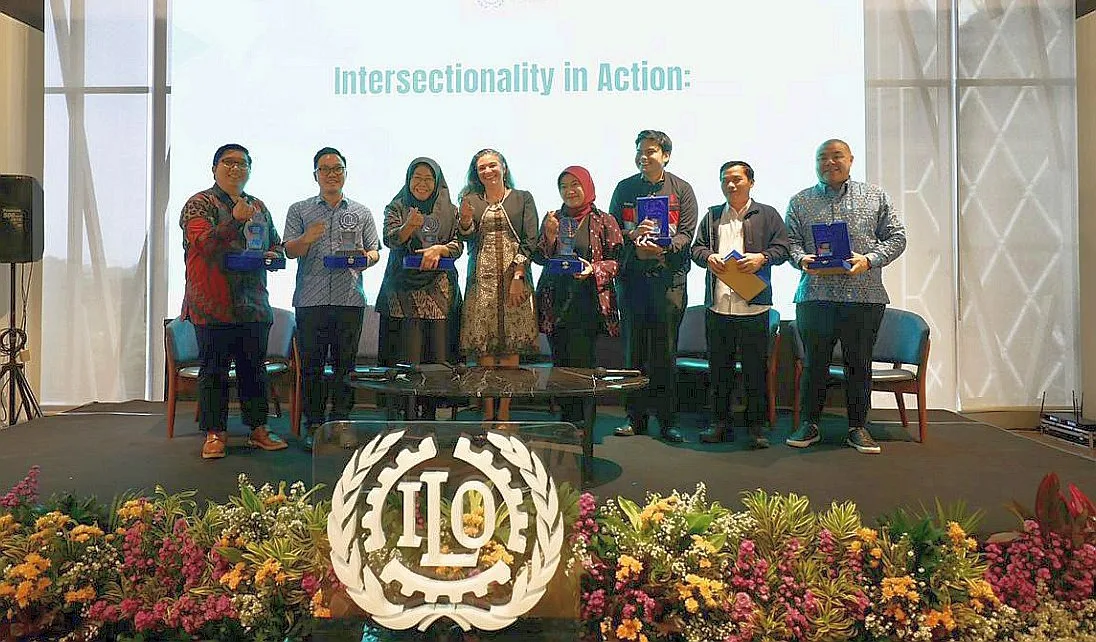
The warning emerged during the International Labour Organization’s (ILO) sixth forum on AI and the world of work, held in Jakarta on Tuesday, where policymakers, healthcare professionals, employers, workers’ representatives, academics, and development partners examined the growing role of AI in Indonesia’s health sector.
The policy dialogue, titled “Intersectionality in Action: A Deep Dive with Policymakers & Practitioners on AI, Health Workforce, and Serving Vulnerable Indonesian Workers,” focused on how emerging technologies are reshaping healthcare delivery while raising new challenges for labour protection, digital inclusion, and equitable access to medical services.
From diagnostic support systems and disease surveillance to workforce planning and administrative automation, AI is increasingly becoming part of healthcare operations worldwide.
Advocates say the technology can enhance productivity, strengthen occupational health and safety, and improve access to healthcare, particularly in underserved regions. Yet concerns remain over algorithmic bias, data privacy, unequal access to digital infrastructure, and the future of work in the sector.
Indonesia’s Minister of Health, Budi Gunadi Sadikin, in remarks delivered by Eko Sulistijo, Head of the Ministry’s Data and Technology Centre, said AI could become a key driver of the country’s healthcare transformation agenda.
“As we advance our health transformation agenda, it is essential that technology complements and promotes equity in healthcare services,” Budi said.
He revealed that the Health Ministry is developing a policy framework governing AI use in healthcare, involving consultations with doctors, academics, and healthcare practitioners.
Janine Berg, Senior Researcher at the ILO Research Department in Geneva, presented findings from an ILO study on the impact of large language models (LLMs) on physicians’ clinical reasoning in Indonesia, Kenya, and the Netherlands.
“Our findings suggest that AI can strengthen healthcare delivery and support clinical decision-making without replacing healthcare workers,” Berg said, emphasizing that successful implementation requires training, rigorous validation, and strong governance mechanisms.
The discussion comes as Indonesia pushes forward an ambitious health transformation strategy aimed at strengthening primary care, referral services, health resilience, financing, workforce development, and digital health technologies.
Despite progress, the country continues to face significant challenges, including shortages and uneven distribution of healthcare workers, rising demand driven by population ageing, and persistent disparities between urban and rural healthcare access.
ILO Country Director for Indonesia and Timor-Leste Simrin Singh stressed that the benefits of AI would ultimately depend on how governments, employers, and workers manage its deployment.
“AI should be seen as a tool to support, not replace, healthcare workers,” Singh said. “The challenge is ensuring that AI improves healthcare outcomes, strengthens working conditions, and expands equitable access to quality healthcare.”
Industry practitioners participating in the forum highlighted practical applications of AI, ranging from healthcare resource allocation and claims management to expanding services in remote communities.
They also stressed the need to mitigate risks associated with emerging technologies, particularly for vulnerable workers and populations facing barriers to healthcare and digital inclusion.
Representatives from labour and business organizations echoed calls for balanced AI adoption. They emphasized workforce readiness, patient protection, digital infrastructure investment, and skills development as critical factors in ensuring that technological innovation supports both sustainable economic growth and improved health outcomes.
With more than 100 stakeholders participating, the forum underscored a growing consensus that AI could become a powerful force in modernizing Indonesia’s healthcare system—provided that innovation is matched by strong governance, worker protections, and a commitment to equitable access.
As Southeast Asia’s largest economy accelerates its digital transformation, the debate over AI’s role in healthcare is likely to become a defining issue in determining whether technological progress narrows or widens existing social and economic gaps. (Midwan)
Follow Us at Google News and WA Channel