
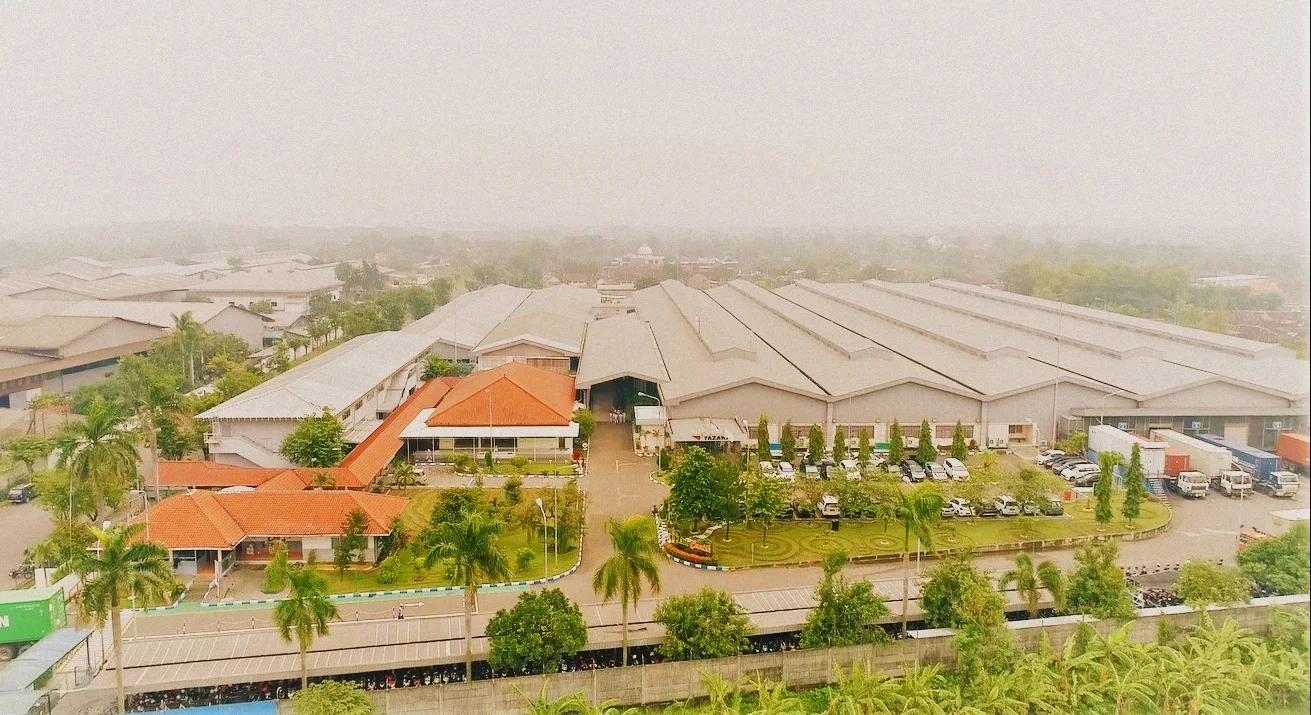
ASIATODAY.ID, JAKARTA – Indonesia has debunked reports that two manufacturing subsidiaries of Japan’s Yazaki Group, one of the world’s largest automotive suppliers, are relocating production to Vietnam, seeking to reassure investors as Southeast Asia’s competition for global manufacturing investment continues to intensify.
Following an on-site investigation, Indonesia’s Ministry of Industry said PT Jatim Autocomp Indonesia (PT JAI) in Pasuruan and PT Surabaya Autocomp Indonesia (PT SAI) in Mojokerto, East Java, remain fully operational. The ministry said neither company has plans to relocate production to Vietnam or implement layoffs, despite widespread reports suggesting otherwise.
“We conclude that there are currently no plans to relocate the production facilities of either company from Indonesia to Vietnam, and there has been no workforce reduction or layoffs,” ministry spokesperson Febri Hendri Antoni Arief said quoted on June 29, 2026.
According to the ministry, its findings were based on field inspections and direct confirmation from both companies.
The clarification comes as Indonesia and Vietnam compete aggressively to attract export-oriented manufacturers while multinational companies continue diversifying supply chains and rebalancing production across Asia.
Japan’s Yazaki and Indonesia’s Export Manufacturing Base
The companies at the center of the controversy are Indonesian subsidiaries of Japan’s Yazaki Group, a privately held automotive supplier founded in 1941 and widely recognized as one of the world’s largest manufacturers of automotive wiring harnesses and electrical distribution systems.
Operating in more than 40 countries, Yazaki supplies critical components to many of the world’s leading automakers through an extensive global manufacturing network. Its wiring harnesses—often described as the “nervous system” of modern vehicles—connect and power essential functions including engine management, lighting, safety systems, sensors, infotainment, and advanced driver-assistance technologies.
Yazaki’s Indonesian operations have become an important part of that global production network. The company’s manufacturing facilities in East Java primarily serve export markets, supporting international automotive production while reinforcing Indonesia’s position within the regional automotive supply chain.
According to the Ministry of Industry, PT JAI and PT SAI have invested more than IDR1.9 trillion (approximately US$117 million) in Indonesia. During the first quarter of 2026, the two plants produced a combined 2.8 million automotive components, with 100% of their output exported to overseas markets.
Why the Rumors Matter
Because wiring harness production is among the most labor-intensive and supply chain-critical segments of vehicle manufacturing, any relocation by a major supplier such as Yazaki would carry implications far beyond Indonesia. Such a move could reshape supplier networks, alter export flows, and influence investment decisions across Southeast Asia’s automotive industry.
Instead, Indonesian officials said the rumors themselves had already disrupted business operations. Overseas buyers and suppliers reportedly sought clarification regarding existing and future contracts after reports of a possible relocation circulated publicly.
The episode illustrates how quickly unverified information can affect business confidence in an increasingly competitive investment environment, where market perception can be as influential as government policy.
Indonesia and Vietnam’s Race for Manufacturing Investment
Vietnam has emerged as one of Asia’s fastest-growing manufacturing destinations, attracting substantial foreign investment in electronics, automotive components, and other high-value industries.
Indonesia, meanwhile, has pursued an ambitious industrial strategy centered on downstream mineral processing, electric vehicle development, and strengthening domestic manufacturing capabilities.
As global manufacturers continue diversifying production beyond China, competition between Indonesia and Vietnam has intensified. Both countries are seeking to attract long-term investment from Japanese, South Korean, European, and U.S. manufacturers looking to build resilient regional supply chains.
Recognizing the strategic importance of investor confidence, Industry Minister Agus Gumiwang Kartasasmita has instructed ministry officials nationwide to intensify monitoring of industrial performance, respond rapidly to potential supply chain disruptions, and implement early measures to prevent factory closures and protect employment.
For Indonesia, the controversy extends well beyond two factories in East Java. It reflects a broader battle for investment credibility as Southeast Asia cements its position as one of the world’s most important manufacturing regions.
In this increasingly competitive landscape, governments are competing not only through incentives and infrastructure, but also by demonstrating that their industrial ecosystems remain stable, reliable, and resilient in the eyes of global investors. (AT Network)
Follow Us at Google News, WA Channel, and LinkedIn