
ASIATODAY.ID, JAKARTA — Indonesia is accelerating the long-delayed Abadi Masela gas project, a strategic investment worth around US$20 billion (IDR339 trillion), as the government moves to strengthen national energy security and reduce dependence on imported fuels amid escalating global geopolitical uncertainty.
Minister of Energy and Mineral Resources Bahlil Lahadalia said construction of the project, one of Indonesia’s largest upstream gas developments, is scheduled to begin in 2027, ending decades of delays that had stalled one of the country’s most significant energy investments.
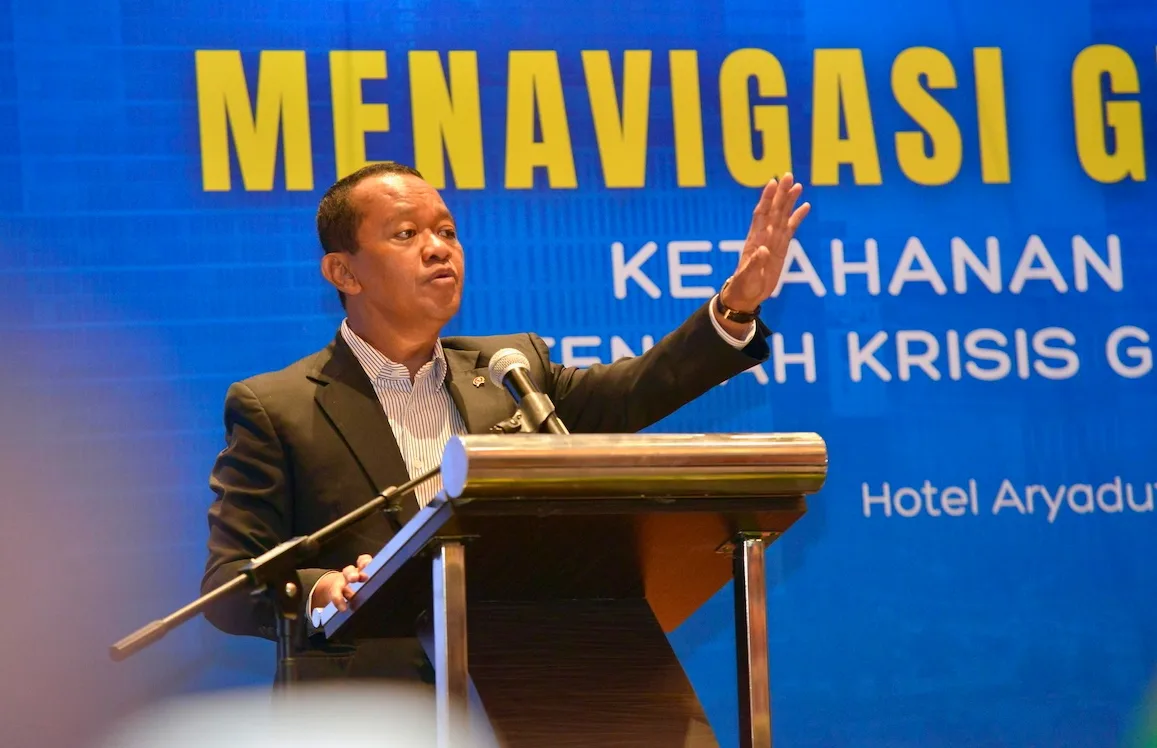
“After years of delays, the project has finally moved forward following key policy decisions and technical studies. We have instructed INPEX to accelerate implementation, and construction will begin in 2027,” Bahlil said during the Mid-Year Economic Review hosted by the Institute for Development of Economics and Finance (INDEF) in Jakarta on Thursday.
The Abadi Masela project, operated by Japan’s INPEX Corporation and its partners, is expected to commence production between 2029 and 2030, providing a major boost to Indonesia’s domestic natural gas supply and supporting the country’s long-term energy transition.
The acceleration follows directives from President Prabowo Subianto during his official visit to Japan in March 2026, where energy transition investment and the completion of the Masela project were identified as strategic priorities.
Following the visit, Bahlil met with INPEX Chief Executive Officer Takayuki Ueda, who reaffirmed the company’s commitment to expedite project development.
Energy Strategy Amid Rising Geopolitical Risks
The government’s push to fast-track Masela forms part of a broader strategy to shield Indonesia from mounting geopolitical risks that continue to disrupt global energy markets and supply chains.
Bahlil compared today’s geopolitical environment to a recurring illness, warning that international conditions can shift rapidly and make long-term planning increasingly difficult.
To reduce exposure to volatile global markets, Indonesia is pursuing policies aimed at lowering imports of liquefied petroleum gas (LPG), refined fuels, and crude oil while maximizing domestic energy resources.
Among the government’s flagship initiatives is the expansion of Compressed Natural Gas (CNG) as an alternative to subsidized 3-kilogram LPG cylinders. Officials estimate CNG could reduce household energy costs by around 30–40% while significantly lowering import dependence.
Indonesia is also preparing to officially launch its B50 biodiesel program in July 2026, increasing the share of palm oil-based biofuel in diesel consumption. The policy is expected to curb diesel imports, improve the trade balance, and strengthen the domestic downstream palm oil industry.
At the same time, the government is evaluating potential crude oil imports from Russia as part of a broader effort to diversify energy supply sources and improve resilience against future global supply disruptions.
With the acceleration of the Masela project, the rollout of CNG, the implementation of B50, and diversification of crude oil supplies, Indonesia is positioning itself to build a more resilient, self-sufficient energy system while reinforcing its role as a major energy producer in Asia. (AT Network)
Follow Us at Google News, WA Channel, and LinkedIn