
ASIATODAY.ID, MANILA — The Asian Development Bank (ADB) has taken two significant steps that underscore its long-term strategy to strengthen development financing across Asia and the Pacific, announcing the establishment of a North Pacific Subregional Office while formally opening the election process for its next president.
The twin announcements reflect ADB’s efforts to reinforce both its institutional leadership and operational presence at a time when the region faces growing climate risks, widening infrastructure financing gaps, and increasing demand for sustainable economic development.
ADB President Masato Kanda is the sole nominee for the institution’s next five-year presidential term, which begins on 24 November 2026. Voting by ADB’s Board of Governors will run from 2 July to 31 August, with the result scheduled to be announced on 1 September 2026.
Under the ADB Charter, the President must secure the support of a majority of Governors representing a majority of the institution’s total voting power.
Expanding ADB’s Presence in the Pacific
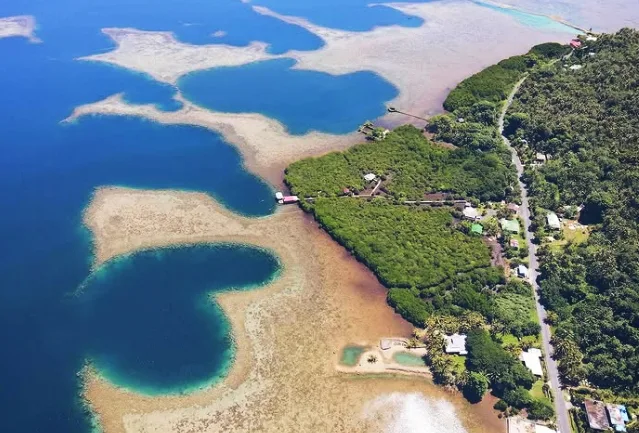
At the heart of ADB’s latest expansion is the creation of the North Pacific Subregional Office in Pohnpei, Federated States of Micronesia (FSM), upgrading the bank’s existing country office into a regional hub expected to become operational by the end of 2026.
The office will serve the Federated States of Micronesia, the Marshall Islands, and Palau, strengthening collaboration with governments, development partners, regional organizations, civil society, and the private sector.
The expanded presence is expected to accelerate project preparation and implementation, improve portfolio management, deepen policy dialogue, strengthen institutional capacity, and enhance emergency response capabilities in one of the world’s most climate-vulnerable regions.
“The North Pacific Subregional Office will strengthen ADB’s ability to deliver tailored development solutions to address the complex challenges facing the region,” said Emma Veve, ADB Director General for the Pacific on July 2, 2026.
She added that a stronger regional presence would also help mobilize greater public and private investment while deepening partnerships to build long-term resilience and sustainable prosperity.
Responding to Climate and Development Challenges
The North Pacific’s small island economies remain among the world’s most vulnerable to climate change, extreme weather events, natural disasters, and external economic shocks.
ADB believes a stronger on-the-ground presence will enable closer engagement with governments and development partners, resulting in faster project delivery, more effective policy coordination, and improved disaster response.
Since becoming a key development partner in the North Pacific in 1990, ADB has steadily expanded its financial support for the region.
As of 31 March 2026, the bank had committed US$841.11 million to its North Pacific developing member countries, including financing through the Asian Development Fund (ADF).
Its active public-sector portfolio comprised 34 projects valued at US$320.5 million at the end of 2025, with further expansion expected as investment in infrastructure, renewable energy, climate adaptation, and public services continues to grow.
In June 2026, ADB also approved a US$500,000 grant to support recovery efforts in the Federated States of Micronesia after Typhoon Sinlaku, which affected approximately 34,000 people across 42 municipalities.
Positioning for the Next Decade
The launch of ADB’s presidential election alongside the expansion of its operational footprint highlights the institution’s broader ambition to strengthen both governance and delivery capacity.
If confirmed for another term, Masato Kanda is expected to lead ADB through a period marked by rising demand for climate finance, sustainable infrastructure, clean energy investment, digital transformation, and greater private-sector participation across developing economies.
As Asia and the Pacific continue to navigate economic uncertainty and accelerating climate challenges, ADB is positioning itself to play an even more influential role in mobilizing capital, strengthening regional cooperation, and advancing sustainable, inclusive, and resilient growth. (AT Network)
Follow Us at Google News, WA Channel, and LinkedIn