
ASIATODAY.ID, MANILA – The Philippines has announced a sweeping military modernization program that will expand strategic air bases near the South China Sea and the Taiwan Strait, underscoring Manila’s efforts to strengthen its territorial defense capabilities amid persistent maritime disputes with China.
The Philippine Air Force said the initiative includes upgrades to key military installations, the acquisition of long-range maritime patrol aircraft, additional Black Hawk utility helicopters, Bell 412EPX search-and-rescue helicopters, and advanced surveillance radar systems to improve maritime domain awareness and operational readiness.
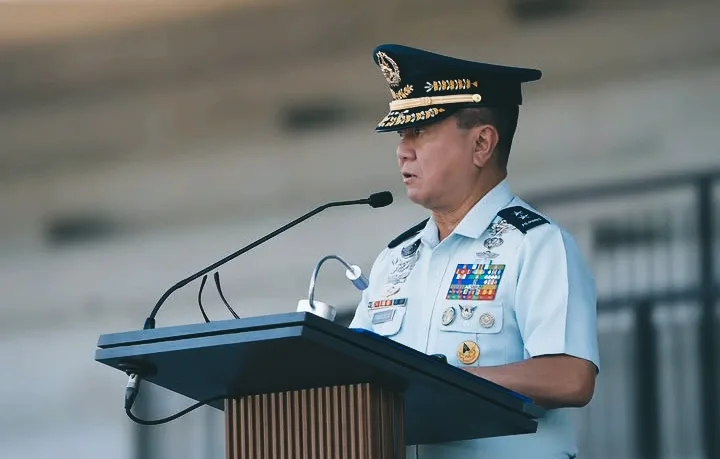
Speaking during the Philippine Air Force’s 79th anniversary celebration, Air Force Commander Lt. Gen. Arthur Cordura said the modernization drive reflects the service’s long-term commitment to building a more capable and interoperable force.
“The Air Force remains committed to modernization despite various challenges, focusing on mission readiness, interoperability with allies, and building a credible multi-domain force,” Cordura said.
Strategic Frontline Investments
A central element of the modernization program is the expansion of military facilities on Thitu Island (Pag-asa Island), the Philippines’ largest occupied feature in the disputed Spratly Islands. The island hosts both a permanent civilian community and one of Manila’s most important military outposts in the South China Sea.
The second major project is located in Santa Ana, Cagayan Province, overlooking the Luzon Strait—a vital maritime corridor linking the South China Sea and the western Pacific, and one of the closest Philippine gateways to Taiwan.
Defense analysts consider the Luzon Strait one of the Indo-Pacific’s most strategically significant waterways because of its importance for commercial shipping, military logistics, and regional security.
Expanding Defense Partnership with Washington
Santa Ana is among the sites designated under the Enhanced Defense Cooperation Agreement (EDCA), which allows rotational deployment of U.S. forces, joint military exercises, pre-positioning of defense equipment, and infrastructure development at selected Philippine military facilities.
The modernization effort comes as Manila and Washington continue to deepen defense cooperation through expanded joint exercises, enhanced maritime patrols, and greater interoperability under their decades-old Mutual Defense Treaty.
Security cooperation between the two allies has accelerated in recent years amid growing strategic competition in the Indo-Pacific.
Beijing Pushes Back
China has repeatedly opposed the expansion of U.S.-Philippines defense cooperation, arguing that increased American military access in the Philippines heightens regional tensions and reflects a broader strategy to contain Beijing’s influence.
Chinese analysts have offered more nuanced assessments, suggesting that Washington’s posture is aimed primarily at strengthening deterrence and strategic positioning rather than preparing for direct military confrontation.
Growing Strategic Competition
The Philippines’ latest military modernization illustrates the broader transformation of the Indo-Pacific security environment, where regional governments are investing heavily in defense capabilities as geopolitical rivalry continues to intensify.
With competing territorial claims in the South China Sea remaining unresolved and tensions across the Taiwan Strait continuing to draw international attention, Manila’s investment in military infrastructure is expected to enhance its surveillance, mobility, and deterrence capabilities.
While supporters view the modernization program as essential for safeguarding national sovereignty and strengthening alliance interoperability, analysts also warn that continued military buildups across the region reinforce the need for sustained diplomacy, confidence-building measures, and effective crisis-management mechanisms to reduce the risk of miscalculation.
As strategic competition between the United States and China increasingly shapes the Indo-Pacific security architecture, the Philippines is positioning itself as a pivotal frontline state in one of the world’s most consequential geopolitical theaters. (AT Network)
Follow Us at Google News, WA Channel, and LinkedIn