
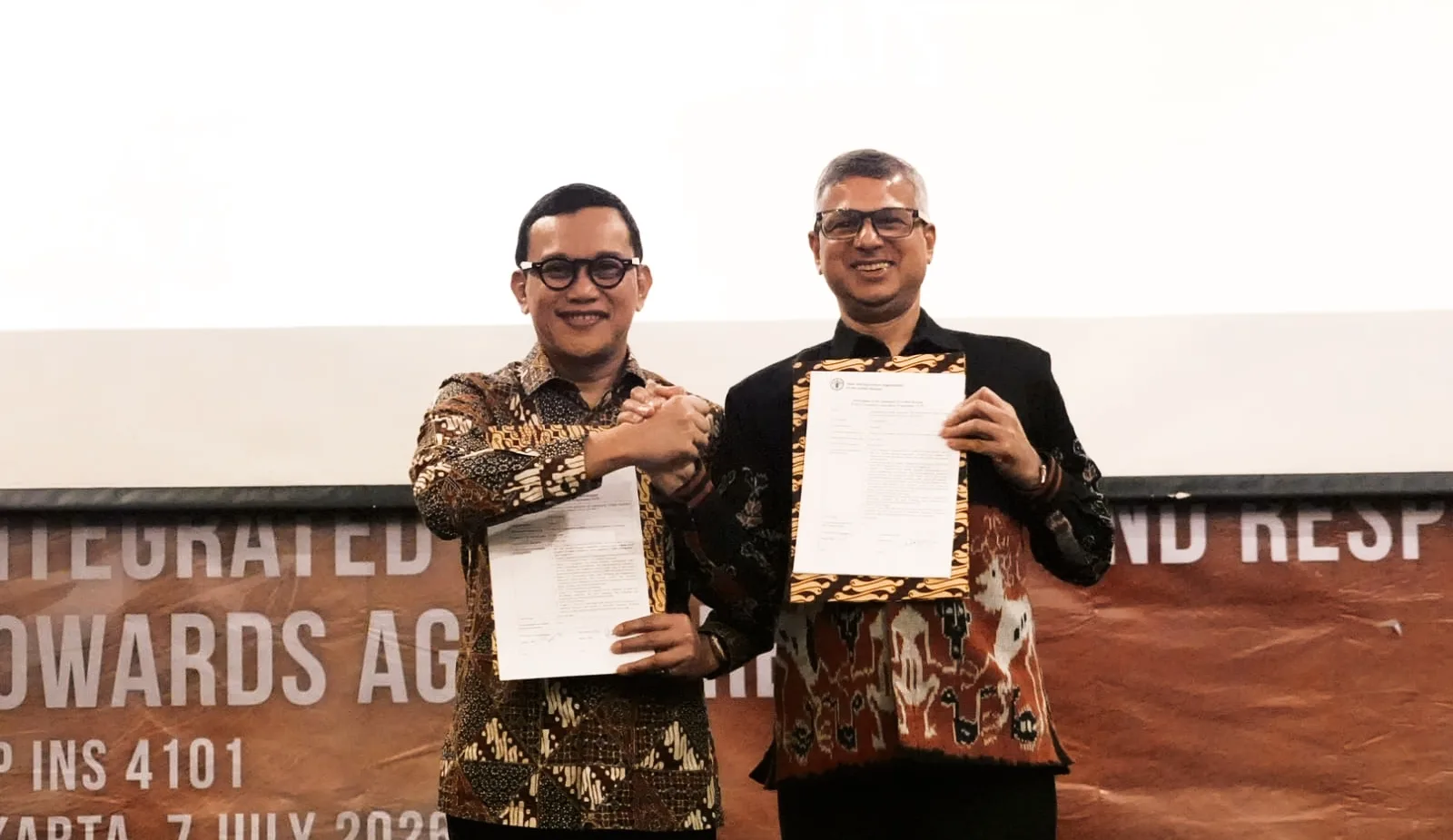
ASIATODAY.ID, JAKARTA — The Food and Agriculture Organization of the United Nations (FAO) has committed USD 200,000 in technical assistance to help modernize Indonesia’s animal quarantine system, reinforcing the country’s biosecurity, food security and preparedness against transboundary animal diseases as global trade and cross-border livestock movements continue to expand.
The programme, launched on Tuesday by Indonesia’s Quarantine Authority (Barantin) and FAO Indonesia, will run from 2026 to 2028 under FAO’s Technical Cooperation Programme (TCP). The initiative aims to strengthen Indonesia’s capacity to prevent, detect and respond to animal diseases, zoonotic infections and invasive alien species through science-based risk management, digital technologies and stronger institutional capacity.
Speaking at the programme’s inception workshop in Jakarta, Barantin Head Abdul Kadir Karding said Indonesia’s quarantine system must evolve alongside increasingly complex international trade and supply chains.
“Indonesia’s quarantine system should facilitate trade without compromising biosecurity. Modern, data-driven risk management aligned with international standards is essential to protecting food security while improving economic efficiency,” Karding said.
Indonesia’s livestock industry supports more than 13 million households, according to Statistics Indonesia (BPS), making effective animal disease prevention a critical pillar of national food resilience, rural livelihoods and economic stability.
The FAO-funded programme will focus on three strategic priorities: strengthening the technical competencies of quarantine officers in animal disease risk assessment; developing an integrated digital platform for surveillance, risk mapping and early warning; and expanding public awareness and community preparedness to reduce the risks of disease outbreaks.
FAO Representative for Indonesia and Timor-Leste Rajendra Aryal said stronger quarantine systems are fundamental to the One Health approach, which recognizes the close links between animal, human and environmental health.
“A strong animal quarantine system is the frontline defence against biological threats that endanger public health, food systems and international trade. Through this programme, FAO is supporting Indonesia in building modern risk analysis and digital quarantine capabilities that will strengthen national resilience while contributing to safer regional and global trade,” Aryal said.
Despite significant progress, Indonesia’s animal quarantine system continues to face challenges, including fragmented surveillance data, limited system integration and the need for internationally aligned risk assessment frameworks. The new technical assistance programme is designed to address these gaps by strengthening institutional capacity, improving digital governance and enhancing evidence-based decision-making.
Representatives from government ministries, academia, professional organizations and development partners endorsed the programme’s implementation framework during the launch, reaffirming a shared commitment to building a more integrated and resilient national biosecurity system.
Beyond improving quarantine services, the initiative is expected to help Indonesia align more closely with international animal health and biosecurity standards, supporting safer agricultural trade, stronger food security and greater confidence in the country’s role within regional and global supply chains. (Midwan)
Follow Us at Google News, WA Channel, and LinkedIn