
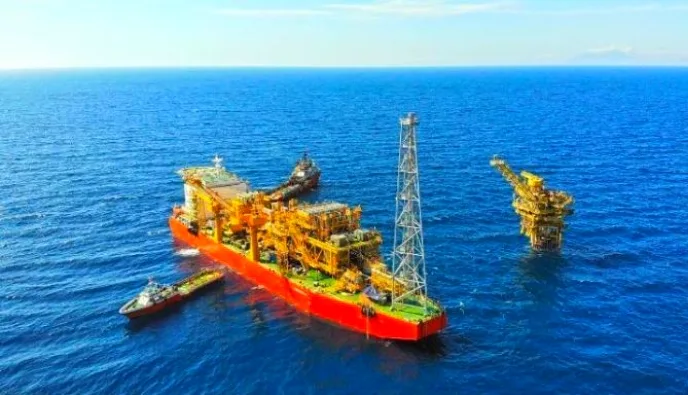
ASIATODAY.ID, JAKARTA — Indonesia and Malaysia are entering a new phase of strategic energy cooperation following the extension of the Floating Production Storage and Offloading (FPSO) Bukit Tua contract, securing the continuity of offshore oil and gas operations in the Madura Strait for the next decade.
The agreement represents more than the continuation of an offshore production facility. It reflects a broader shift in Southeast Asia’s energy landscape, where regional cooperation, investment certainty, and infrastructure resilience are becoming increasingly important to ensure long-term energy security.
The extended FPSO Bukit Tua operation will support continued production from Petronas’ working area while enabling the development of nearby fields, including Hidayah, Barokah, and Bukit Panjang, which are progressing through development stages.
The contract signing brought together key stakeholders from Indonesia and Malaysia, including representatives from Indonesia’s upstream oil and gas sector, Petronas leadership, and the Government of Sabah, highlighting the growing strategic importance of cross-border energy collaboration.
Strengthening Indonesia’s Upstream Investment Confidence
For Indonesia, the continuation of FPSO Bukit Tua represents an important step in maintaining production stability as the country seeks to increase oil and gas output and attract greater investment into the upstream sector.
Over more than 11 years of operation, FPSO Bukit Tua has demonstrated strong operational performance, recording 2.7 million working hours without a Lost Time Injury (LTI) — reflecting high safety standards and reliable offshore management.
The facility has the capacity to process up to 25,000 barrels of oil per day (BOPD) and 60 million standard cubic feet of gas per day (MMSCFD), positioning it as a critical asset supporting Indonesia’s offshore energy production.
The new agreement also delivers improved economic efficiency, with lower FPSO leasing costs compared with the previous contract. This efficiency enhancement is expected to strengthen project economics and improve Indonesia’s attractiveness as an upstream investment destination.
In a global energy market increasingly focused on efficiency, resilience, and supply security, long-term operational certainty has become a key factor influencing investment decisions.
ASEAN’s New Era of Energy Investment
The Bukit Tua extension comes as ASEAN faces a defining challenge: meeting rapidly growing energy demand while accelerating the transition toward cleaner energy systems.
Southeast Asia is one of the world’s fastest-growing economic regions, driven by industrial expansion, urbanisation, digital transformation, and rising electricity consumption. This growth requires massive investment across the entire energy ecosystem — from oil and gas exploration to renewable power, transmission networks, energy storage, and low-carbon technologies.
While renewable energy investment continues to accelerate, natural gas remains strategically important for ASEAN as a transition energy source that supports industrial growth and grid stability.
Indonesia, Malaysia, and Thailand remain among the region’s key energy producers, while countries such as Singapore, Vietnam, and the Philippines continue expanding LNG infrastructure and seeking diversified energy partnerships.
This changing landscape creates significant opportunities for international investors in upstream development, offshore technology, LNG infrastructure, energy services, and emerging clean energy solutions.
From Energy Competition to Regional Collaboration
ASEAN’s future energy security will increasingly depend on cooperation rather than isolated national strategies.
Regional initiatives such as cross-border electricity trading, ASEAN Power Grid development, LNG connectivity, carbon capture and storage (CCS), and renewable energy corridors are expected to become important pillars of Southeast Asia’s energy future.
Indonesia holds a strategic position in this transformation due to its vast natural resources, including oil and gas, geothermal potential, renewable energy resources, and critical minerals supporting the global energy transition.
Malaysia contributes decades of offshore expertise, advanced energy capabilities, and strong regional networks through its energy industry ecosystem.
Together, Indonesia and Malaysia demonstrate how ASEAN countries can combine resources, technology, and investment capacity to create shared economic value and strengthen regional resilience.
Energy Diplomacy Opens New Frontier Opportunities
Beyond its commercial value, the FPSO Bukit Tua extension carries a significant message of energy diplomacy.
The facility, jointly involving Indonesian and Malaysian interests, represents a model of cooperation that could be expanded into broader regional energy partnerships.
The Government of Sabah has also expressed interest in exploring additional cooperation opportunities in potential oil and gas areas along the Indonesia-Malaysia border, including frontier regions such as Ambalat and the Ligitan-Sipadan area.
These opportunities highlight the potential for ASEAN countries to build stronger energy partnerships amid growing global uncertainty and increasing competition for secure energy supplies.
Bukit Tua as a Blueprint for ASEAN’s Energy Future
The continuation of FPSO Bukit Tua illustrates a broader trend: ASEAN’s energy future will be shaped by partnerships that connect natural resources, technology, capital, and regional markets.
For global investors, Southeast Asia offers a combination of strong economic growth, abundant resources, expanding industrial demand, and strategic geographic importance.
Indonesia and Malaysia’s energy alliance sends a clear signal that ASEAN is not only a growing energy consumer but also an emerging destination for long-term energy investment.
As the global energy system continues to transform, projects such as Bukit Tua could serve as a blueprint for how Southeast Asian nations build a more secure, competitive, and sustainable energy future. (AT Network)
Follow Us at Google News, Instagram, WA Channel, and LinkedIn