
ASIATODAY.ID, BANDUNG — Indonesia is strengthening its role in the global coffee trade as an integrated export ecosystem connects farmers, logistics networks, and international markets. A new shipment of Indonesian coffee to China and Morocco signals growing opportunities for the country’s agricultural commodities to compete in global supply chains.
A total of 38.4 tonnes of Indonesian coffee valued at US$227,443.20 was exported from the SRG KAI-ASLI Gedebage warehouse in Bandung, West Java, to international buyers in China and Morocco.
The shipment consisted of 19.2 tonnes of Robusta Grade 2 coffee worth US$71,040 for Morocco and 19.2 tonnes of Arabica Semi-Wash coffee valued at US$156,403.20 for China.
The export milestone demonstrates how Indonesia’s Warehouse Receipt System (SRG) is evolving beyond a storage facility into a strategic platform that supports commodity quality, financing access, and global market connectivity.
“Optimizing SRG strengthens the competitiveness of Indonesian commodities, increases added value, and expands international market access for farmers and businesses,” said Bappebti Chief Tirta Karma Senjaya.
From Coffee Farms to Global Markets
Through the SRG mechanism, farmers are able to maintain the quality of their products, access financing, and determine the right time to sell based on market conditions.
The export ecosystem involves farmers from the Gunung Luhur Berkah Cooperative, PT ASLI Logistik Indonesia as an aggregator, PT Sucofindo as the warehouse operator, PT Kereta Api Indonesia as the warehouse owner and initiator of the rail-based SRG concept, and PT Kliring Berjangka Indonesia as the SRG registration center.
Financial institutions also contribute by supporting financing access and strengthening the agricultural value chain.
The initiative reflects Indonesia’s broader effort to transform agricultural commodities from local products into globally competitive exports.
Ports and Logistics Strengthen Export Competitiveness
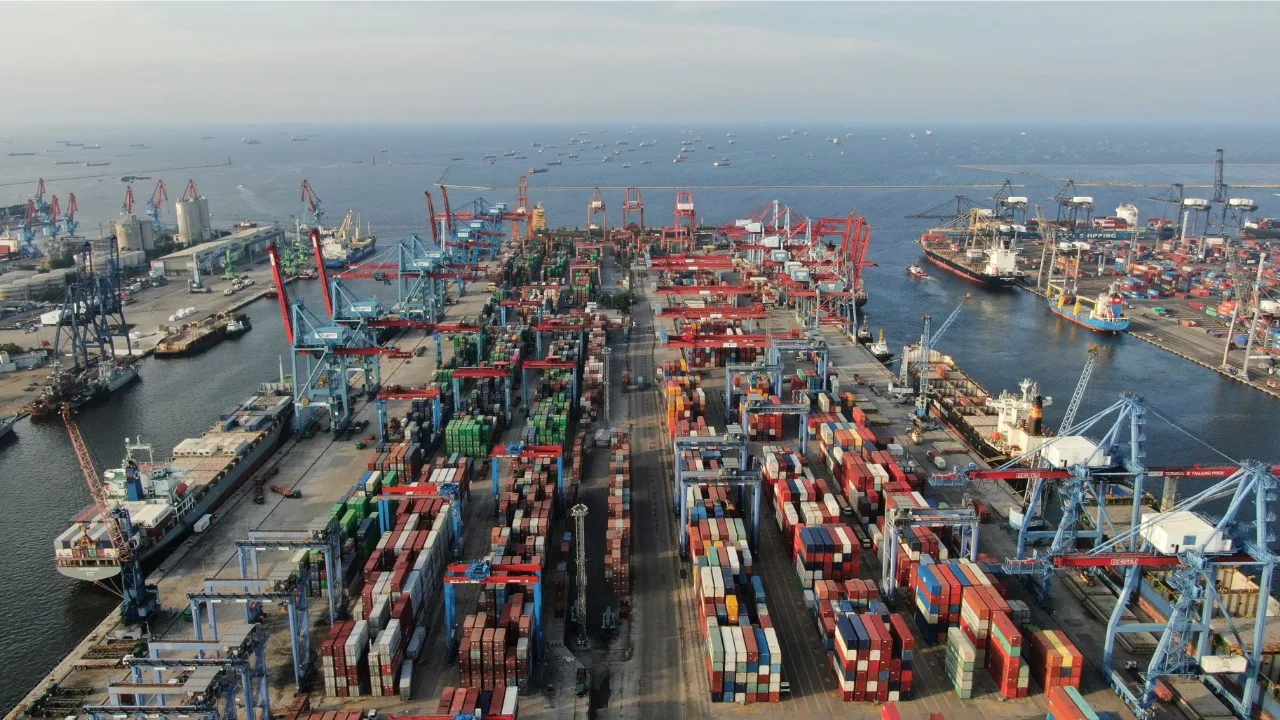
The expansion of Indonesian coffee exports is supported by the strengthening of national logistics infrastructure, with ports playing a crucial role as gateways connecting domestic producers with global markets.
Indonesia’s port network continues to show positive momentum. PT Pelabuhan Indonesia (Persero) recorded container flows reaching 6.42 million TEUs until April 2026, reflecting continued growth in trade activity.
International container traffic recorded significant expansion, supported by stronger export and import activities. The improvement of port capacity, digital services, and logistics efficiency is expected to further strengthen Indonesia’s competitiveness in global supply chains.
Modern logistics infrastructure is becoming increasingly important as Indonesia seeks to expand exports of value-added commodities, including coffee, processed agricultural products, and manufactured goods.
China and Morocco Open New Growth Opportunities
The latest coffee exports highlight Indonesia’s strategy to diversify international markets while responding to growing global demand for specialty coffee.
Additional shipments are expected to continue, including eight containers of Arabica Semi-Wash coffee totaling 153.6 tonnes valued at US$1.25 million for China.
Meanwhile, demand from Morocco has the potential to increase further, with projected shipments reaching several containers each month.
Chairman of the Gunung Luhur Berkah Cooperative, Miftahudin Saf, said international market access has become increasingly important for farmers.
“Through SRG, farmers can store commodities, sell at the right time, and maintain supply availability to meet export demand,” he said.
Building Indonesia’s Next Generation of Exports
Indonesia is one of the world’s leading coffee producers, with diverse origins and varieties recognized by global consumers.
By strengthening the entire ecosystem — from farmers and storage facilities to logistics networks and international ports — Indonesia is positioning coffee as part of a broader strategy to build competitive, sustainable, and globally connected exports.
As global demand for specialty coffee continues to rise, Indonesia’s coffee sector is moving beyond commodity trading toward a stronger role in the international value chain. (AT Network)
Follow Us at Google News, Instagram and LinkedIn