
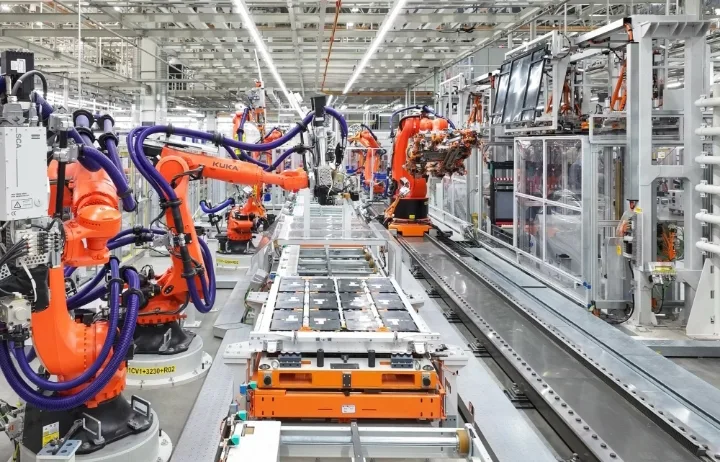
ASIATODAY.ID, VIENNA – The global energy transition is opening a new front in economic competition, with batteries, clean energy technologies, and technical standards emerging as strategic factors that will shape the future of industries and international trade.
The World Trade Organization (WTO) has highlighted the growing importance of global standards for critical and emerging technologies, including clean energy generation and storage as well as lithium-ion batteries, as countries compete to build stronger positions in the low-carbon economy.
At the WTO Technical Barriers to Trade (TBT) Committee meeting held on 7–10 July 2026, members discussed how effective technical regulations, international standards, and conformity assessment procedures can support innovation while ensuring that new technologies can enter global markets.
Lithium-Ion Batteries Become Strategic Assets
Lithium-ion batteries are rapidly becoming one of the most valuable assets in the global energy transition.
Their importance extends beyond electric vehicles. Batteries are now central to renewable energy storage, smart grids, industrial decarbonization, and the development of future low-carbon economies.
WTO members emphasized that predictable, practical, and adaptable standards are essential to accelerate the deployment of clean technologies while avoiding unnecessary barriers to international trade.
The committee highlighted the importance of international standards, strong quality infrastructure, broad stakeholder participation, and regulatory cooperation to build trust and allow climate-related technologies to reach markets more efficiently.
Clean Energy Standards Shape Future Markets
The race for clean technology leadership is reshaping the global economic landscape.
Governments and industries are competing to secure battery supply chains, critical minerals, advanced manufacturing capabilities, and access to fast-growing markets linked to electric vehicles and renewable energy.
At the same time, environmental regulations and digital requirements are becoming increasingly important factors in determining global competitiveness.
The WTO meeting discussed emerging trade issues involving clean energy, biofuels, recycled plastics, industrial decarbonization, cybersecurity, and digital product passports.
These standards could influence how companies produce, certify, and export goods in the coming decades.
Asia at the Heart of the Battery Economy
Asia has become the center of the global battery ecosystem, with major roles in electric vehicle production, battery manufacturing, mineral processing, and clean technology development.
The rapid expansion of the battery industry is also creating new opportunities for resource-rich economies to move beyond raw material exports and develop higher-value industrial capabilities.
Countries with critical minerals are increasingly seeking to strengthen domestic processing, attract investment, and become part of global clean energy supply chains.
However, meeting international requirements on sustainability, traceability, and environmental performance will be essential to remain competitive.
WTO Warns Against Fragmented Global Standards
The WTO stressed that technical regulations should support legitimate public policy objectives, including environmental protection, safety, and innovation, while avoiding unnecessary restrictions on trade.
During the meeting, the TBT Committee reviewed 70 specific trade concerns raised by member countries, covering areas such as environmental technologies, digital products, industrial standards, food, pharmaceuticals, and medical devices.
The discussions reflected a broader shift in global trade: competition is no longer defined only by tariffs and production costs, but increasingly by technology, standards, and control over strategic supply chains.
As the world accelerates toward a low-carbon future, batteries are becoming more than an energy storage technology — they are emerging as a symbol of economic power and industrial leadership.
The global battery race has begun, and it may determine the winners of the next era of economic growth. (AT Network)
Follow Us at Google News, Instagram and LinkedIn