
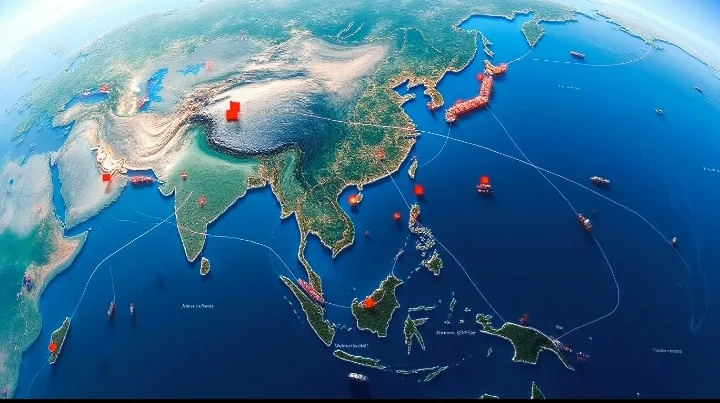
ASIATODAY.ID, JAKARTA — Indonesia is strengthening its global trade position after the House of Representatives (DPR RI) approved the ratification process for four strategic trade agreements involving ASEAN, China, and the Eurasian Economic Union (EAEU).
The move marks a significant step in Jakarta’s strategy to expand market access, diversify trade partnerships, and strengthen Indonesia’s role in regional and global supply chains.
The approval was reached during a working meeting and hearing between DPR Commission VI, the Ministry of Trade, and the Food and Drug Authority (BPOM) in Jakarta on Monday, July 21, 2026. The agreements will be ratified through Presidential Regulations in accordance with Indonesia’s legal framework.
Deputy Chairman of DPR Commission VI Andre Rosiade said the agreements would strengthen Indonesia’s trade cooperation with international partners while improving the competitiveness of national products in global markets.
“Commission VI has received explanations from the Minister of Trade and the Head of BPOM regarding the proposed ratification of these agreements,” Andre said.
The four strategic agreements include the Free Trade Agreement between Indonesia and the Eurasian Economic Union and its member states, the Second Protocol Amending the ASEAN Trade in Goods Agreement (ATIGA), the ASEAN Framework Agreement on Food Safety Regulation, and the Protocol to Enhance Comprehensive Economic Cooperation between ASEAN and China.
Together, the agreements are expected to open wider opportunities for Indonesian exporters, improve trade facilitation, strengthen food safety cooperation, and enhance economic connectivity across Asia and emerging markets.
Expanding Indonesia’s Global Trade Network
The latest agreements reflect Indonesia’s broader effort to build a more resilient and diversified trade network amid changing global economic dynamics.
Through stronger ASEAN economic integration and deeper cooperation with China, Indonesia aims to support smoother trade flows, strengthen regional production networks, and create new opportunities for businesses.
The agreement framework with the Eurasian Economic Union also provides Indonesia with an avenue to expand commercial relations with emerging markets beyond its traditional trade partners.
DPR Commission VI emphasized that the government must continue to follow regulatory procedures during the ratification process. After the issuance of Presidential Regulations, the government is required to formally notify the DPR as part of parliamentary oversight.
Indonesia-Canada CEPA Moves Forward
Beyond the four regional trade agreements, Indonesia is also preparing for the implementation of the Comprehensive Economic Partnership Agreement (CEPA) with Canada.
Chairwoman of DPR Commission VI Anggia Ermarini said Indonesia and Canada have strong potential to expand bilateral economic cooperation, particularly in sectors where both countries have complementary advantages.
“Indonesia and Canada have many areas for cooperation, including exports, imports, and strategic products that can benefit both countries,” Anggia said after meeting with Canadian Ambassador to Indonesia Jess Dutton in Jakarta.
She explained that discussions are focused on preparing the legal framework and supporting regulations needed to ensure the agreement can be implemented effectively.
Potential cooperation areas include agriculture, energy, minerals, and other strategic industries that can contribute to sustainable economic growth.
Canadian Ambassador Jess Dutton welcomed the engagement with Indonesia’s Parliament, saying collaboration with various stakeholders is important to advancing shared economic interests.
“It is important for us to engage with all members of Parliament to discuss issues of common interest and ultimately advance the interests of both Canada and Indonesia,” Dutton said.
He added that the Indonesia-Canada CEPA would provide a stronger foundation for expanding trade and investment cooperation between the two countries.
Positioning Indonesia as a Global Trade Hub
The approval of the four strategic agreements reinforces Indonesia’s ambition to become a key economic hub connecting Asia, global supply chains, and international markets.
With its strategic location, large domestic economy, and growing industrial capacity, Indonesia continues to pursue trade partnerships that support export growth, attract investment, and strengthen its position in the evolving global economy. (AT Network)
Follow Us at Google News, Instagram and LinkedIn