
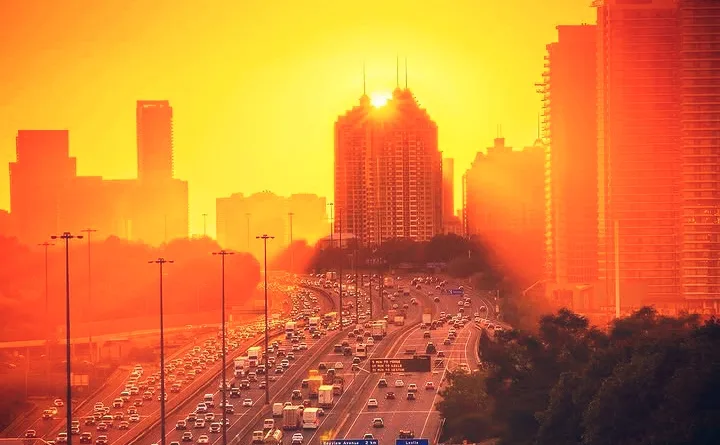
ASIATODAY.ID, JAKARTA — Planet Earth is entering a new era of unprecedented warming. The rising global temperature is no longer simply a natural climate cycle, but a consequence of a fundamental shift in the planet’s energy balance driven by increasing greenhouse gas concentrations.
The World Meteorological Organization (WMO) has warned that Earth is now absorbing more heat than it can release back into space — a dangerous imbalance that signals the accelerating impact of climate change and raises the possibility of new global temperature records in the years ahead.
Greenhouse gases, particularly carbon dioxide (CO₂), are acting like a massive blanket surrounding the planet. They allow sunlight to enter the atmosphere but trap part of the heat that would otherwise escape back into space. As emissions continue to accumulate, the trapped heat continues to build year after year.
The consequences are becoming increasingly visible: oceans are warming, polar ice is shrinking, sea levels are rising, and extreme weather events are becoming more frequent and intense across the world.
Earth’s Energy Imbalance Reaches Critical Levels
WMO data shows that recent years have been among the warmest periods ever recorded since modern climate observations began in the 19th century.
In 2025, global temperatures reached approximately 1.43°C above the pre-industrial average, moving dangerously close to the 1.5°C threshold established by the international community as a key limit for avoiding the most severe impacts of climate change.
United Nations Secretary-General António Guterres has warned that the planet is being pushed beyond its climate safety boundaries.
He stressed that almost every major indicator of climate change is moving in the wrong direction — from rising temperatures and ocean heat content to accelerating environmental disruptions.
Oceans Carry the Burden of Global Warming
More than 90 percent of the excess heat trapped by greenhouse gases is absorbed by the oceans, making them the largest buffer against global warming.
However, this protection comes at a cost. Ocean temperatures have reached record levels, including warming trends detected thousands of metres below the surface.
Rising ocean temperatures threaten marine ecosystems, accelerate coral reef degradation, disrupt fisheries, and increase the intensity of tropical storms.
On land, extreme heatwaves are becoming more common. Several regions around the world have recorded temperatures above 40°C, conditions that were once considered highly unusual.
WMO emphasizes that human activities — particularly fossil fuel consumption and rising carbon emissions — remain the primary drivers of the current climate crisis.
Atmospheric CO₂ concentrations are now at their highest levels in more than two million years, meaning the warming trend will continue even if emissions reductions accelerate today.
El Niño Raises the Risk of Extreme Weather
The global climate outlook is facing another challenge with the return of El Niño.
According to WMO forecasts, El Niño conditions have developed in the tropical Pacific and are expected to strengthen significantly during the second half of 2026.
El Niño is a natural climate phenomenon characterized by unusually warm sea surface temperatures in the central and eastern equatorial Pacific. While it is part of Earth’s natural climate system, its impact can become more severe when combined with a planet already experiencing record levels of warming.
WMO predicts that a strengthening El Niño event could increase the likelihood of extreme heatwaves, droughts, heavy rainfall, and marine heatwaves across many regions.
“El Niño conditions are already underway and are forecast to strengthen rapidly into a strong event. This will intensify the chances of drought, heavy rainfall, heatwaves on land, and marine heatwaves in many parts of the world,” WMO Secretary-General Celeste Saulo said.
A World Preparing for a Hotter Future
WMO forecasts indicate that above-average temperatures are likely across most populated land areas outside polar regions.
The tropical Pacific is expected to experience significant ocean warming, while several regions across Asia, Australia, and other climate-sensitive areas face growing risks from shifting rainfall patterns.
However, WMO notes that El Niño is not the only factor influencing global climate conditions. Its effects will depend on its strength, duration, and interaction with other climate drivers, including the Indian Ocean Dipole and Atlantic climate patterns.
To address the growing risks, WMO is strengthening global coordination with governments, humanitarian organizations, agriculture sectors, health authorities, and vulnerable communities through improved climate information systems and early warning mechanisms.
The question facing humanity is no longer whether the planet is warming.
The evidence is undeniable.
The real challenge now is how quickly the world can reduce emissions, adapt to a changing climate, and prevent global warming from reaching a point where its consequences become increasingly difficult to control. (AT Network)
Follow Us at Google News, Instagram and LinkedIn